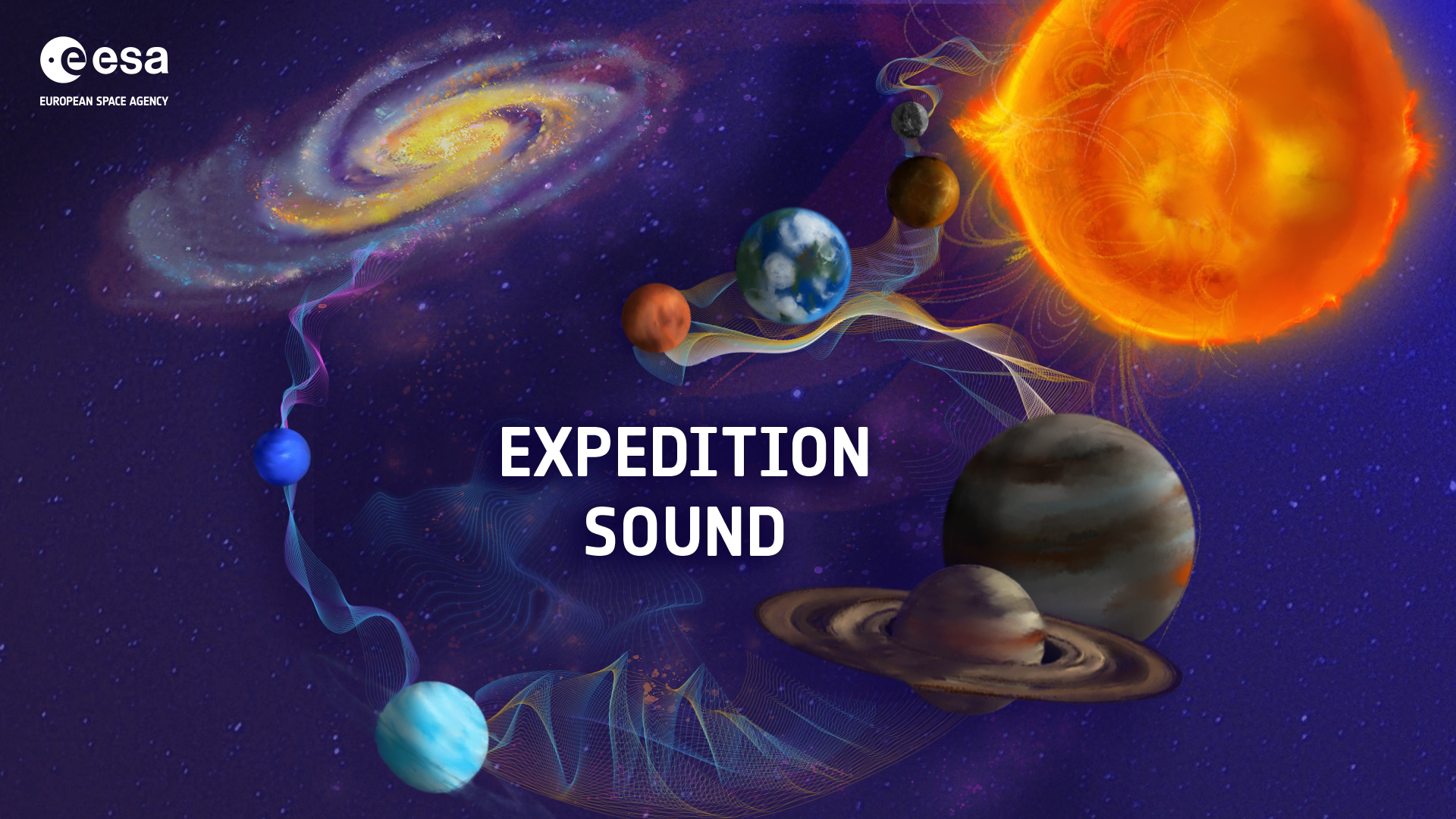
The European Space Agency (ESA) has launched an innovative podcast series titled Expedition Sound, which invites listeners to explore the Universe through the medium of sound. Guided by host Zsófi Szalavári, the series is a journey through space, translating astronomical data into auditory experiences, and revealing the hidden science behind ESA's space missions. This initiative aims to make astronomy more accessible, particularly to those who are vision impaired, by converting complex data into soundscapes.
Sonification: A New Way of Experiencing Space
At the heart of the series is the concept of sonification, a process that converts data into sound, offering a unique way to interpret and experience the cosmos. This approach not only aids scientific understanding but also broadens the reach of astronomical data to individuals who may not engage with traditional visual data representations. The podcast highlights the importance of inclusivity in science communication, with contributions from vision impaired astronomers who find significant value and connection through listening.
The first episode of Expedition Sound delves into the mysteries of our Sun, guided by data from the Solar Orbiter mission. Listeners are invited to tune into the 'solar fireworks,' experiencing the dynamic phenomena of solar flares and the solar cycle through sound. ESA project scientist Miho Janvier discusses how the Solar Orbiter is unraveling the Sun's secrets, while blind astronomer and science communicator Nic Bonne shares insights on how auditory data enhances accessibility to space science.
Future Episodes and Their Focus
The podcast promises a series of episodes that will explore different celestial phenomena and missions. The second episode, expected on July 30, 2026, will take listeners on a journey through the Solar System with the BepiColombo mission, which is currently en route to Mercury. This mission is a joint effort between ESA and the Japan Aerospace Exploration Agency (JAXA), aiming to study Mercury's composition, geophysics, atmosphere, and magnetic field, shedding light on the planet's history.
Subsequent episodes will continue to expand the auditory exploration of space. On August 13, 2026, the third episode will focus on the Milky Way galaxy, utilizing data from the Gaia and Plato missions to explore the 'wobble' of stars. Finally, the series will venture into the depths of space on August 27, 2026, examining the mysterious effects of gravity with the Euclid mission, which aims to understand dark energy and dark matter.
The Broader Impact of Sound in Science Communication
The use of sound in science communication is not merely a novel approach but a strategic one to engage wider audiences. By transforming data into sound, ESA is not only making space science more accessible but also potentially inspiring a new generation of scientists and astronomers. This method of data representation could pave the way for more inclusive scientific methodologies, ensuring that space exploration and the wonders of the Universe are accessible to all.
Conclusion
As Expedition Sound unfolds, it invites listeners to experience the cosmos in a way that transcends traditional visual constraints. By leveraging sonification, ESA is breaking new ground in how we perceive and understand the Universe. This auditory journey not only enhances accessibility but also enriches the public's connection to space exploration, making the vast and often abstract realm of space more tangible and relatable.
The launch of Expedition Sound represents an exciting development in the field of astronomy and underscores the ongoing commitment of ESA to innovate in the ways we explore and understand our Universe. With each episode, listeners are not only brought closer to the stars but also reminded of the limitless possibilities that await in the unexplored depths of space.