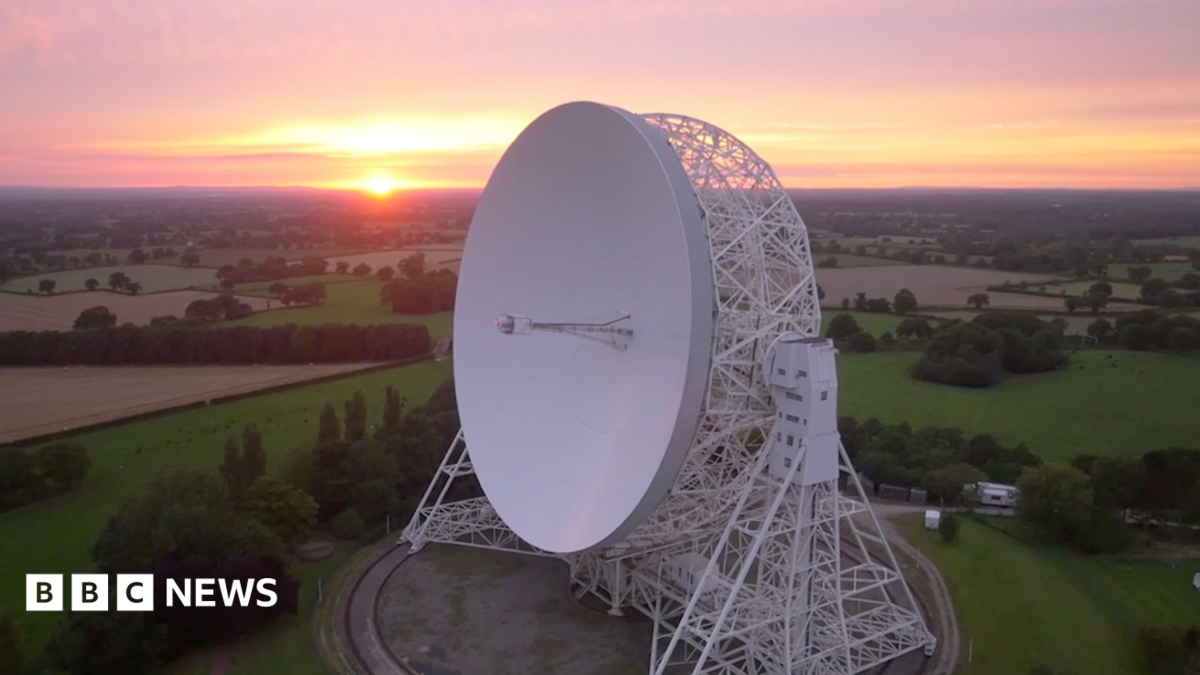
The Jodrell Bank Observatory, a pivotal institution in the realm of radio astronomy, is on the verge of closure. This potential shutdown comes in the wake of a significant funding withdrawal by UK Research and Innovation (UKRI), which has sparked an outcry from the scientific community.
Established in 1945, Jodrell Bank has been at the forefront of astronomical research, housing the UK’s largest telescope, the Grade I-listed Lovell telescope. Over nearly seven decades, it has played a crucial role in the study of distant galaxies, the monitoring of Soviet missiles during the Cold War, and the training of future astronomers. Its contributions to global science were recognized in 2019 when it was designated a UNESCO World Heritage site.
The decision to cut the observatory’s funding, which amounts to £2.8 million annually, has been described by scientists as "heartbreaking" and "scientifically misguided." UKRI, which has an annual budget of nearly £10 billion, cited the need to prioritize projects with the greatest long-term impact as the rationale for the cuts. These financial adjustments come amidst broader reductions affecting astronomy, nuclear, and particle physics research over the next four years.
Professor Brian Cox of the University of Manchester, which hosts Jodrell Bank, expressed his astonishment at UKRI's decision to proceed with the cuts, highlighting the existing damage to the UK's scientific infrastructure. He criticized the agency for not collaborating with the current government to find a viable solution.
Further emphasizing the gravity of the situation, Professor Catherine Heymans, Scotland’s Astronomer Royal, noted the profound impact of the cuts on UK astronomy. She remarked on the observatory's history of delivering significant scientific discoveries and described the funding withdrawal as "devastating." The cessation of scientific observations at Jodrell Bank is anticipated by April 1, 2028, unless alternative funding sources are identified.
In response to the criticism, Jonathan Reynolds, the Secretary of State in the expanded business department now responsible for science, reiterated the government's commitment to sustaining the UK’s world-leading research capabilities. He emphasized the importance of investing in new scientific facilities and infrastructure to support future growth and innovation.
This development is not isolated, as the UKRI has also terminated funding for the UK’s participation in the James Clark Maxwell Telescope in Hawaii, which is instrumental in imaging supermassive black holes, and reduced support for the Extremely Large Telescope project.
The situation at Jodrell Bank underscores broader challenges facing the UK's scientific community. Rising operational costs, including electricity and staffing, alongside unfavorable foreign exchange rates for international collaborations, have compounded the financial strain on research institutions. These pressures necessitate difficult decisions about funding allocations, but they also risk undermining the UK’s position as a leader in scientific research.
As stakeholders search for solutions, the potential closure of Jodrell Bank serves as a stark reminder of the delicate balance between financial management and scientific ambition. The observatory’s fate remains uncertain, but its legacy in advancing human understanding of the universe is indisputable.