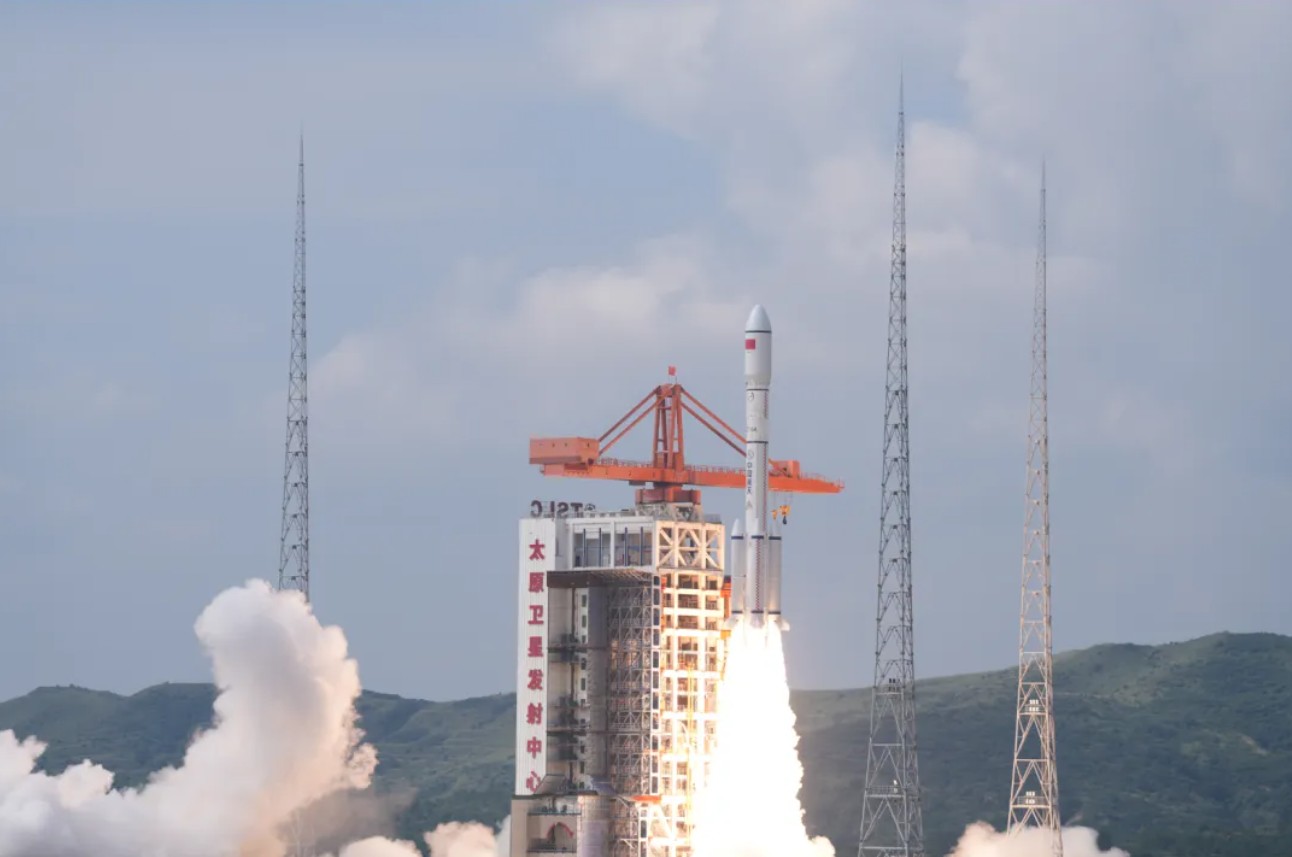
On July 30, 2026, China successfully launched the TJS-27A and TJS-27B satellites from the Taiyuan Satellite Launch Center using a Long March 6A rocket. This launch marks a significant advancement in China’s space capabilities, specifically in the areas of communication and electronic intelligence. Developed by the China Academy of Space Technology (CAST) and the Shanghai Academy of Spaceflight Technology (SAST), these satellites are designed to enhance China's satellite communication, broadcasting, and data transmission infrastructure while also conducting technology experiments and verifications.
Electronic Intelligence Role
The TJS-27A and 27B satellites have been tracked by the U.S. Space Force in 1,153-kilometer altitude orbits with an inclination of 64.8 degrees. These orbits are characteristic of time-delay-of-arrival (TDOA) electronic intelligence satellites, similar to the U.S. Naval Ocean Surveillance System (NOSS) network. According to Jonathan McDowell, a former astrophysicist and space activity tracker, such satellites are likely intended for electronic intelligence (ELINT) and signals intelligence (SIGINT) gathering. This aligns with China's previous space missions, which have included similar reconnaissance capabilities under the Yaogan satellite series.
Strategic Implications
The deployment of TJS-27A and B appears to signify a new mission type within the classified TJS satellite series. Historically, TJS satellites have been positioned in geosynchronous orbits, with some exceptions like TJS-13 and TJS-21, which were placed in Molniya orbits. The introduction of TJS-27A and B into a lower orbit suggests a strategic shift, potentially aimed at enhancing China's reconnaissance capabilities or testing new satellite technologies. The launch also fits into a broader pattern of China's increasing investment in space technology, as evidenced by recent achievements such as the successful recovery of an orbital-class rocket booster and advancements in sea-based rocket launch capabilities.
Technological Context and Future Prospects
China's space program has been making strides in recent years, with significant technological advancements and strategic initiatives. The TJS-27 launch is part of a larger context of efforts to bolster China's space situational awareness and establish a robust space infrastructure. For instance, a Beijing-based startup has recently secured significant funding to develop a satellite constellation for tracking orbital objects, highlighting China's commitment to enhancing its space situational awareness capabilities.
Looking ahead, the successful deployment of TJS-27A and B could pave the way for further innovations in satellite technologies and applications. While the precise functions of these satellites remain classified, their deployment underscores the importance of space as a domain for national security and technological prowess. As China continues to expand its presence in space, these developments are likely to have significant implications for global space dynamics and the future of satellite-based communication and intelligence.