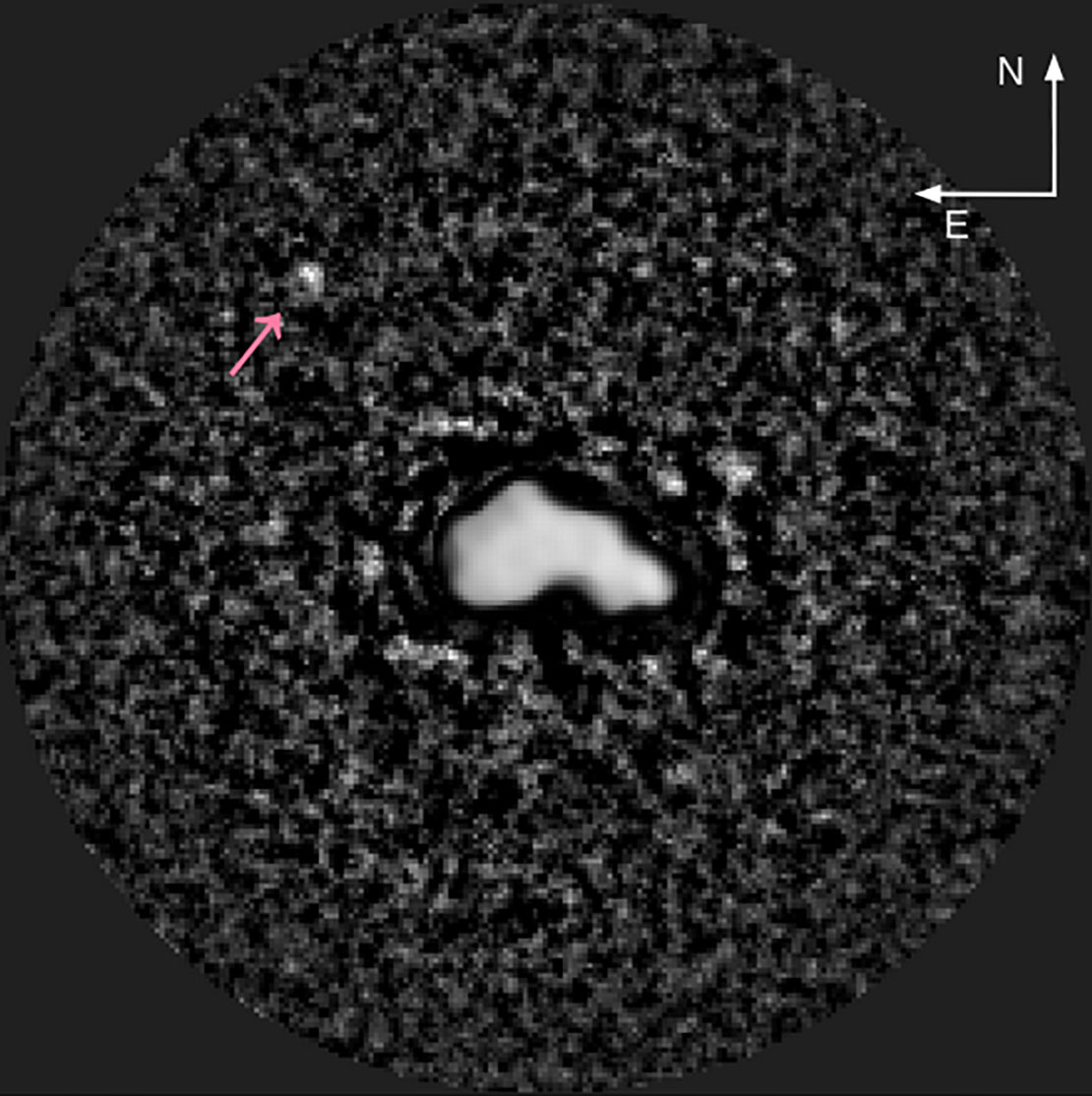
The universe is a vast expanse filled with countless mysteries, and among its most enigmatic objects are blazars—distant, active galaxies that emit jets of matter at narrow angles toward Earth. A recent study by scientists from the University of Heidelberg and the Institute of Nuclear Physics of the Polish Academy of Sciences (IFJ PAN) in Krakow has delved into the complexities of these celestial phenomena, focusing on the blazar PKS 2155-304. Despite two decades of observations, the study has yielded more questions than answers, underscoring the challenges astronomers face in understanding these cosmic entities.
Blazars are a specific type of active galactic nuclei (AGN), characterized by their intense emissions of electromagnetic radiation. These emissions are believed to be the result of violent processes occurring as matter is drawn into a supermassive black hole at the galaxy's center. The activity of these galaxies is marked by the presence of jets—narrow streams of ionized, luminous matter—that can extend tens of millions of light-years into space. When such jets are oriented in our direction, the galaxy appears as a point source, earning the designation of a blazar.
The primary focus of the recent study was PKS 2155-304, located about 1.5 billion light-years away in the constellation Piscis Austrinus. The researchers aimed to decipher the nature of blazars through extended observational data rather than the short-term, sporadic studies that have been more common in the past. Despite their efforts, the team found that the complexity of the phenomena involved in blazar emissions only increased, leading to a proliferation of intriguing questions rather than definitive answers.
Understanding blazars is inherently challenging due to their immense distance from Earth and the high variability of the radiation they emit. This radiation spans a wide energy range, posing significant interpretative hurdles. Blazars are among the most variable types of AGNs, with changes in brightness occurring over a range of timescales from minutes to years. This variability, coupled with the vast distances involved, complicates efforts to develop a coherent theoretical framework for these objects.
Historically, blazars have captivated astronomers due to their extreme properties and the insights they offer into high-energy astrophysical processes. The term 'blazar' itself is a combination of 'BL Lacertae object' and 'quasar,' two types of AGNs that share some observational characteristics. The study of blazars not only enhances our understanding of galaxy evolution and black hole physics but also contributes to broader cosmological inquiries about the universe's structure and dynamics.
The ongoing research into blazars, such as the project undertaken by the Polish-German team, is crucial as it challenges existing models and assumptions. It invites astrophysicists to refine their theories about how supermassive black holes interact with their surroundings and how these interactions manifest as observable phenomena across vast cosmic distances.
Looking ahead, the study of blazars will likely benefit from advancements in observational technology and methodologies. As telescopes and detection instruments become increasingly sensitive and precise, astronomers will be better equipped to capture the subtle nuances of blazar behavior. Furthermore, collaborations across international research institutions, like the one between the University of Heidelberg and IFJ PAN, highlight the importance of collective scientific efforts in tackling the universe's most perplexing questions.
The mysteries surrounding blazars remain as intricate as ever, and while current research may have raised more questions than it answered, it represents a significant step in the ongoing quest to understand these celestial powerhouses. As we continue to peer into the depths of space, the enigmatic nature of blazars serves as a reminder of the universe's complexity and the endless opportunities for discovery it holds.