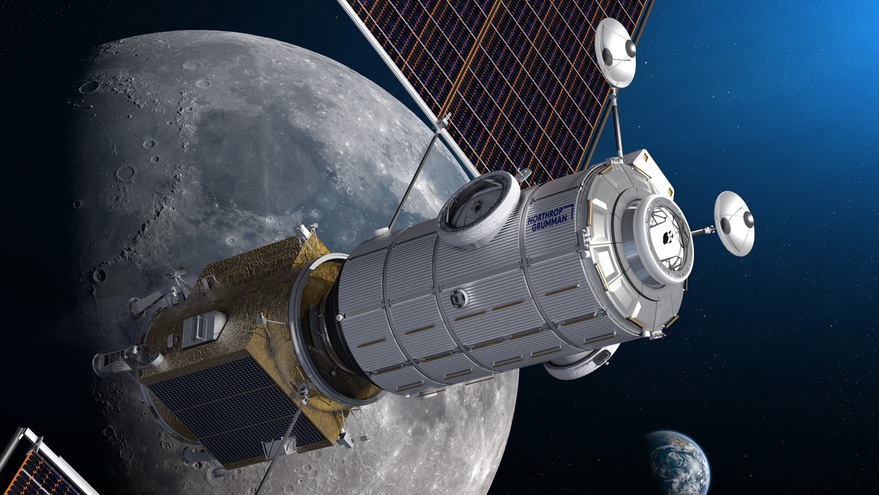
The recent decision by NASA to indefinitely halt work on the Gateway project has led to significant changes within the space industry, particularly impacting subcontractors such as Paragon Space Development Corp. On August 11, Paragon announced a 'companywide restructuring' resulting in the layoff of 70 employees across its locations in Arizona, Colorado, and Texas. This move comes as a direct consequence of Northrop Grumman, the primary contractor for the Habitation and Logistics Outpost (HALO) module, terminating Paragon's contract to provide life support systems for HALO.
The HALO module was originally a core component of NASA's ambitious lunar Gateway project, which aimed to establish a facility in a near-rectilinear halo orbit around the moon. The project was intended to support Artemis missions, with contributions from various international partners. However, NASA's announcement at the Ignition event in March to halt the Gateway project has led to significant reevaluations and adjustments within the companies involved.
Paragon's president and chief executive, Mark Greeley, described the layoffs as one of the most challenging decisions in the company's 33-year history. Despite the setback, Greeley emphasized that the termination of the HALO contract does not signify a fatal blow to the company. Paragon plans to retain the intellectual property rights to the life support technologies it developed for HALO, which could be repurposed for future projects.
While Paragon faces challenges, Northrop Grumman is exploring alternative avenues for the technologies developed for HALO. The company announced plans to incorporate some of these technologies, including power and avionics systems, into three upcoming Lunar Infrastructure Demo missions. These missions, set to take place later this decade, will employ commercial landers procured through NASA's Commercial Lunar Payload Services program. Additionally, Northrop is considering converting the HALO module into a lunar habitat, although this proposal is complicated by acknowledged corrosion issues with the module's structure, provided by Thales Alenia Space.
Despite the Gateway project's cancellation, Paragon remains optimistic about its future contributions to human spaceflight. The company has a long history of developing life support systems and related technologies essential for living and working in extreme environments. Paragon is actively seeking opportunities to apply its expertise to NASA's lunar base plans and other potential government and commercial projects.
In the broader context of space exploration, the indefinite halt of the Gateway project illustrates the complex and often unpredictable nature of space missions. The Gateway was envisioned as a pivotal element of NASA's return to the moon under the Artemis program, which aims to establish a sustainable human presence on the lunar surface. The project's suspension underscores the financial, technical, and political challenges that can influence the trajectory of ambitious space initiatives.
Moving forward, the industry will be watching closely to see how companies like Paragon and Northrop Grumman navigate the post-Gateway landscape. The ability to adapt and innovate will be crucial as they work to realign their strategies and technologies with NASA's evolving priorities and the broader goals of international space exploration.