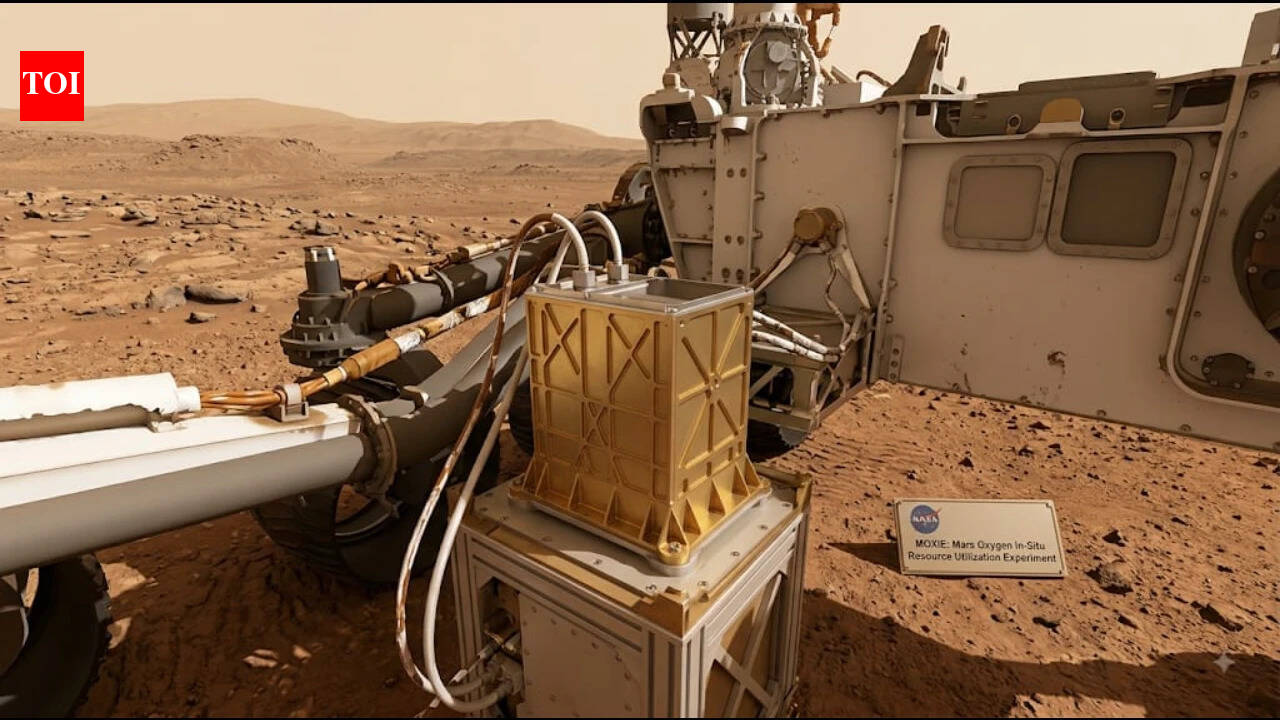
For the first time in history, oxygen has been produced on another planet, thanks to NASA's Mars Oxygen In-Situ Resource Utilization Experiment, or MOXIE. This small yet groundbreaking device, housed within the Perseverance rover, has been quietly operating on Mars between 2021 and 2023. Unlike the grand visions of a bustling Mars base, MOXIE's achievement is a humble yet profound step towards making human exploration of Mars a reality.
MOXIE operates by taking in carbon dioxide from the Martian atmosphere, which is composed of approximately 96% CO2, and converting it into molecular oxygen. This process, known as solid oxide electrolysis, involves a high-temperature electrochemical reaction that separates oxygen atoms from carbon dioxide molecules. Over 16 operational runs, MOXIE produced a total of 122 grams of oxygen, surpassing several of its initial performance targets.
Although the quantity of oxygen produced is minuscule compared to what a human mission would require, the primary objective of MOXIE was to demonstrate that local resources on Mars can be utilized effectively. This concept of in-situ resource utilization (ISRU) is crucial for future missions, potentially reducing the need to transport vast amounts of supplies from Earth, thereby significantly decreasing mission costs and complexity.
The success of MOXIE is a pivotal step in addressing one of the fundamental challenges of human exploration of Mars: ensuring that astronauts have access to essential resources such as oxygen. Oxygen is not only vital for human survival but also an important component for rocket fuel, which could be used for the return journey to Earth.
The implications of MOXIE's success extend beyond the immediate production of oxygen. This experiment has demonstrated that Mars' atmosphere, often seen as a barrier due to its thinness and high CO2 content, can actually be transformed into a valuable resource. This reduces the psychological and logistical barriers to human exploration, opening new possibilities for sustained human presence on the Red Planet.
MOXIE's operation aboard the Perseverance rover highlights the innovative approach NASA has taken toward resource utilization on Mars. By embedding this experiment within a rover primarily tasked with geological and astrobiological research, NASA has effectively combined scientific exploration with technological innovation.
The development and deployment of MOXIE mark a significant shift in how space agencies approach interplanetary exploration. It underscores a growing recognition of the need for sustainable exploration strategies that leverage local resources. While the production of 122 grams of oxygen might seem modest, its successful demonstration is a testament to the potential of ISRU technologies in future missions.
Looking ahead, the lessons learned from MOXIE will inform the design of larger, more efficient systems capable of supporting human missions. These systems would need to produce oxygen at a scale sufficient for human use, requiring advances in technology and engineering. The path forward involves scaling up MOXIE's technology to create a robust infrastructure for oxygen production on Mars.
MOXIE's achievement is not just a technical success but a symbol of the innovative spirit that drives space exploration. It embodies the idea that by overcoming one challenge at a time, humanity can make the dream of exploring and living on Mars a reality. As space agencies worldwide continue to pursue this goal, the insights gained from MOXIE will be instrumental in shaping the future of Martian exploration.