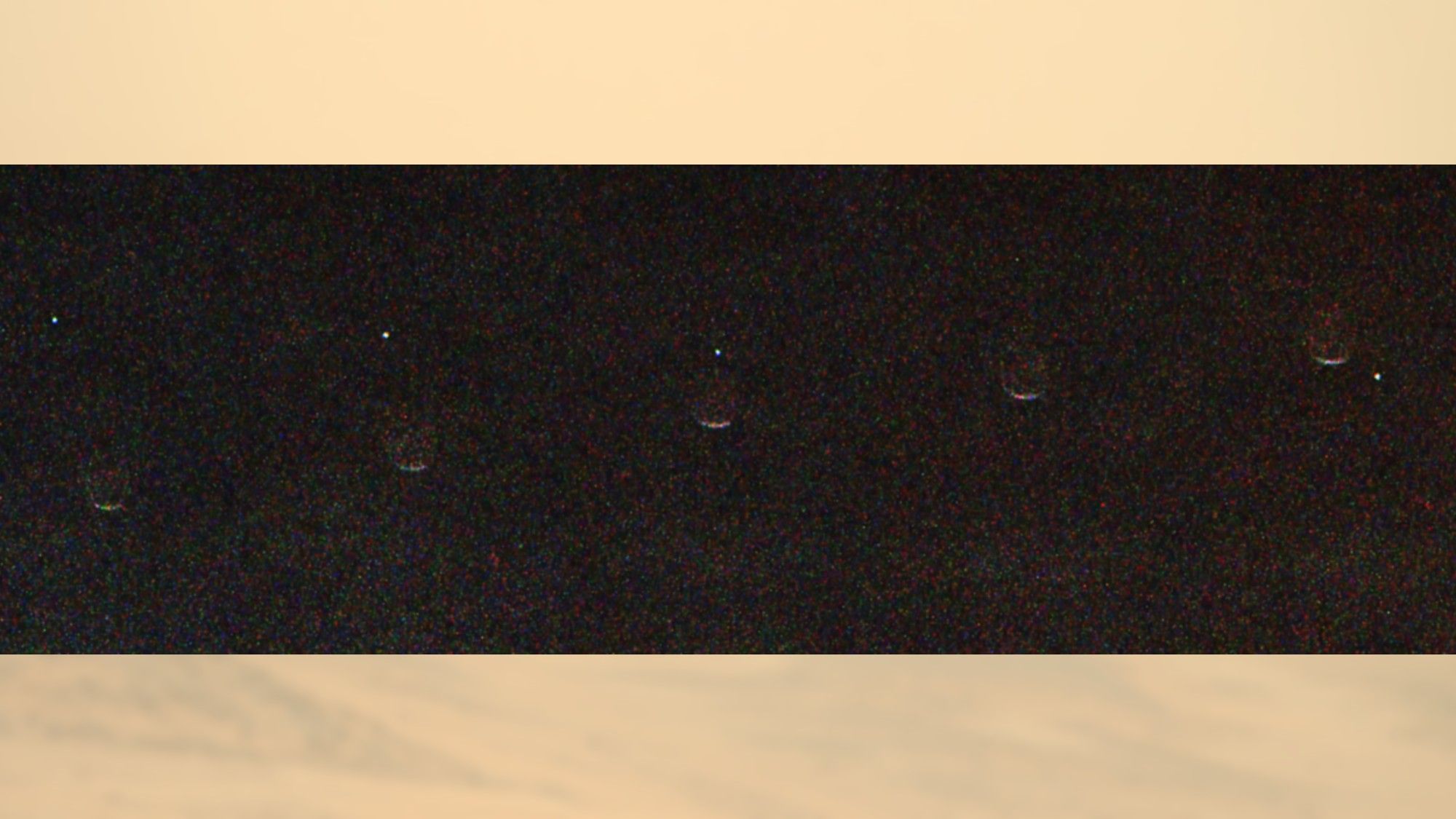
On July 2, 2026, NASA's Perseverance rover achieved a remarkable astrophotographic feat by capturing Earth disappearing behind Phobos, one of Mars' two moons. This event, recorded on the 1,907th Martian day (or sol) of the rover's mission, highlights the advanced imaging capabilities of the Perseverance rover, which continues to provide invaluable data from the Martian surface.
The images were taken using the Mastcam-Z instrument, a sophisticated camera system on board Perseverance. This system is managed by Arizona State University in collaboration with Malin Space Science Systems in San Diego. The Mastcam-Z is designed for high-resolution imaging and is instrumental in capturing detailed footage of the Martian landscape and celestial phenomena. The composite comprises seven images showing Earth as a small bright dot moving from the upper left to the lower right, eventually passing behind Phobos.
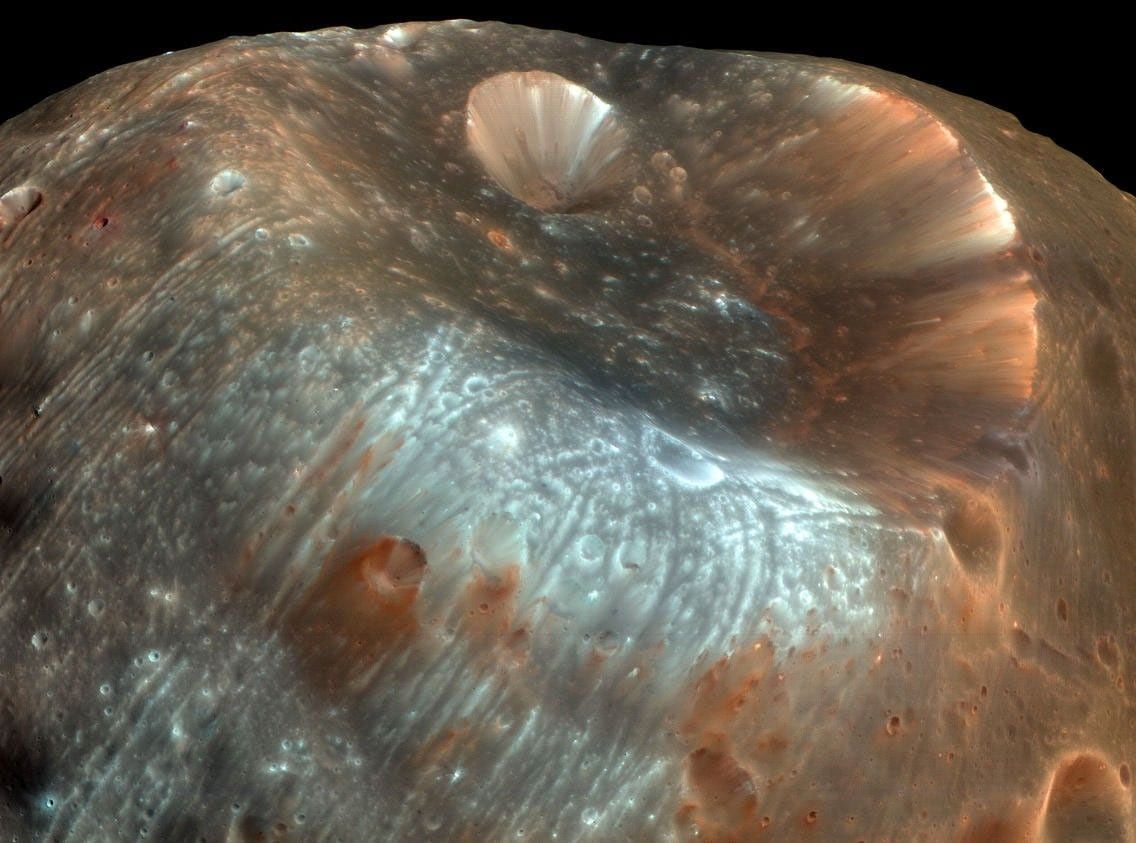
Phobos, along with its smaller sibling Deimos, is one of Mars' two moons. Unlike Earth's moon, Phobos is irregularly shaped and much smaller, with an average diameter of about 22 kilometers. The close proximity of Phobos to Mars makes it an intriguing subject for scientific study, as its origins and composition could unravel mysteries surrounding the formation of the Solar System. NASA's Jet Propulsion Laboratory (JPL) in Southern California, managed by Caltech, oversees the operations of the Perseverance rover as part of NASA's Mars Exploration Program.
The sequence of images was taken approximately 40 minutes after sunset on that sol, providing a unique view of the Martian twilight. The sky's appearance, a blend of blue-gray and reddish-gray hues, adds an otherworldly dimension to the photographs, emphasizing the distinct Martian atmosphere and lighting conditions. The black background in the images was achieved through processing techniques that removed extraneous light, enhancing the clarity and detail of the scene.
Perseverance's mission extends beyond capturing stunning images. It is fundamentally about exploring Mars' surface for signs of ancient life and understanding the planet's geology and climate. Recently, the rover discovered evidence of asteroid impacts on Mars dating back nearly four billion years, offering insights into the planet's tumultuous past and the early Solar System.
The significance of this celestial event goes beyond its visual appeal. Observations like these are crucial for understanding the relative motions and interactions of celestial bodies within our Solar System. They also demonstrate the capability of robotic explorers to perform complex tasks, paving the way for future missions and explorations.
Looking ahead, the technological advancements demonstrated by Perseverance on Mars could inform future missions not only to the Red Planet but also to other celestial bodies. NASA has already expressed interest in adapting technology from Mars missions for lunar explorations, such as the proposed PROMISE lunar rover.
As Perseverance continues its mission, each discovery and observation adds a piece to the puzzle of Mars' history and its place in the broader cosmic context. The rover's ability to capture such events as Earth vanishing behind Phobos offers both a scientific treasure and a visual spectacle, reminding us of the intricate dance of celestial bodies within our Solar System.