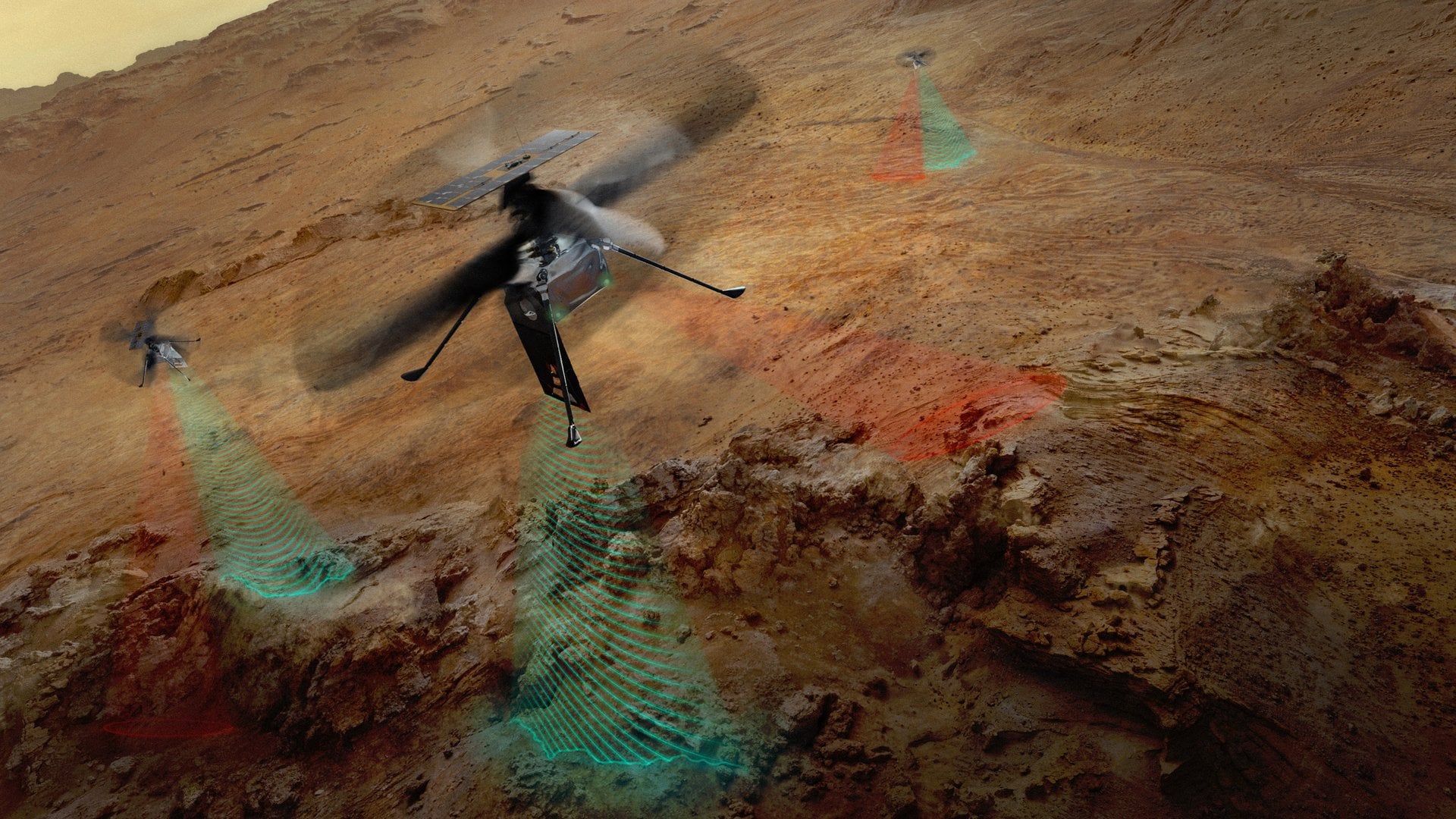
NASA's ongoing exploration of Mars is set to take a significant leap forward with the introduction of the SkyFall Mars Helicopters. Following the successful demonstration of controlled flight on Mars by the Ingenuity helicopter between 2021 and 2024, NASA is now preparing to deploy a trio of helicopters with a groundbreaking mission: the detection of shallow water ice deposits crucial for future crewed missions.
The SkyFall helicopters, comprising one larger and two smaller units, are equipped with cutting-edge technology to locate frozen water within the top few meters of the Martian regolith. This mission is pivotal as astronauts will rely heavily on local water sources for their survival during future missions to the Red Planet. Unlike large ice deposits detectable by satellites, which lie tens of meters beneath the surface, shallow deposits are much more accessible and thus highly desirable.
Central to their mission is the use of ground-penetrating radar, facilitated by a revolutionary antenna design. The antenna, constructed from a flexible fabric, is designed to extend beneath the helicopters without risking damage during landing. This innovation allows the helicopters to operate effectively, maintaining a minimum clearance of about 15 cm (6 inches) above the Martian surface, a feat impossible with traditional rigid antennas that require a clear 48 cm (19-inch) view of the ground.
The radar system operates over an ultra-wide frequency range of 500 to 2,500 megahertz (MHz), enabling it to penetrate several meters below the Martian surface. According to Adrian Tang, the ground-penetrating radar lead instrument scientist at NASA's Jet Propulsion Laboratory (JPL), this capability is crucial for resolving the fine layering between dry soil and ice. The longer wavelengths in this range can penetrate several yards, providing a broad overview, while shorter wavelengths deliver detailed information about the uppermost layers.
Each SkyFall helicopter is equipped with four sophisticated instruments, drawing inspiration from NASA's Ingenuity Mars Helicopter. Ingenuity's successful operation proved that aerial vehicles could navigate Mars' thin atmosphere and offer valuable insights for surface missions, such as identifying safe travel routes and potential research sites. However, the SkyFall mission faces unique challenges in radio communication, necessitating the novel antenna solution to ensure effective data transmission.
The SkyFall helicopters are currently undergoing rigorous testing at JPL to ensure their functionality and durability in the harsh Martian environment. This testing phase is crucial to prepare them for the demanding conditions they will face once deployed on Mars.
The implications of the SkyFall mission are significant. By potentially uncovering accessible water sources, NASA is laying the groundwork for sustainable human exploration of Mars. The success of this mission could drastically reduce the logistical challenges of transporting water from Earth, making long-term human presence on Mars more feasible.
Moreover, the technological advancements represented by the SkyFall helicopters could pave the way for future exploration missions, not just on Mars but on other celestial bodies where water detection is critical. As NASA continues to push the boundaries of space exploration, the SkyFall mission stands as a testament to human ingenuity and the relentless pursuit of knowledge.
In conclusion, NASA's SkyFall Mars Helicopters represent a significant step forward in the exploration of Mars, with their innovative design and mission objectives promising to unlock new possibilities for future crewed missions. As they prepare for their maiden flight, the world watches with anticipation, hoping for the breakthroughs that these helicopters promise to deliver.