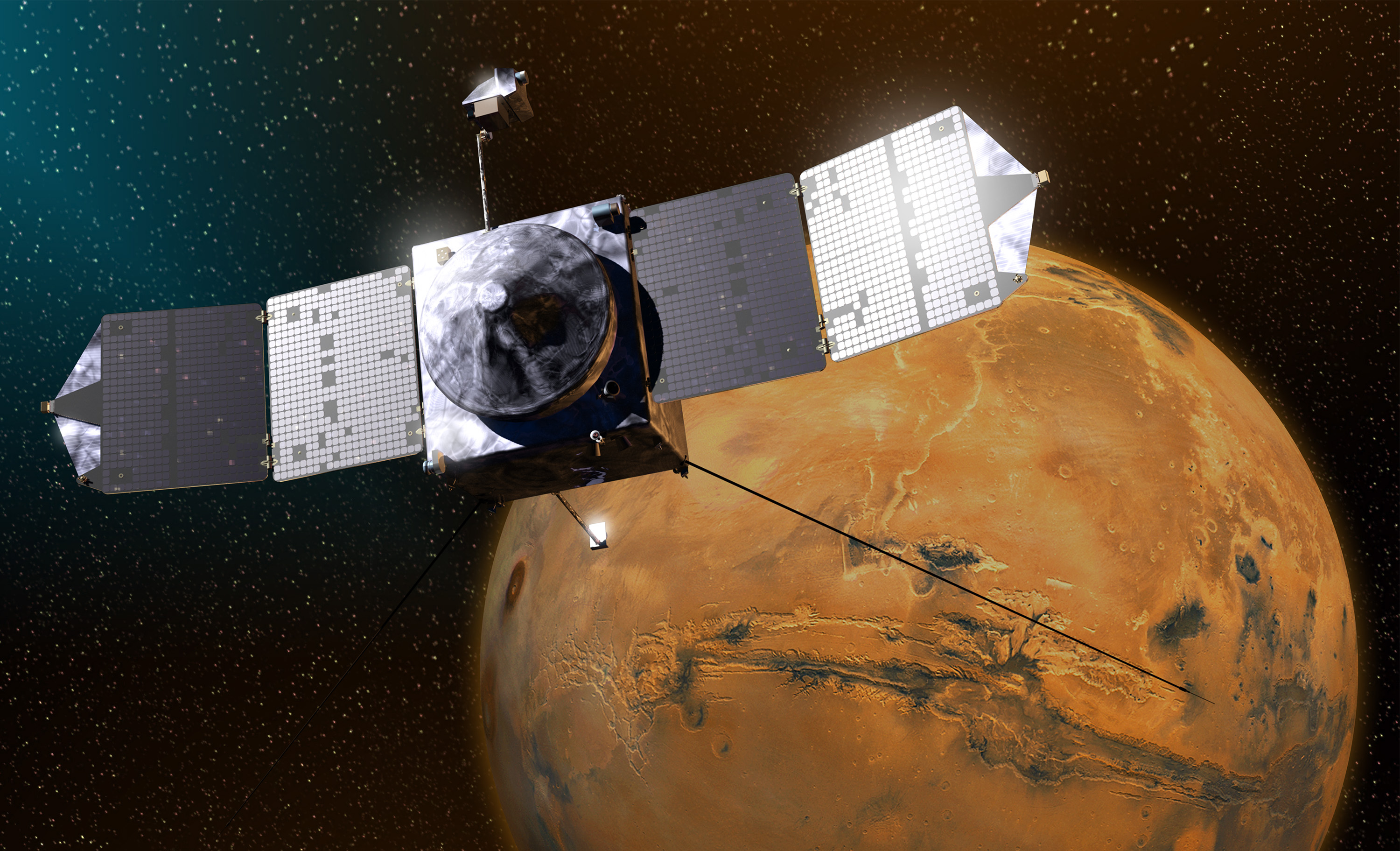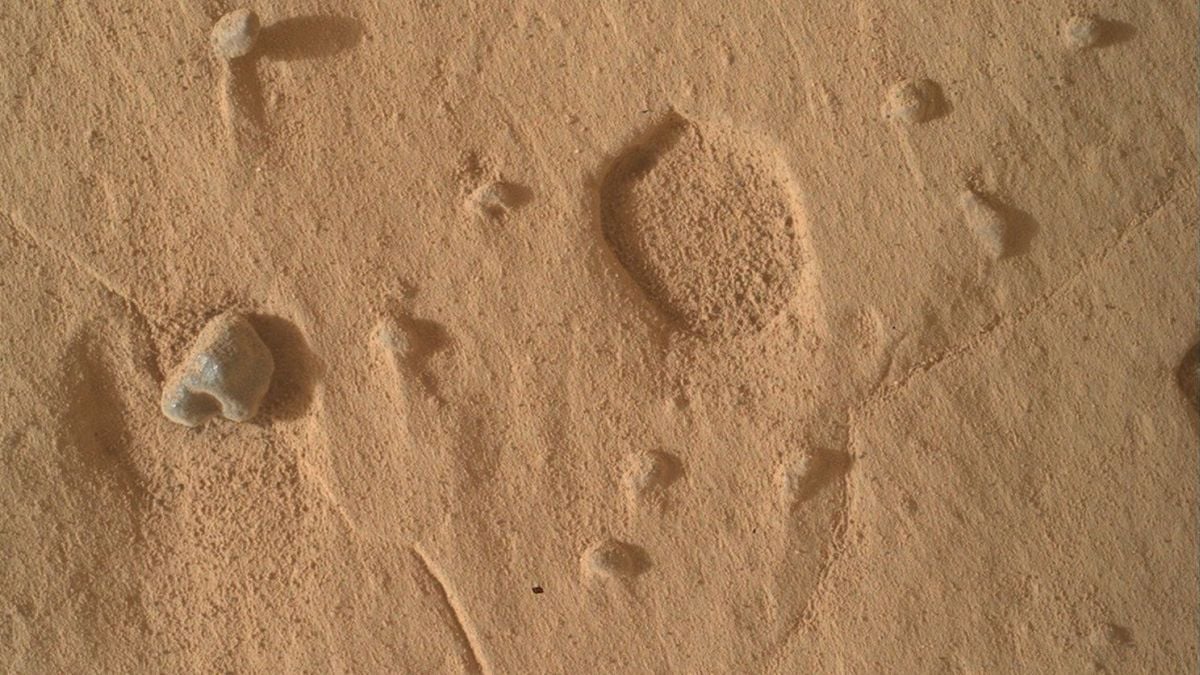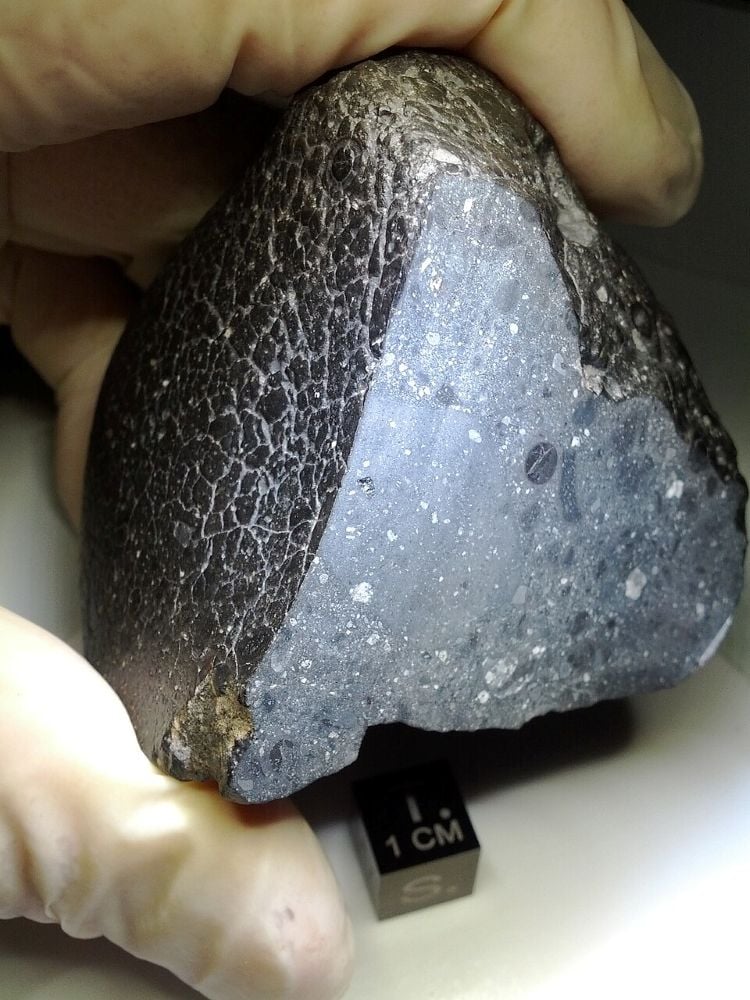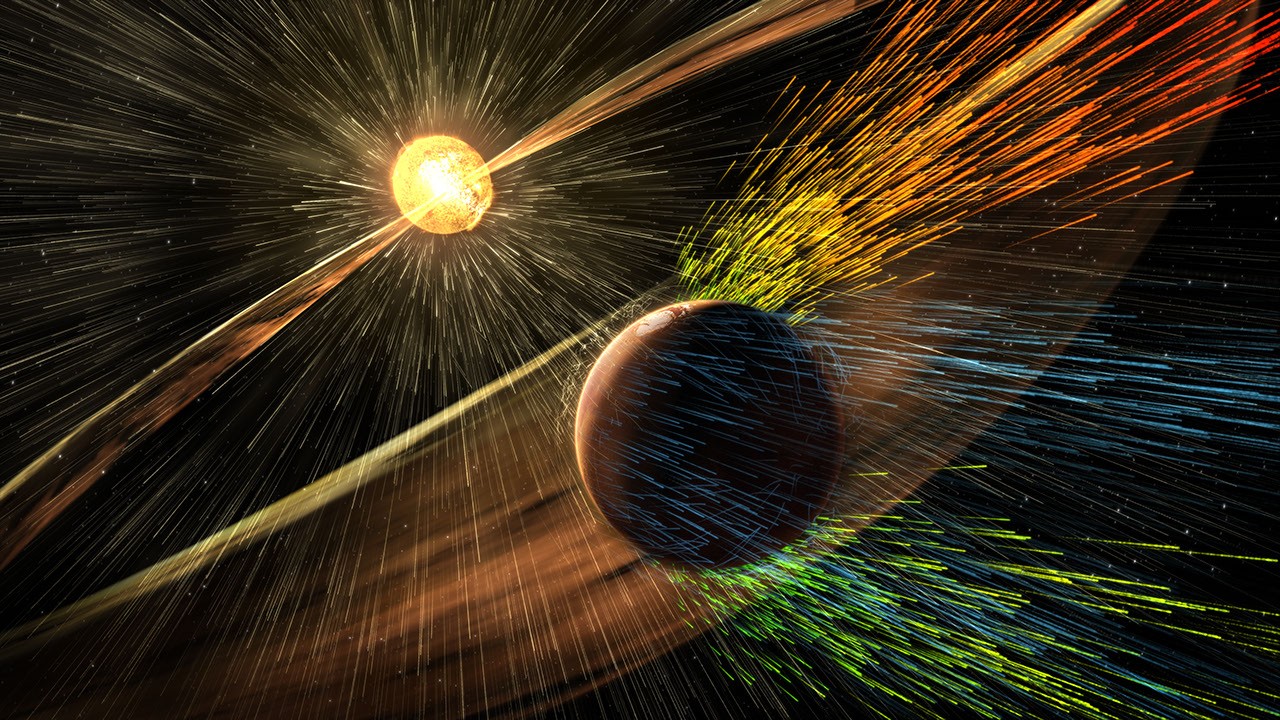
NASA's Mars Atmosphere and Volatile Evolution (MAVEN) mission has provided groundbreaking insights into the Martian atmosphere, revealing a surprising similarity to Earth's magnetic processes. Although Mars lacks a global magnetic field, MAVEN data have confirmed that localized magnetic phenomena akin to Earth's Dungey cycle play a role in creating auroras on the Red Planet. This discovery opens new avenues for understanding Martian atmospheric dynamics and the planet's historical climate evolution.
The Dungey cycle, a well-known process on Earth, involves the interaction between solar wind and Earth's magnetosphere. This interaction causes magnetic reconnection, injecting energy and masses throughout the magnetosphere, ultimately firing electrons back into the atmosphere to produce auroras. On Mars, this cycle occurs over the planet's localized crustal magnetic fields, which are remnants of a once-active global magnetic field. These crustal fields are scattered across the planet, particularly in the southern hemisphere, and play a pivotal role in influencing atmospheric phenomena.
Shaosui Xu, an associate research physicist at the University of California, Berkeley, and lead author of the recent study published in Nature Communications, noted, "We knew that magnetic reconnection was happening at Mars but did not expect it to be like the Dungey cycle." The study emphasizes the importance of these crustal magnetic fields in driving Martian auroras and potentially contributing to atmospheric loss.
MAVEN's findings are particularly significant as they provide a deeper understanding of how Mars, despite its lack of a global magnetic field, still experiences processes similar to Earth. This understanding is crucial for interpreting the history of atmospheric loss on Mars, which has left the planet with a thin atmosphere primarily composed of carbon dioxide.
The MAVEN spacecraft, which had been orbiting Mars since 2014, experienced a loss of signal with Earth-based ground stations on December 6, 2025. By June 3, 2026, NASA declared the mission concluded, as the spacecraft was deemed unrecoverable. Nevertheless, the wealth of data collected continues to inform ongoing research and upcoming Mars missions.
Understanding the dynamics of Martian auroras not only enriches our knowledge of Mars itself but also enhances our comprehension of magnetic processes across the solar system. The localized magnetic fields on Mars, formed approximately 4 billion years ago, provide unique opportunities to study planetary magnetism without the overwhelming presence of a global magnetic field.
The implications of these findings extend beyond scientific curiosity. As humanity plans for potential manned missions to Mars, understanding the planet's magnetic environment and atmospheric conditions becomes increasingly critical. The interplay between solar activity, magnetic fields, and atmospheric loss could have significant impacts on future exploration and habitation efforts.
Mars' atmosphere is also subject to dramatic weather events, such as dust storms that can envelop the entire planet. These storms, together with solar events, might influence atmospheric dynamics in ways not fully understood. Recent studies suggest that when solar storms coincide with Martian dust storms, they may cause temperature fluctuations, hinting at a more complex atmospheric system than previously thought.
As research continues, the MAVEN mission's legacy will likely influence the design of future instruments and missions aimed at unraveling the mysteries of Mars. The study of Martian auroras and magnetic fields not only enhances our understanding of Mars but also contributes to the broader quest of understanding planetary environments and their evolution throughout the solar system.