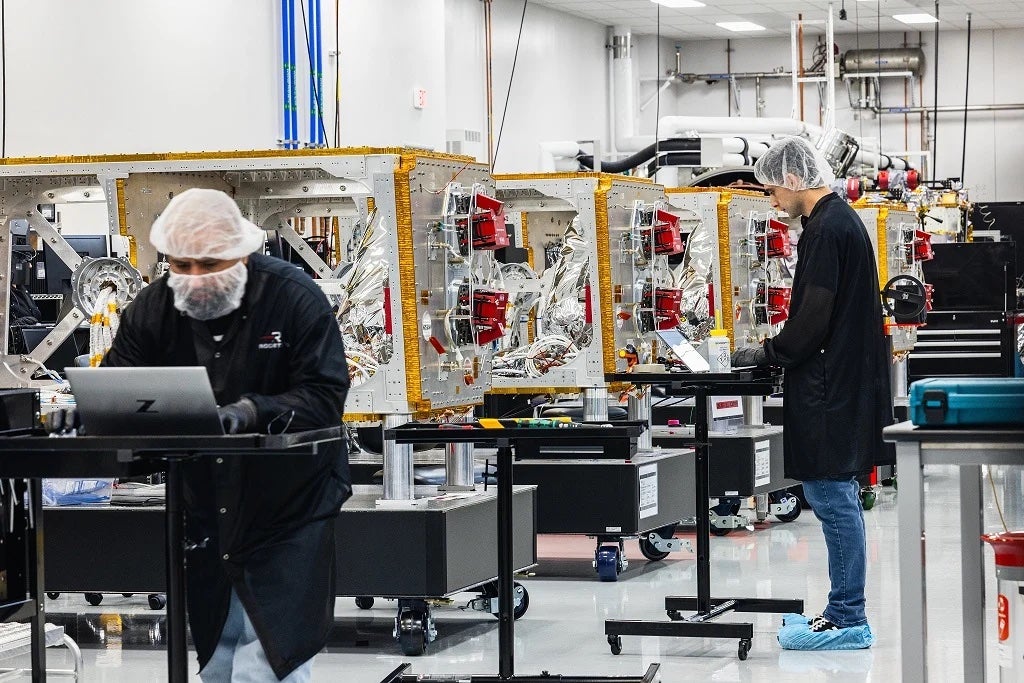
In a significant development within the aerospace sector, Viasat has selected Rocket Lab to build a Geostationary Orbit (GEO) satellite for the Protected Tactical Satcom-Global (PTS-G) program. This collaboration marks a pivotal step in enhancing the capabilities of the U.S. Space Force's tactical communications.
The satellite, which will be based on Rocket Lab's Lightning platform, is set to host Viasat’s dual-band X/Ka-band payload. This initiative follows Viasat’s contract award in May, which tasked the company with delivering the first of a proliferated fleet of small, maneuverable GEO satellites aimed at providing protected tactical satcom capabilities.
Rocket Lab's Lightning platform is designed for high-power and long-life missions, making it an ideal choice for this project. With a power capacity of approximately 3 kW, the Lightning bus is well-suited to support mission-critical communications in contested environments. The platform is already being utilized for other significant projects, such as the Space Development Agency's initiatives and Globalstar's satellite refresh program. Recently, the first eight satellites of Globalstar's refresh were launched successfully, showcasing the platform's reliability and efficiency.
Viasat’s Government President, Craig Miller, emphasized the strategic importance of this collaboration, noting that the integration of Viasat’s advanced communications technology with Rocket Lab’s proven spacecraft platform will advance a more agile and resilient GEO architecture. This architecture is specifically designed to support mission-critical communications hotspots, particularly in increasingly contested tactical environments.
The initial production award, known as Swarm 1, encompasses the manufacturing, integration, and testing phases, as well as the launch and on-orbit checkout of the mini-GEO satellite system. Rocket Lab’s vertically integrated components and subsystems are central to the development of this satellite platform, ensuring a streamlined and efficient production process.
Historically, the development of geostationary satellites has been pivotal for both military and civilian communication networks. These satellites, positioned approximately 35,786 kilometers above the equator, maintain a fixed position relative to the Earth's surface, providing consistent and reliable communication channels. The collaboration between Viasat and Rocket Lab signifies a shift towards smaller, more agile GEO satellites, which can be more easily maneuvered and deployed as needed.
Looking ahead, this initiative is set to enhance the U.S. Space Force’s communication capabilities significantly. As global communications become increasingly complex and contested, the need for agile and resilient satellite architectures is more critical than ever. The success of this collaboration could pave the way for future advancements in satellite technology, potentially influencing both military and commercial satellite operations.
The partnership between Viasat and Rocket Lab exemplifies the growing trend of leveraging dual-use technology to provide reliable connectivity for evolving missions. By combining expertise from both companies, the project aims to deliver a cost-effective solution that meets the dynamic needs of modern tactical communications.
As the aerospace industry continues to evolve, collaborations like this one are essential for driving innovation and expanding the capabilities of satellite communications. The outcome of the PTS-G program will be closely monitored by industry experts and stakeholders, as it represents a critical component of the U.S. Space Force’s strategic objectives.