Magnetic memory in the oldest solar system solids
Researchers at the Massachusetts Institute of Technology report that microscopic grains preserved inside an Antarctic meteorite contain records of ancient magnetism that date to the earliest moments of the solar system. The team analyzed calcium‑aluminum‑rich inclusions (CAIs)—among the oldest known materials from the solar nebula—and conclude that a magnetic field existed while the Sun was still forming. Their results appear this week in the Proceedings of the National Academy of Sciences (DOI: 10.1073/pnas.2521660123).
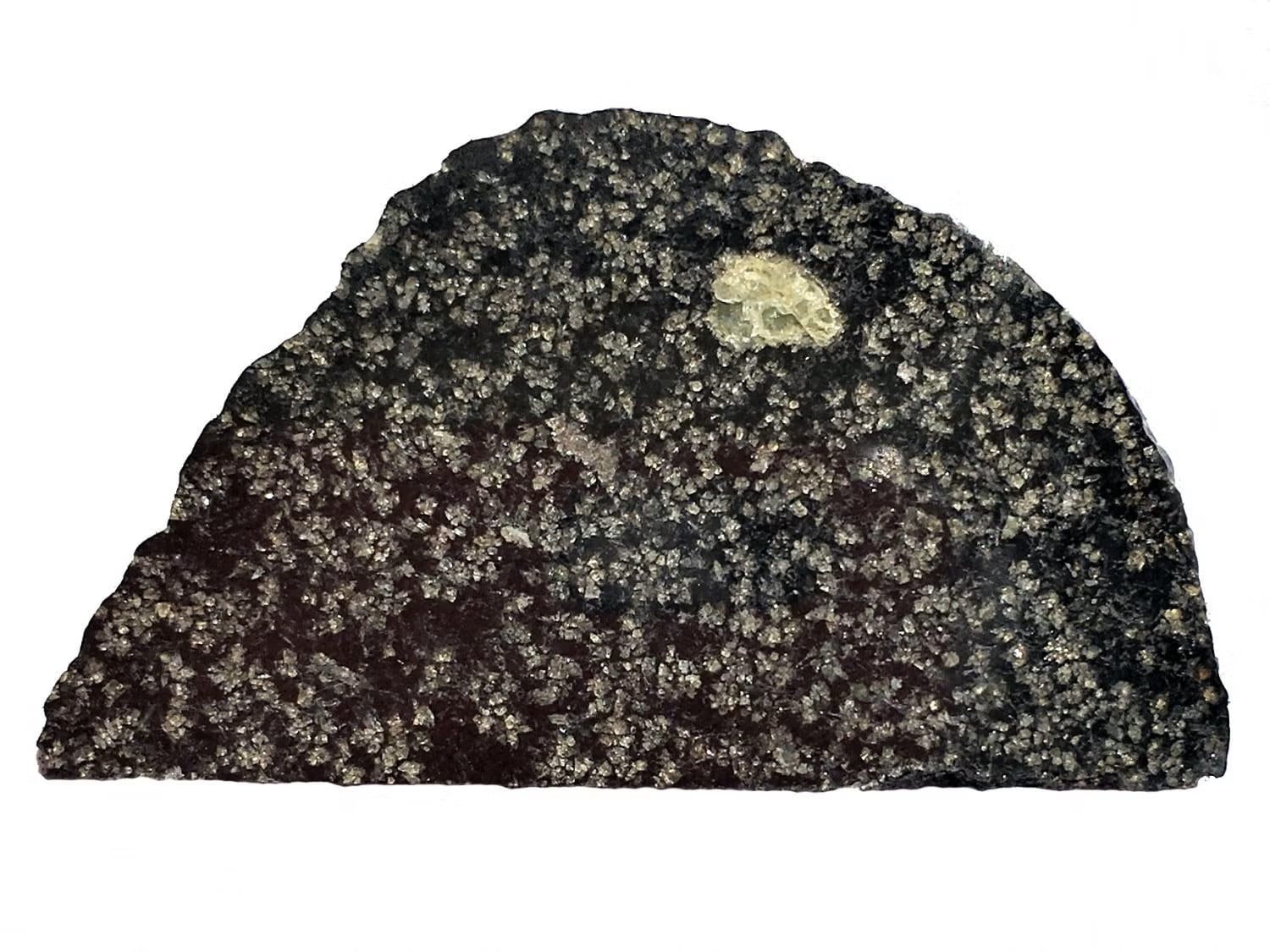
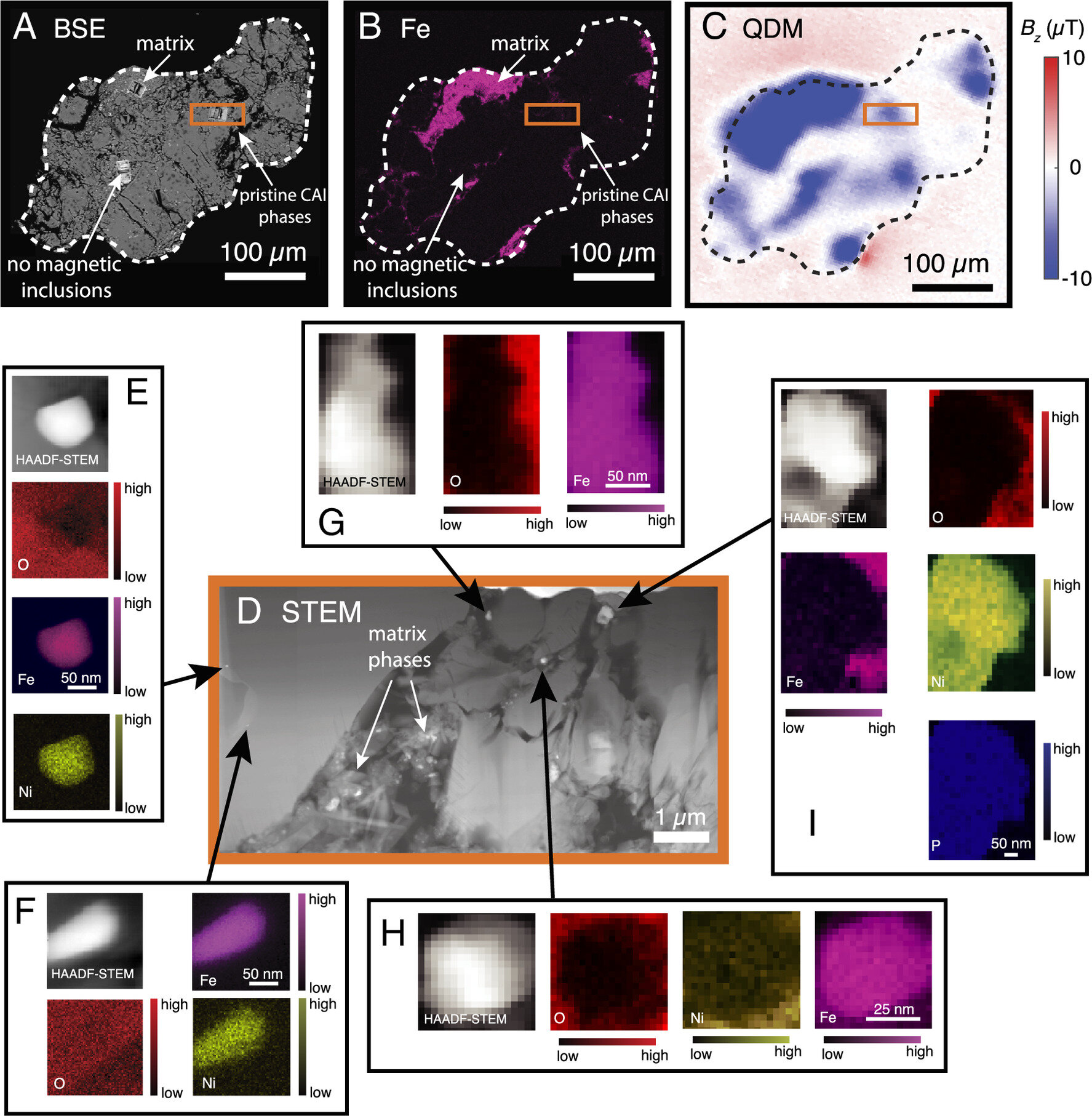
The meteorite in question was discovered in Antarctica in 2008. The CAIs embedded in that specimen originally formed during the solar system's first 200,000 years, making them the oldest known solar system material. According to the MIT team, high‑resolution imaging reveals primary magnetic phases in CAI grains, and those phases preserve a remanent magnetization that can be read today.
Why a magnetic field matters for star and disk formation
For decades, the dominant picture of the Sun's birth held that gravity was the principal agent: a roughly spherical cloud of gas and dust collapsed under its own weight and flattened into a rotating protoplanetary disk from which the Sun and planets condensed. The MIT study adds a new ingredient to that narrative by showing evidence that magnetism was present during the same epoch.
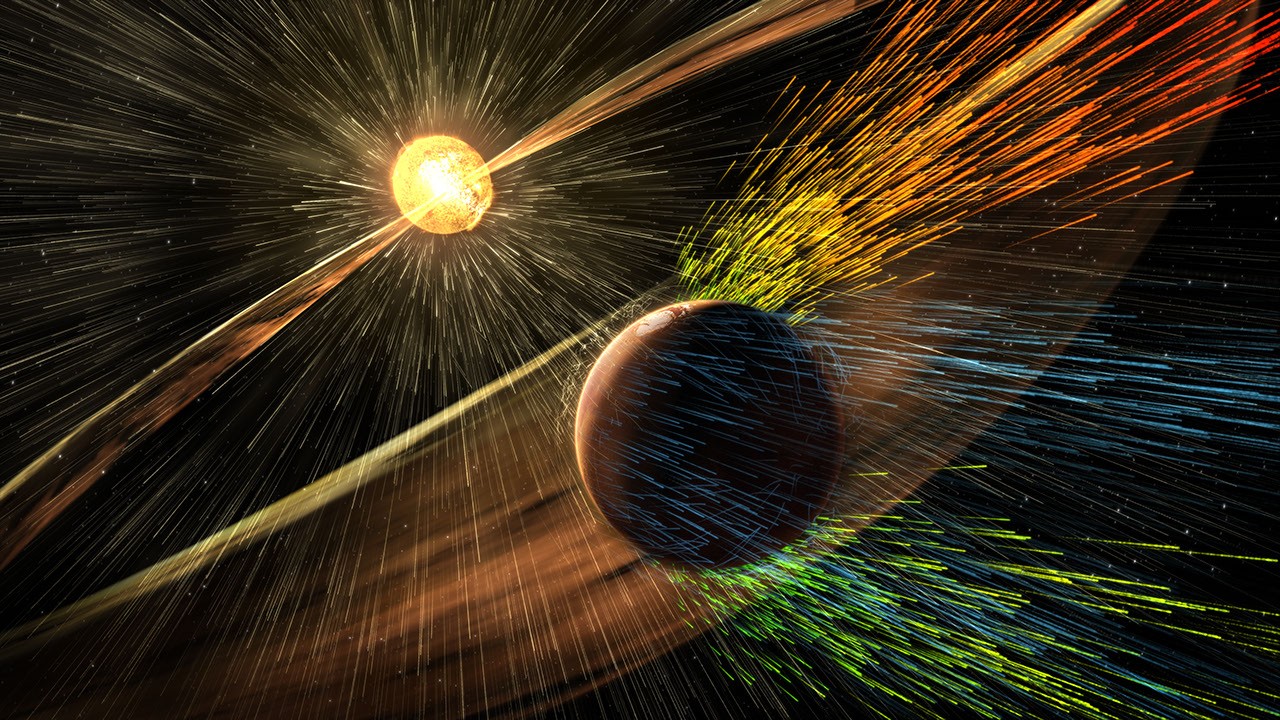
Magnetic fields arise when electrically charged matter moves. In the collapsing solar nebula, the researchers note, ionized gas could have produced a plasma whose motion generated a nebular magnetic field. The MIT authors estimate that this early field was stronger than Earth's present magnetic field and suggest it could have helped pull together primordial matter in ways that complement gravity.
"This transition, from a spherical cloud to a protoplanetary disk, is one of the most significant events in all of solar system history," said Benjamin Weiss, the Robert R. Shrock Professor of Earth and Planetary Sciences at MIT, in the study's accompanying text. "It has long been theorized that gravity caused this, but our measurements show magnetism likely played a role."
The team and their approach
The paper lists Cauê Borlina (first author, Ph.D. '22), Elias Mansbach (Ph.D. '24), and Nilanjan Chatterjee from MIT among the lead authors. The collaboration also includes Xue‑Ning Bai of Tsinghua University, Po‑Yen Tung and Richard Harrison of Cambridge University, François Tissot of Caltech, and Kevin McKeegan of the University of California at Los Angeles. The team used high‑resolution imaging and magnetic characterization of the CAI grains to identify and interpret primary magnetic minerals and their recorded magnetization.
What the results mean—and what remains uncertain
The key conclusion is that a nebular magnetic field existed during the first 200,000 years of solar system history and that its strength exceeded that of Earth's modern field. This finding implies that magnetism may have acted alongside gravity during the cloud‑to‑disk transition and during the earliest stages of Sun formation.
However, the authors frame their interpretation with appropriate caution: the presence of a magnetic signal in CAIs is a record that supports the hypothesis of an early nebular field; it does not, by itself, prove the precise dynamical role of that field in disk formation. The study's measurements constrain the timing and strength of magnetism at a very early epoch, but further work is needed to translate those constraints into detailed models of how magnetic forces influenced gas dynamics in the collapsing nebula.
Context and implications for future research
Finding magnetic signatures in the oldest solar system solids provides an empirical anchor for theoretical models that include magnetic effects during star and disk formation. If subsequent studies confirm and extend these measurements across additional CAIs and meteorites, modelers will have new observational constraints on magnetic field strength and timing during the earliest phases of solar system evolution.
Beyond refining our picture of how the Sun formed, the work highlights the value of meteorites as time capsules. CAIs are direct remnants of the solar nebula's first few hundred thousand years, and their mineralogy and magnetic records give researchers rare access to physical conditions that prevailed 4.6 billion years ago.
The MIT team presents data that shifts the discussion from gravity‑only scenarios toward a more complex interplay of forces in the nascent solar system. Continued laboratory studies of meteoritic material, coupled with advances in astrophysical simulations, will be needed to determine how magnetic fields and gravity together sculpted the early solar nebula.
Source: Massachusetts Institute of Technology press summary and Proceedings of the National Academy of Sciences (DOI: 10.1073/pnas.2521660123). Article published August 24, 2026.