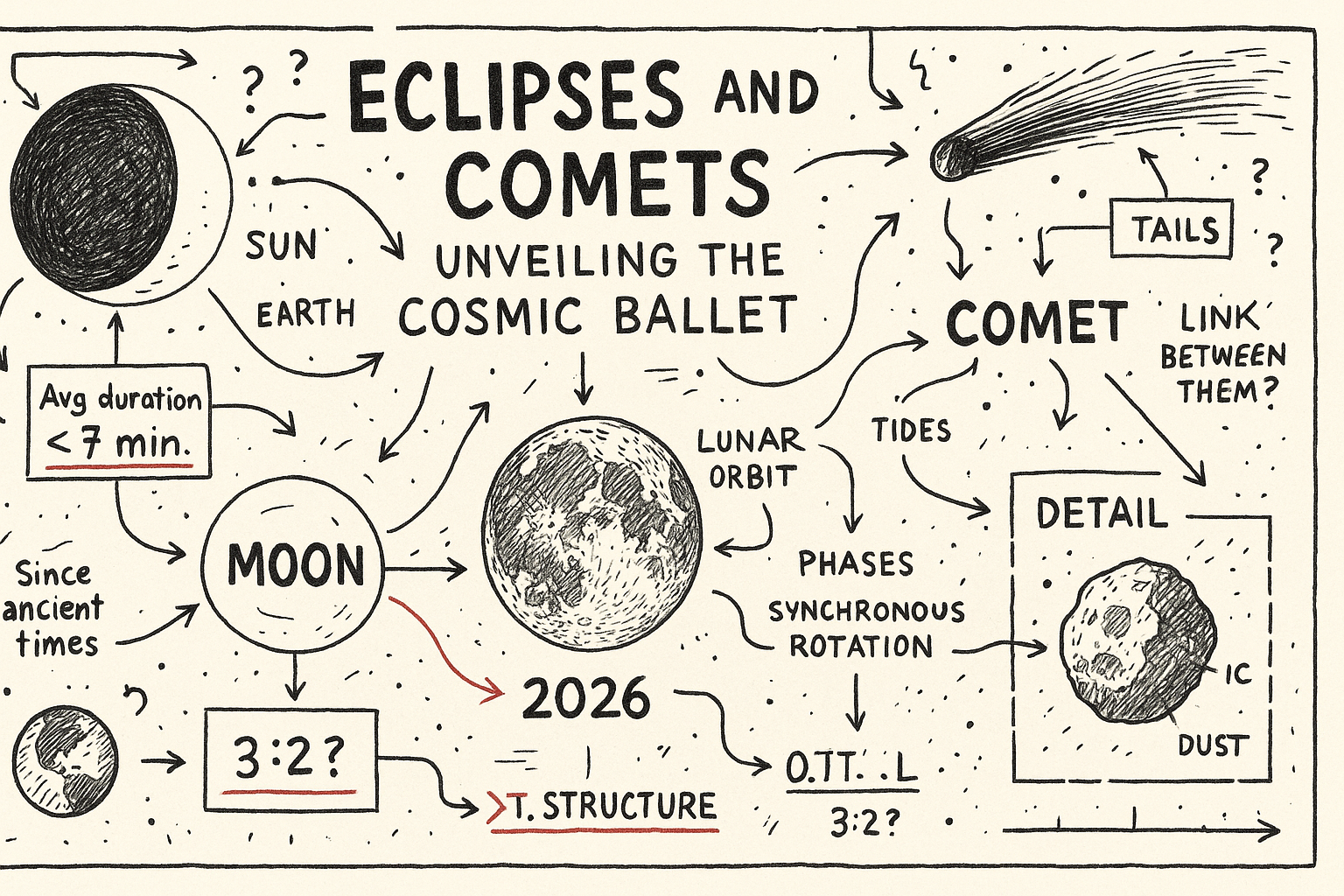
In the cosmic dance of celestial phenomena, August 2026 has emerged as a particularly vibrant chapter. This month, both solar and lunar eclipses have captivated observers worldwide, while comet 220P/McNaught has added an encore performance to the skies. These events not only provide awe-inspiring views but also offer invaluable scientific insights and historical context.
The Solar Eclipse: Chasing the Corona
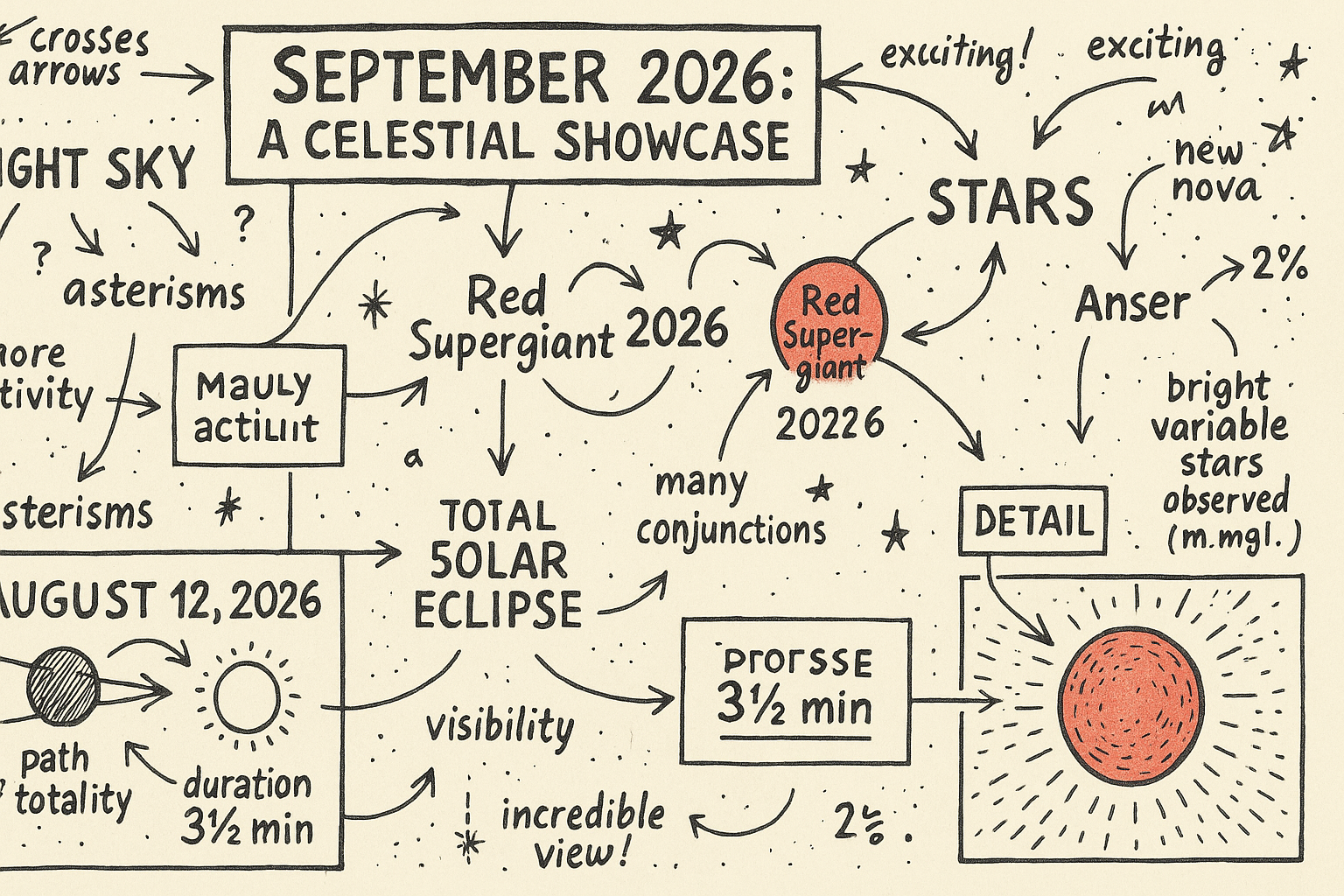
On August 12, a total solar eclipse swept across Europe, offering a rare opportunity to study one of the Sun's greatest mysteries: why its corona is significantly hotter than its surface. NASA's Johnson Space Center and a team of international scientists used aircraft to chase the moon's shadow, capturing data that could help unravel this enigma. Flying over the Atlantic Ocean, Irish and Italian researchers equipped with the E-CorMag telescope focused on the magnetic fields of the corona, seeking clues about solar dynamics and potential impacts on Earth’s space weather.
This collaboration underscores the global nature of astronomical research and the lengths to which scientists go to gather crucial data. The choice of an airborne observatory highlights a novel approach in overcoming atmospheric disturbances, offering a clearer view of the eclipse.
Lunar Eclipse: A Blood Moon Spectacle
Later in the month, the Earth cast its shadow on the Moon, creating a near-total lunar eclipse visible across the Americas, Europe, and Africa. Known as a 'Blood Moon', this phenomenon is caused by sunlight scattering through Earth's atmosphere, bathing the Moon in a reddish hue. Such events not only draw public fascination but also provide opportunities to study Earth's atmosphere and its effects on light.
Lunar eclipses have been observed for centuries, yet each occurrence adds to our understanding of atmospheric conditions and Earth's climatic shifts. The August 28 eclipse, visible to early risers in the UK and Europe, served as both a visual delight and a reminder of our planet's intricate connections with its lunar companion.
Comet 220P/McNaught: A Celestial Survivor
Amidst the eclipse excitement, comet 220P/McNaught has refused to fade into obscurity. This celestial wanderer, visible in the dawn sky, has been a persistent presence throughout August. Comets, often considered harbingers of change in ancient cultures, continue to intrigue modern astronomers with their potential to unlock secrets about the early solar system.
The resilience of comet 220P/McNaught, surviving its journey through the solar system, highlights the dynamic and often unpredictable nature of these icy bodies. Observing its trajectory and composition offers insights into the building blocks of planets and the evolution of our cosmic neighborhood.
Connecting the Dots: Eclipses and Comets in Context
The convergence of these celestial events invites reflection on humanity's enduring fascination with the skies. Historically, eclipses and comets have been seen as omens, guiding decisions and inspiring awe. Today, they serve as natural laboratories, allowing scientists to probe fundamental questions about our universe.
From the intricate mechanics of solar and lunar alignments to the survival of a comet against cosmic odds, these phenomena remind us of the universe's grandeur and complexity. They also emphasize the importance of international cooperation in expanding our scientific horizons.
Looking ahead, the data collected from these events will enhance models of solar activity, improve space weather forecasts, and deepen our understanding of cometary physics. As we continue to explore the cosmos, such phenomena remain beacons of discovery and inspiration.