Launch and transfer to L2
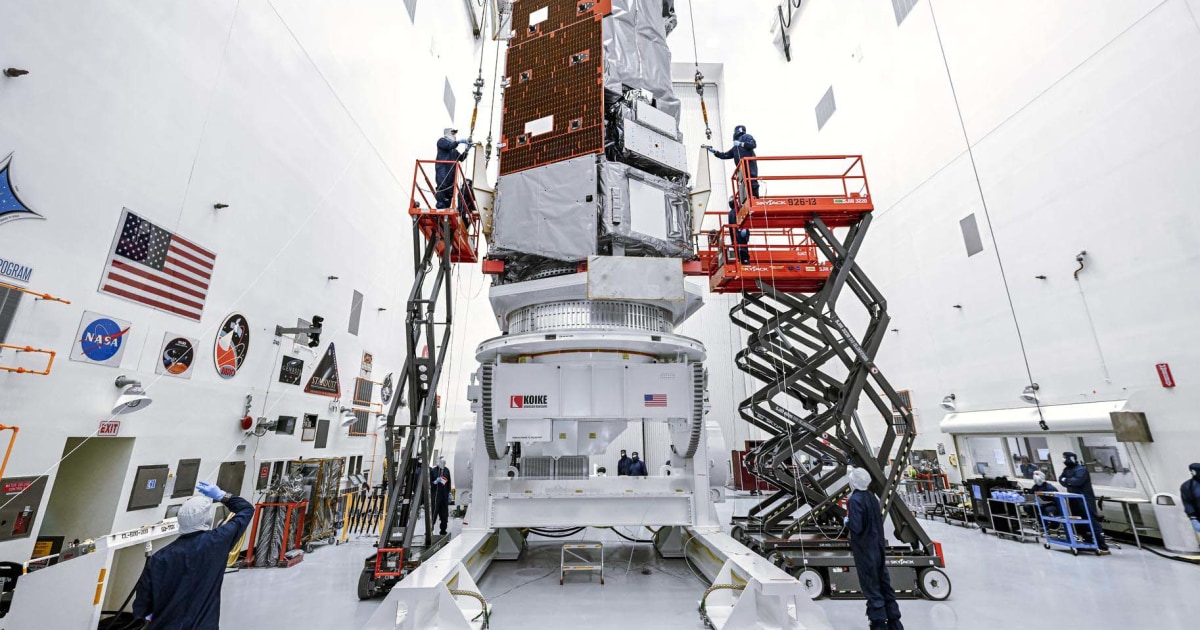
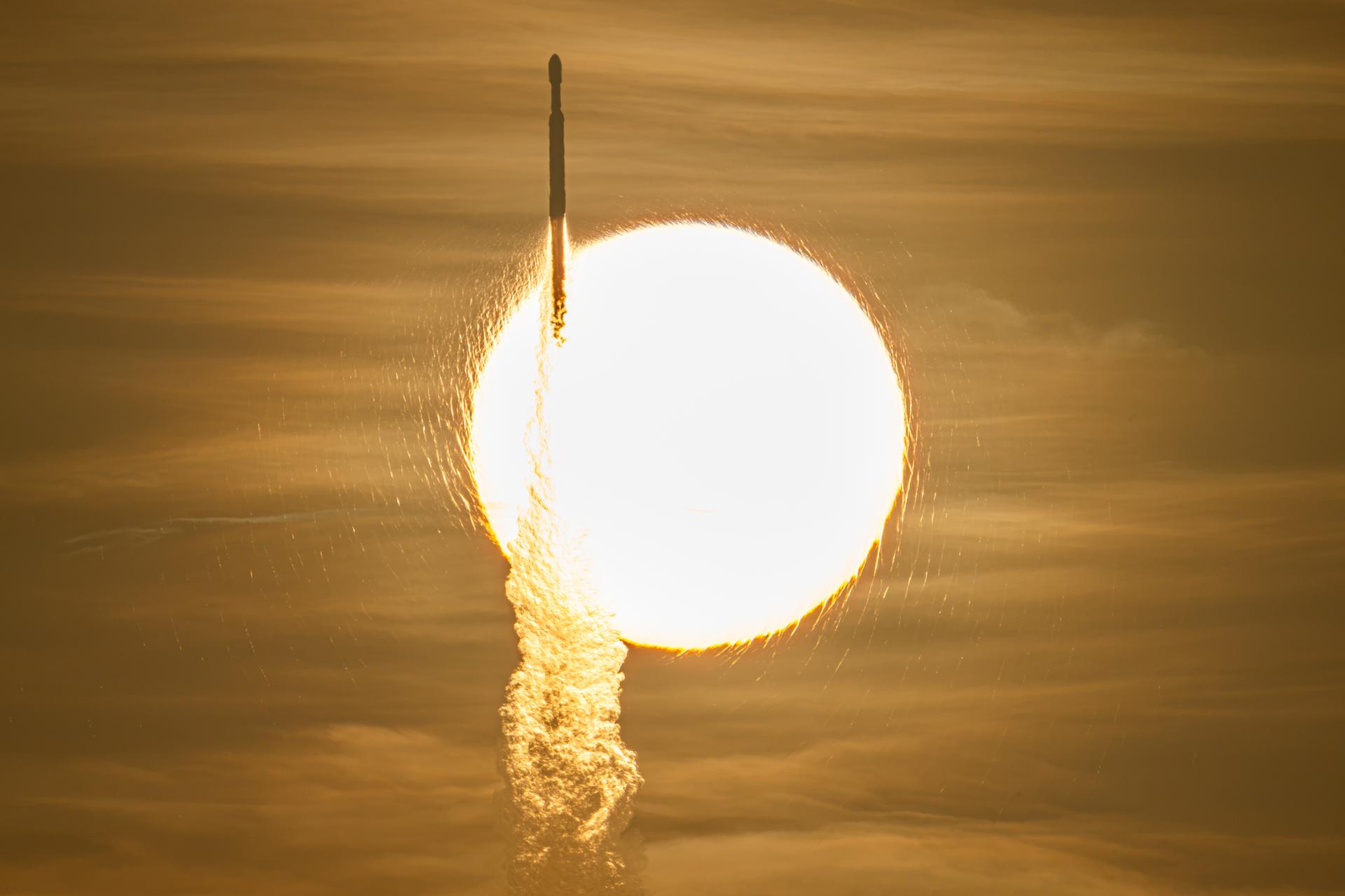
The Nancy Grace Roman Space Telescope (Roman) lifted off on 30 August 2026 at 13:26 CEST aboard a SpaceX Falcon Heavy from Launch Complex 39A at Kennedy Space Center. The two side boosters accomplished propulsive landings at two separate landing zones on the spaceport; the center core was not planned for recovery. The Falcon Heavy second stage injected Roman into a trajectory toward the Sun–Earth Lagrange point L2, located about 1.5 million kilometres from Earth in the anti-Sun direction. Spacecraft separation and acquisition of signal were confirmed shortly after launch.
Mission timeline and lifetime
The observatory is expected to take roughly three months to reach its final halo orbit around L2. The nominal science mission is planned for five years. According to the mission description, the fuel carried should be sufficient for an additional five years of operations, extending potential service to about ten years if other systems remain healthy.
Why L2?
Operating from Sun–Earth L2 offers Roman a thermally stable, low‑torque environment with an unobstructed view of deep space and minimal electromagnetic interference from Earth. That location also minimises fuel use for station-keeping, an important consideration for a mission with multi-year ambitions.
Heritage and purpose
Roman traces its conceptual lineage to the Wide Field Infrared Survey Telescope (WFIRST), later renamed after Nancy Grace Roman. Roman is often framed as a successor to the Hubble Space Telescope (HST) for wide-field infrared surveys. HST was deployed into low Earth orbit more than thirty-six years earlier by Space Shuttle Discovery and, despite its age and the last servicing mission in 2009, still produces valuable scientific data. Roman’s design addresses a complementary scientific niche — wide-field infrared surveys that HST was not optimized to perform.
Instrument overview (focus of this guide)
This article covers the instrumentation on Nancy Grace Roman as presented in the source material. The mission article focused on the observatory’s payload rather than the detailed science plan; a separate piece is planned to address the mission’s specific science programs.
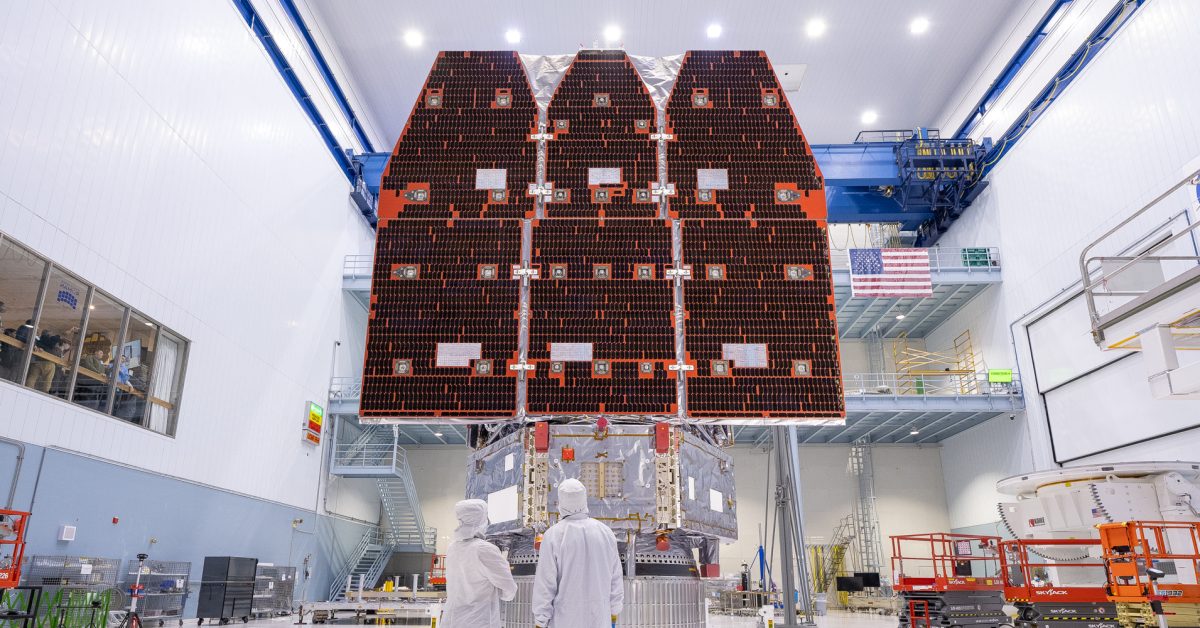
Roman carries a suite of instruments built to perform large-scale infrared surveys. The observatory’s wide field of view and infrared sensitivity are central to its role in producing survey data sets that will be used by the broader astronomical community. The source material emphasises the instrument complement as the core advance over previous facilities, enabling systematic mapping and time-domain work at scales not previously achievable from space.
Operational context and community use
Roman is designed to deliver large, publicly useful data sets for the astronomical community. Operating from L2 and with a prolonged operational lifetime, Roman is intended to function as a survey facility that complements flagship observatories and ground-based facilities. The mission planning reflects that the observatory will serve a broad range of scientific investigations through its survey products and follow-up opportunities.
Launch vehicle and operations notes
The Falcon Heavy used for Roman’s launch is a reusable heavy-lift launcher. For this mission the two side boosters returned to terrestrial landing zones; the central core was expended. NASA confirmed acquisition of signal and spacecraft separation after launch. Public social-media posts by SpaceX documented the booster landings and flight sequence.
Historical perspective and future implications
Roman’s deployment marks a continuity in space-based astrophysical capabilities that began with Hubble. Where Hubble provided high-resolution imaging across a range of wavelengths, Roman is intended to enable large-area infrared surveys that will feed many targeted investigations. If Roman attains an operational lifetime approaching the full ten years of available fuel, it will produce a sustained, legacy-quality data set. Those data will be valuable for cosmology, galaxy evolution studies, and time-domain astronomy, among other fields. The mission’s success will also inform design choices for future space observatories prioritising wide-field survey power in combination with deep, targeted facilities.
What to watch next
In the coming months mission teams will publish details about Roman’s instrument performance during commissioning and the schedule of planned surveys. A separate article is indicated by the source to address the science mission in depth; readers interested in the telescopes’ scientific programmes should look for those follow-ups as commissioning proceeds toward the start of nominal operations.