CNSA advances Tianwen-3 development ahead of 2028 Mars launch window
The China National Space Administration (CNSA) reported continued progress on the Tianwen-3 Mars sample-return mission during the International Deep Space Exploration Conference 2026, with a planned launch in the 2028 Mars launch window and surface operations expected in 2030.
According to the CNSA presentation summarised by AstroSpace.it on 8 September 2026, Tianwen-3 will be a multi-element mission involving two separate launches on Long March 5 rockets. The mission architecture divides systems between a lander with a small ascent vehicle and an orbiter carrying a return capsule. The campaign intends to collect at least 500 grams of Martian material, with the lander and ascent stage operating on the surface in 2030 and a return of samples to Earth in 2031.
Tianwen-3 is described as a particularly complex mission. The two-launch approach reflects the need to deliver both surface and return infrastructure to Martian orbit and surface independently. One Long March 5 will carry the orbiter and the Earth-return capsule, while the second Long March 5 will deliver the lander and the small vehicle meant to lift samples from the Martian surface to link up with the orbiter.
The mission will employ multiple sampling systems. Among those detailed in the CNSA material is a drill capable of reaching approximately two metres in depth. Accessing subsurface material at that depth aims to obtain samples better shielded from surface radiation, which could preserve different geochemical or organic signatures than surface regolith.
AstroSpace.it notes that the design calls for the lander to collect material in the vicinity of the descent site using an array of tools, including the deep drill. After sample acquisition, those samples would be placed into a container for ascent. A small ascent vehicle will then lift the container to Mars orbit, where rendezvous with the orbiter and transfer into the return capsule are planned. The timeline provided in the CNSA briefing places the return of the sample capsule to Earth in 2031.
The stated sample mass goal — at least 500 grams — sets an explicit threshold for scientific return. This target is comparable to other international efforts to secure meaningful quantities of Martian rock and soil for laboratory study on Earth. Achieving it will require success across a sequence of technically demanding phases: precision landing, reliable subsurface drilling, sample handling and transfer, ascent from Mars, orbital rendezvous, and an interplanetary return trajectory that preserves the integrity of the samples.
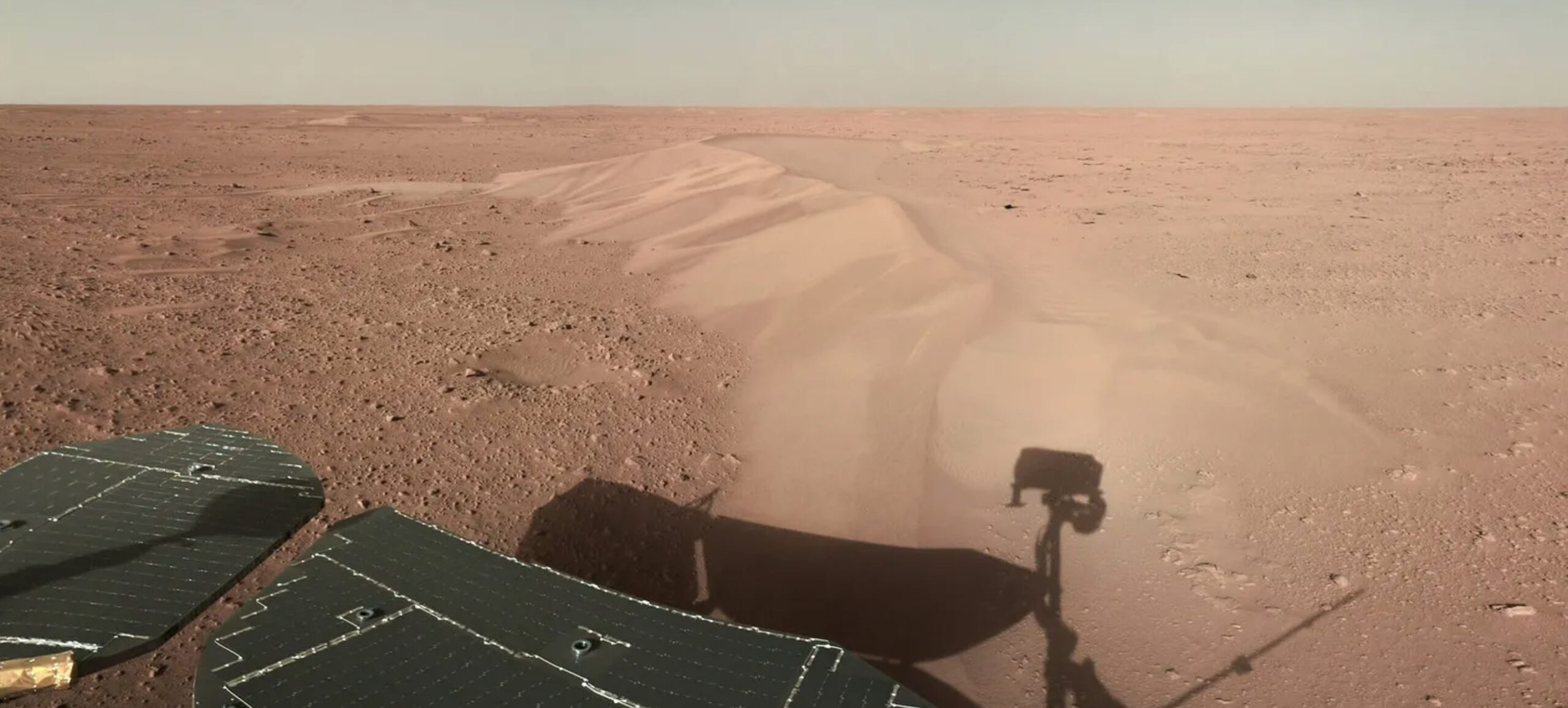
The Tianwen-3 plan follows China’s earlier Mars effort, Tianwen-1, which demonstrated Chinese capabilities for orbiting, landing and roving on Mars. The AstroSpace.it article includes an image reference to Tianwen-1’s successful rover operations in 2021. Tianwen-3’s two-launch, multi-element profile signals an incremental increase in complexity as CNSA moves from single-launch missions to coordinated multi-launch campaigns required for sample return.
International context is relevant: multiple agencies and partnerships have long-term plans oriented toward Mars sample return. For example, past and ongoing programmes from other space agencies have also emphasized deep drilling, ascent vehicles and orbital sample transfer as central challenges. AstroSpace.it’s report situates Tianwen-3 within this broader era of renewed Mars exploration, noting contemporary activity across several actors in the 2020s.
Uncertainties remain intrinsic to any mission of this scope. The AstroSpace.it coverage reports CNSA’s schedule and technical plans as presented at the conference; timelines such as the 2028 launch, 2030 surface operations and 2031 return reflect current planning and will be subject to verification as development and testing proceed. Complex engineering tasks — including demonstration of reliable deep drilling on Mars and a successful Mars ascent — are hypothesis until demonstrated in flight.
If delivered as planned, Tianwen-3 would add returned Martian material to the small but growing set of extraterrestrial samples studied on Earth, enabling detailed laboratory analyses not possible with in situ instruments. The CNSA’s public outline of the mission at the International Deep Space Exploration Conference 2026 provides a concrete schedule and technical roadmap for observers tracking global Mars exploration efforts over the coming decade.
Sources: AstroSpace.it, "Prosegue lo sviluppo della missione cinese Tianwen-3, in vista del lancio verso Marte nel 2028," 8 September 2026 (reporting CNSA presentation at the International Deep Space Exploration Conference 2026).