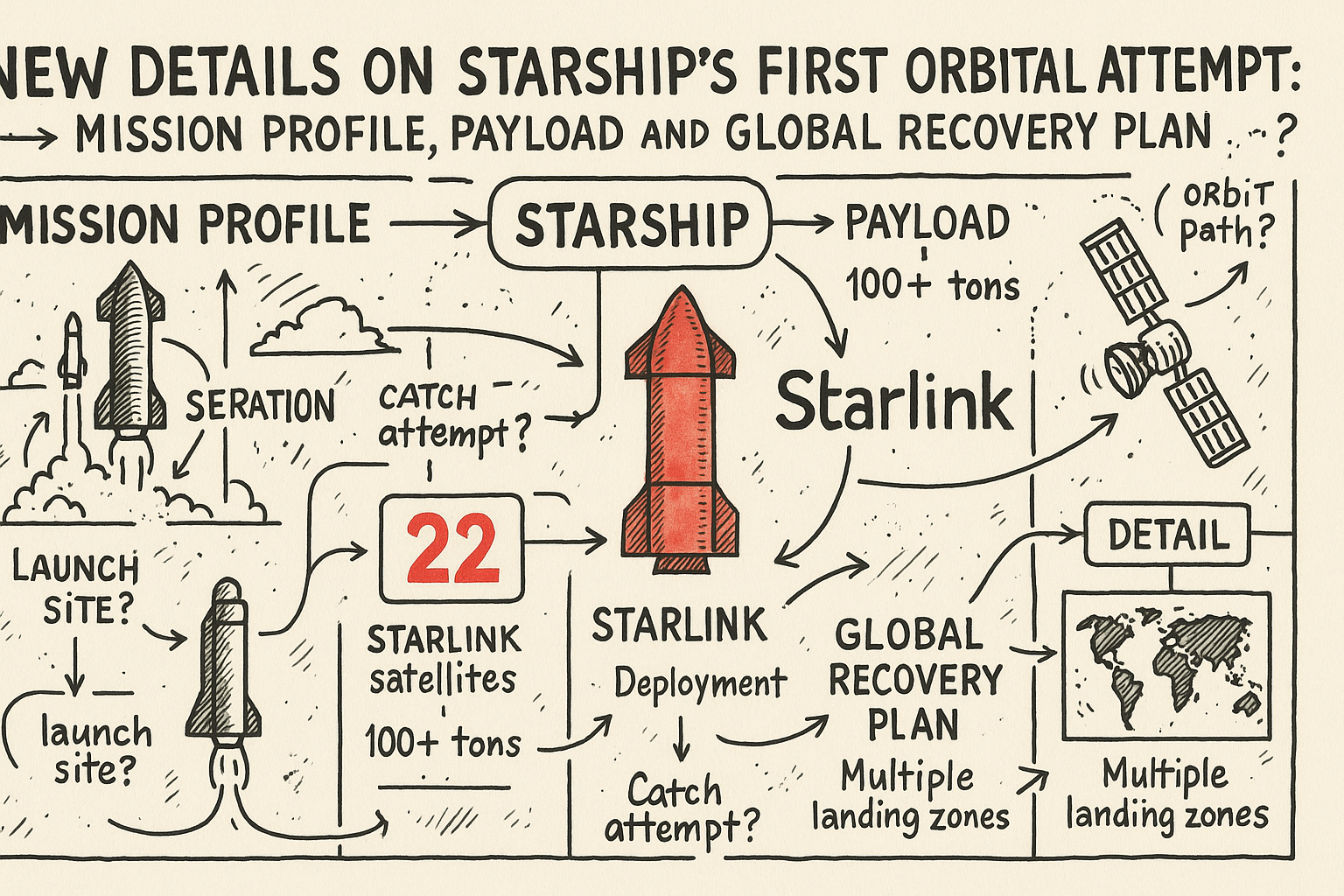
SpaceX’s upcoming Integrated Flight Test‑14 (IFT‑14), scheduled for Sept. 22 with a 75‑minute window opening at 8:15 a.m. EDT, is shaping up as more than another developmental milestone: it will be the company’s first attempt to reach orbit with the Starship system and will carry a commercial, revenue‑generating payload of 26 Starlink V3 satellites.
Ice‑clog diagnosis and fixes
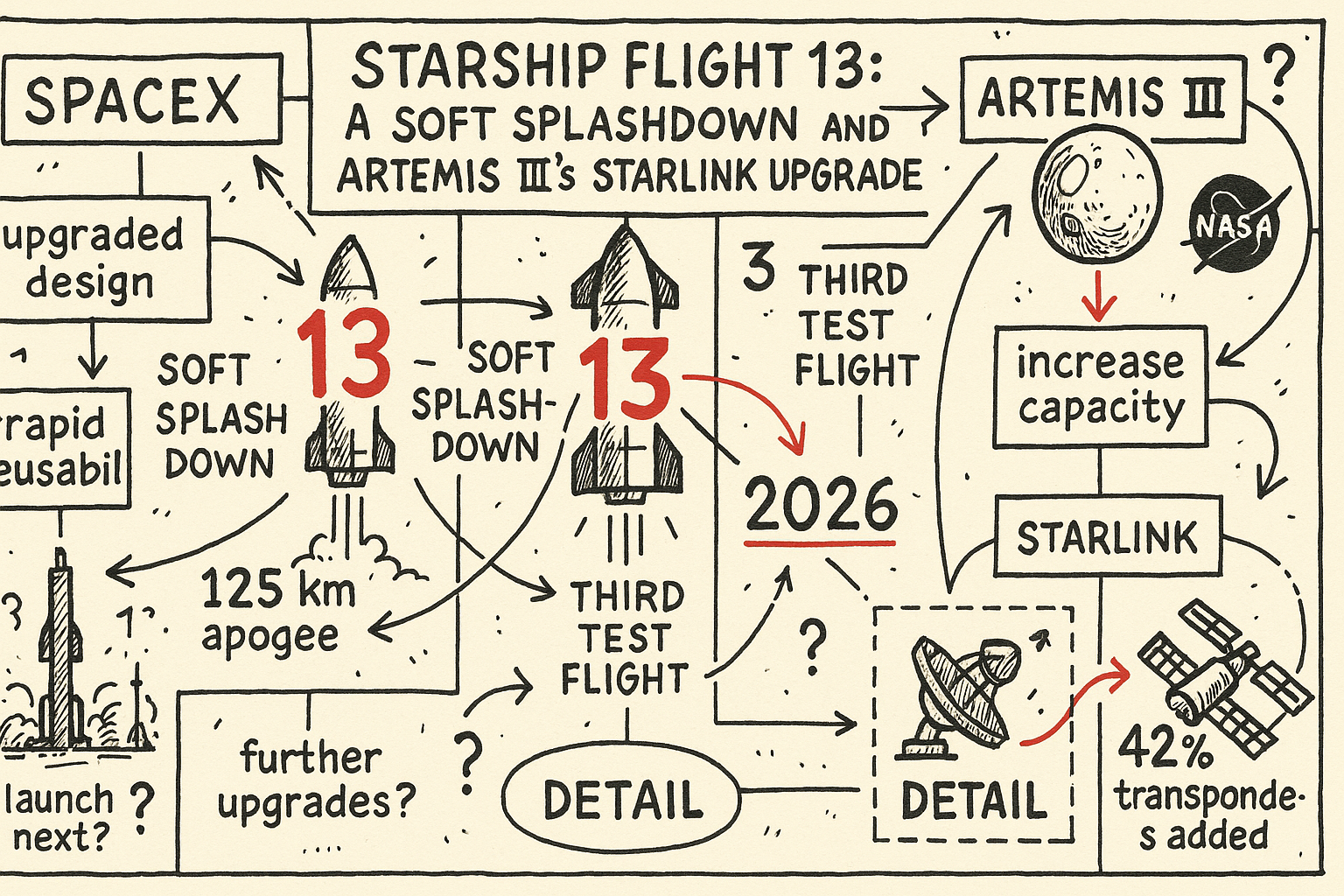
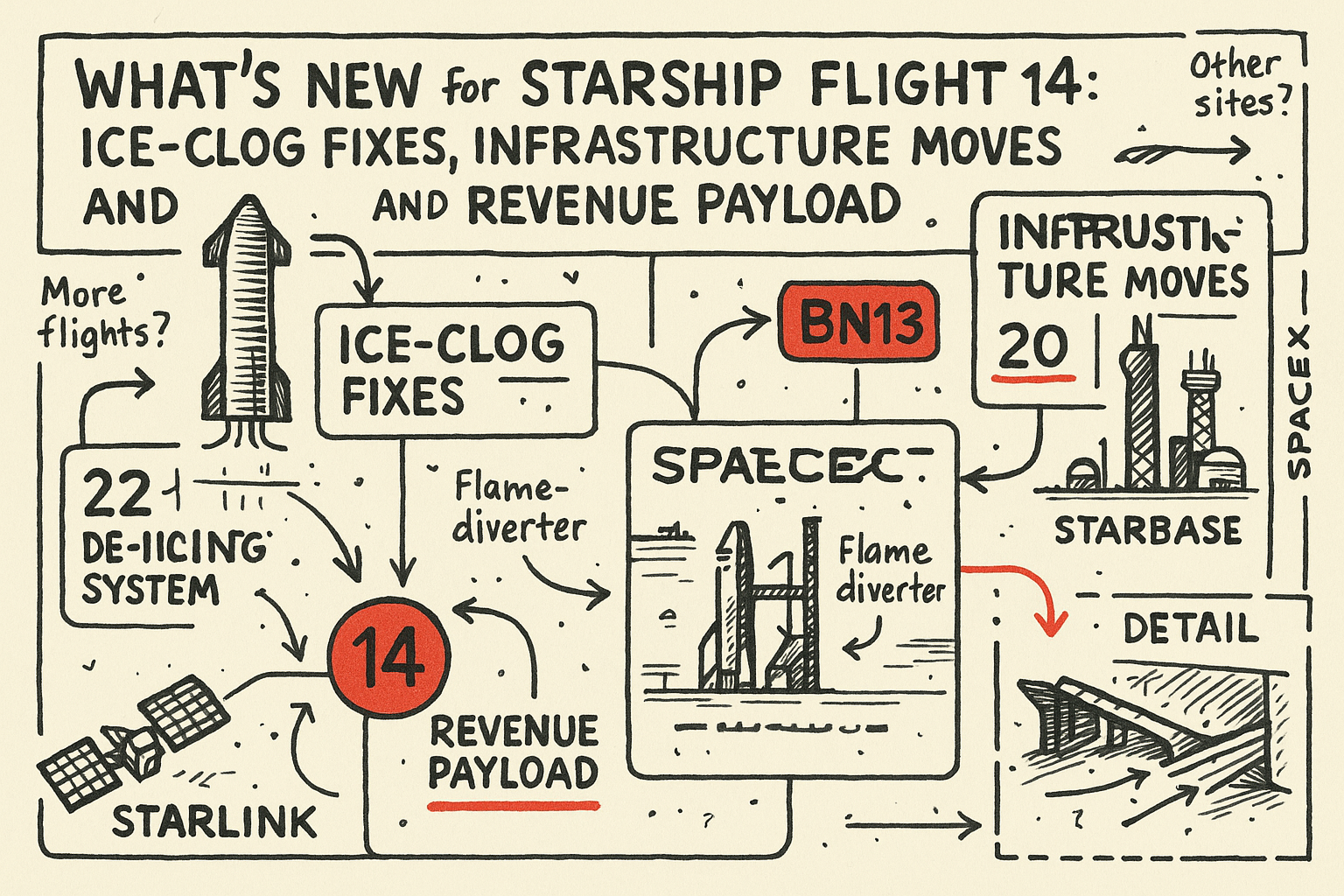
New reporting confirms that SpaceX disclosed an ice‑clogging failure mode that destroyed Booster 20 during Flight 13. The company has repaired that ice‑clog flaw ahead of Flight 14, according to published accounts. The explicit acknowledgment and subsequent remediation mark a notable technical step between the two flights as SpaceX moves to demonstrate a reliable path to orbital flight.
Mission profile and objectives
SpaceX expects IFT‑14 to orbit Earth multiple times and to deploy 26 Starlink V3 satellites before the upper stage splashes down west of Chile. Public reporting states the flight is expected to last about 10 hours and that the deployment of the V3 Starlink batch has been characterized by SpaceX Chief Financial Officer Bret Johnsen as a revenue‑generating flight.
Starbase build‑out continues
While Flight 14 hardware moves toward Pad 1, work at Starbase remains active. New flyover and reporting show continued construction across multiple facilities, including structural test articles, ongoing work at Massey’s and Gigabay, and progress around Pad 1. Ship 42 recently rolled out to Massey’s and completed cryo‑proof testing by Sept. 3, after which it returned to Mega Bay 2 for remaining work and engine installation.
Observers noted that a static fire within about six weeks of cryo‑proofing would match the timelines of recent ships, indicating the cadence SpaceX has established at Starbase as it finishes integration for upcoming vehicles.
Context from Starship’s development history
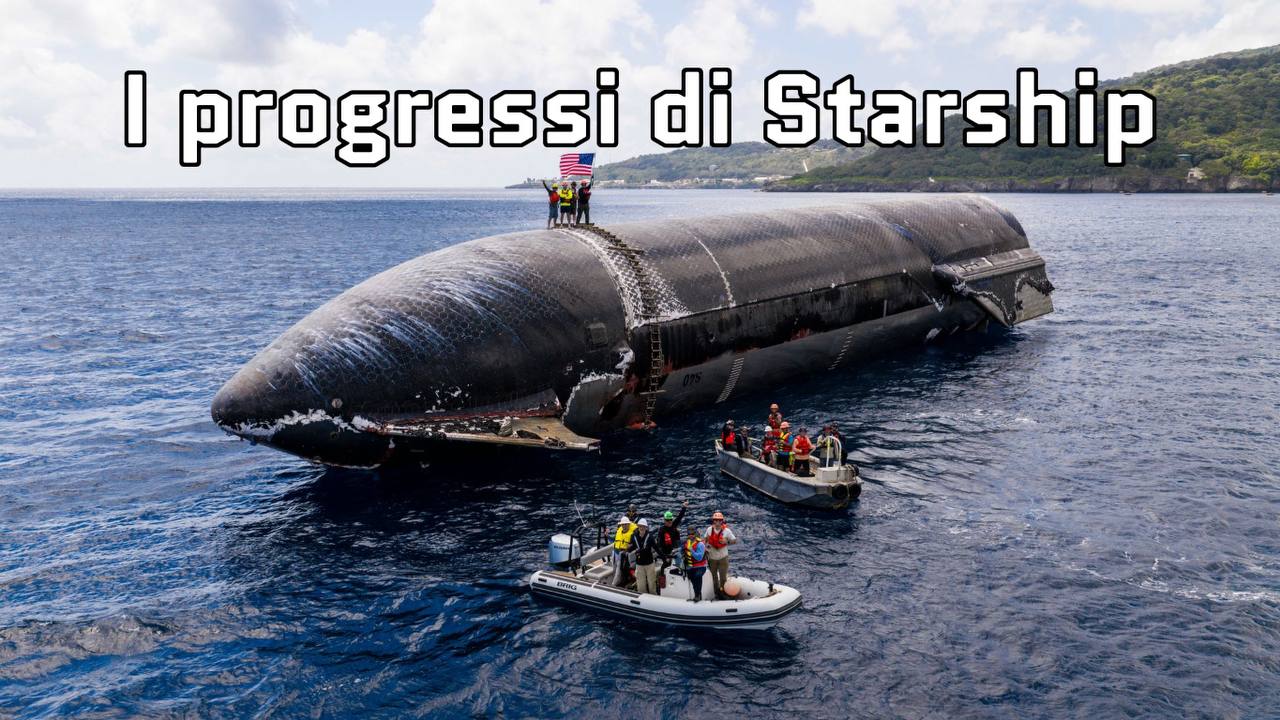
Reporting reiterates the iterative nature of the Starship program since the first launch on April 17, 2023, which ended in a rapid unscheduled disassembly. The program has seen both explosive failures and high‑profile successes such as booster ‘‘catches’’ at the launch tower. Public coverage frames SpaceX’s approach as a ‘‘fail fast, learn faster’’ progression as the company pursues the first orbital flight of the complete launch system—Super Heavy first stage and Starship upper stage.
If regulators and range authorities grant the necessary approvals and the prelaunch processing holds to plan, IFT‑14 will be the first time SpaceX attempts to put Starship into orbit and to inject a set of V3 Starlink satellites from the vehicle. The September flight will therefore be watched closely for the technical fixes implemented after Flight 13, the integration work finishing at Starbase, and the overall ability of the system to complete an orbital insertion and satellite deployment sequence.