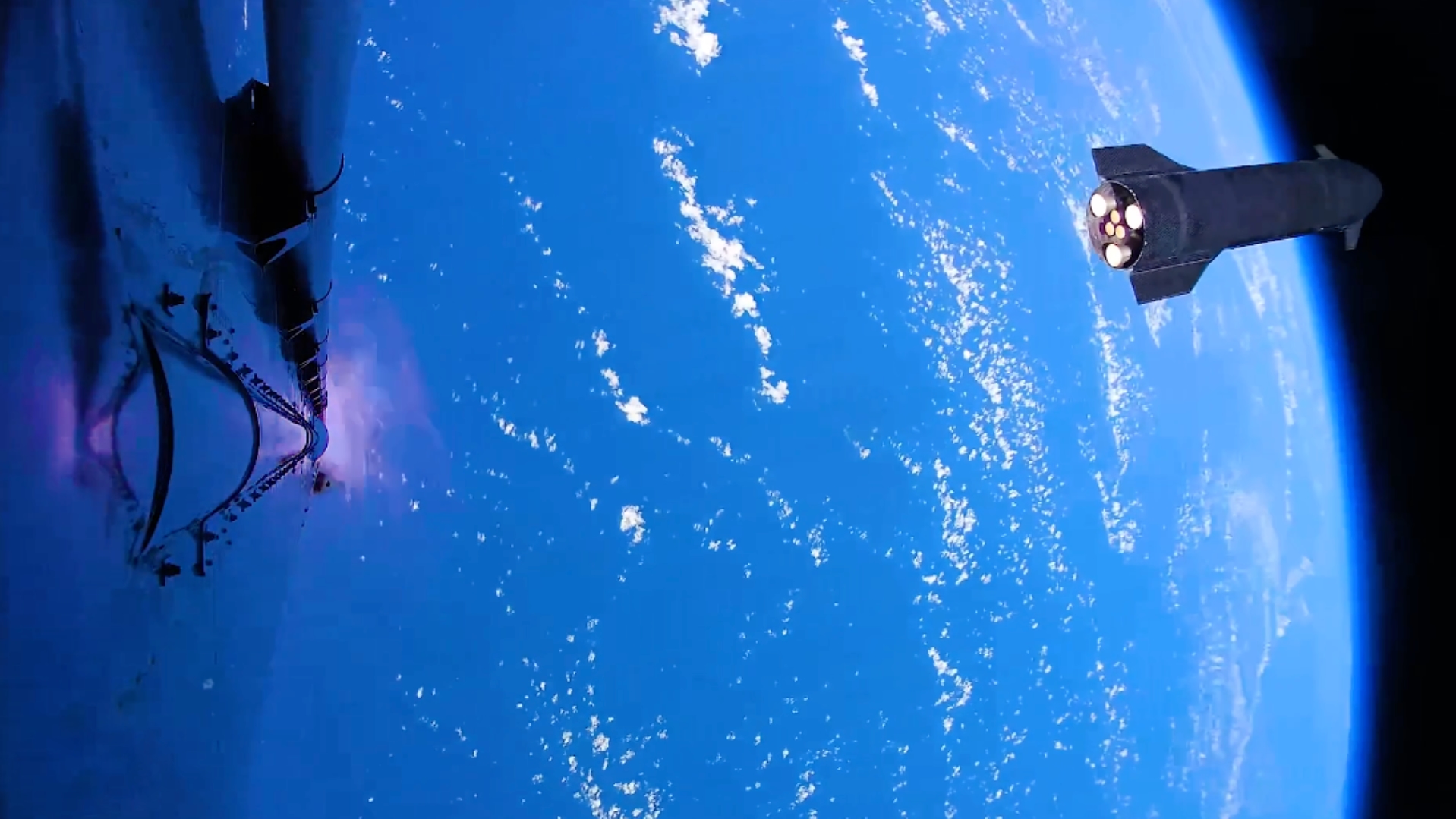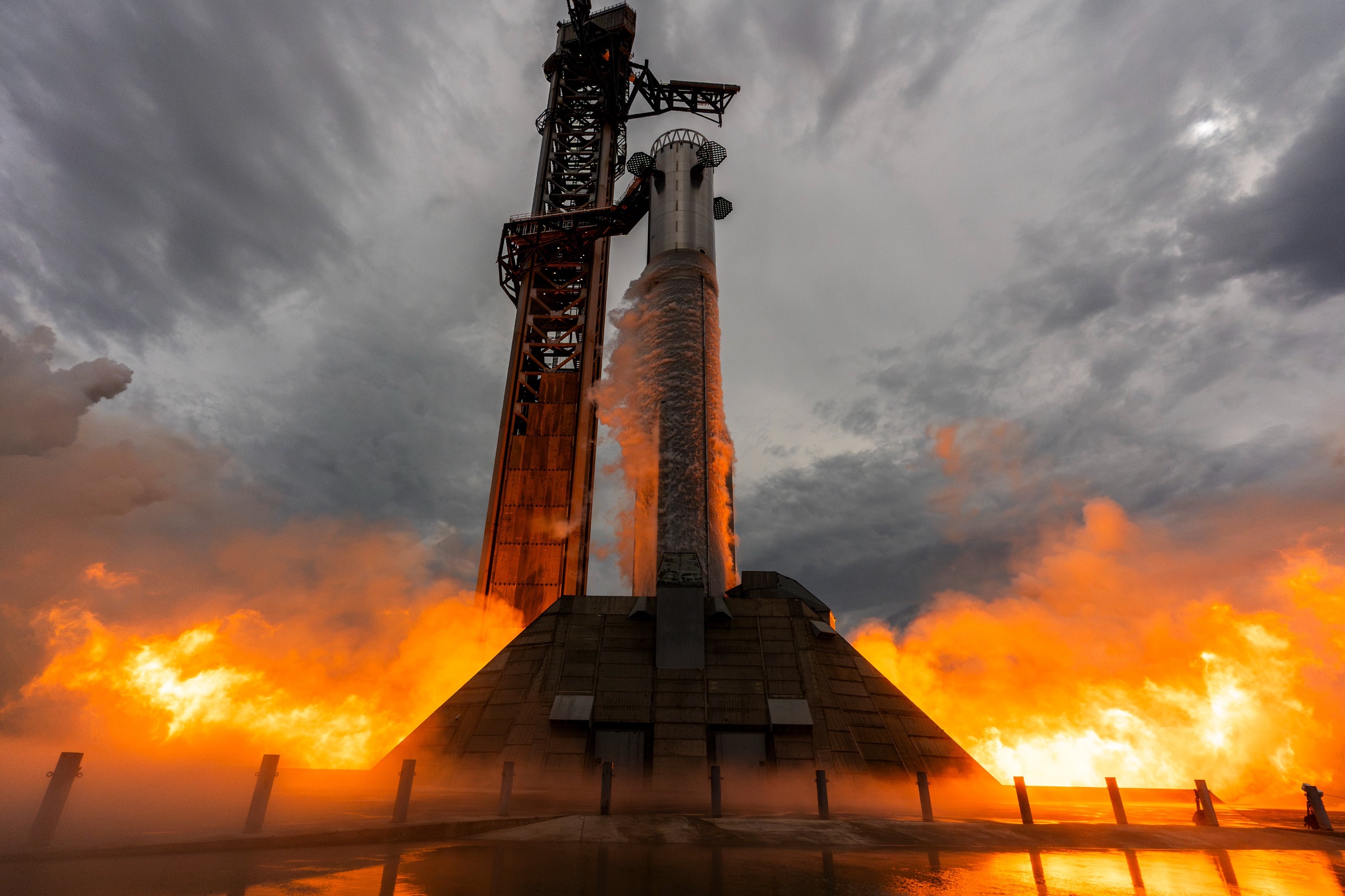
SpaceX announced plans for what it calls Integrated Flight Test-14 (IFT-14) to be the first attempt to place the Starship upper stage into Earth orbit. The company set a launch target for Sept. 22 with a 75‑minute liftoff window that opens at 8:15 a.m. EDT (7:15 a.m. local time in Texas, 1215 GMT), and said the flight will last about 10 hours if it follows the planned profile.
Mission profile and duration
According to reporting on the announcement, the mission will attempt to orbit the Starship second stage and complete six orbits of Earth during the flight. The full flight is expected to take roughly 10 hours from liftoff through mission conclusion, spanning launch, orbital operations and planned re‑entries or splashdowns.
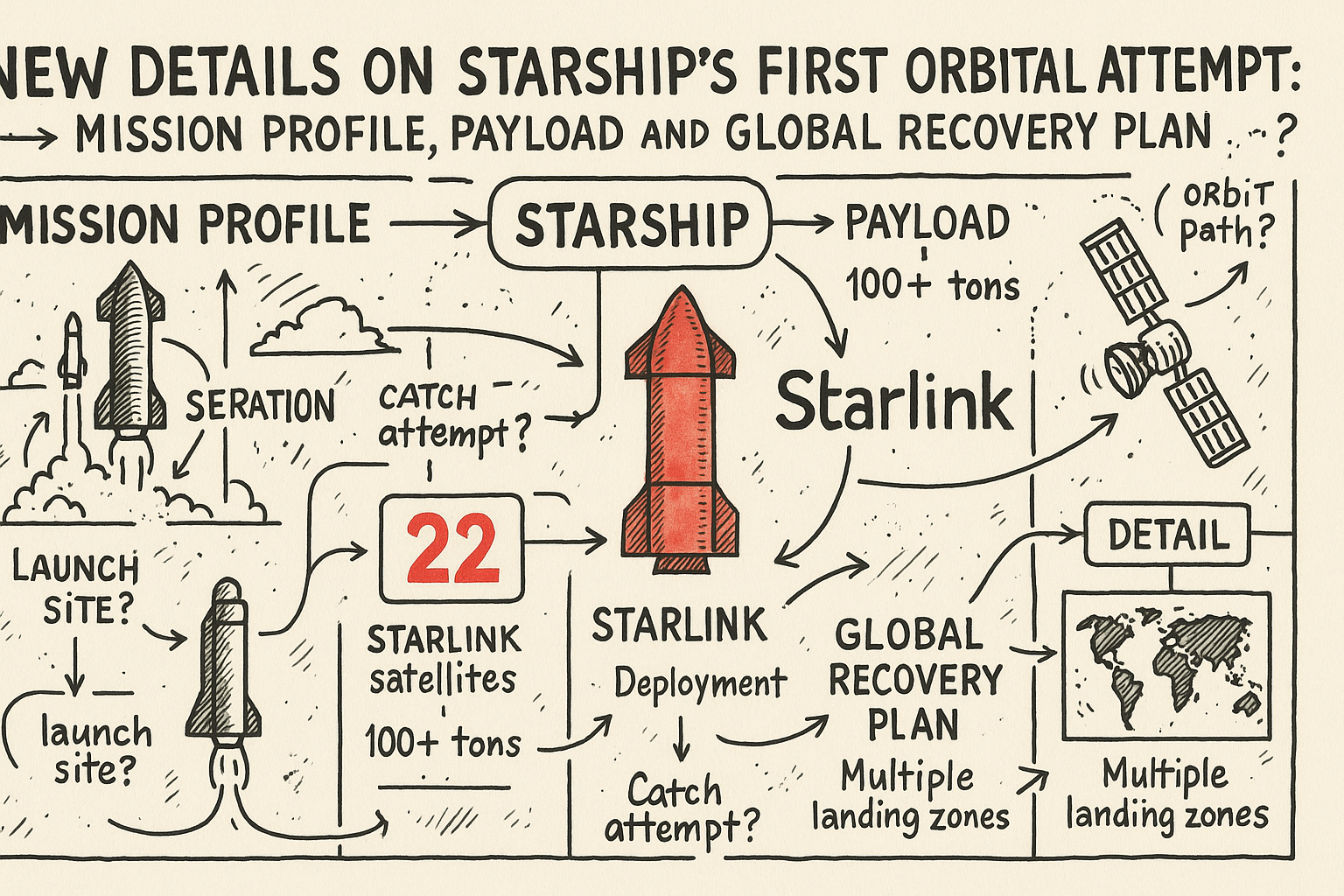
Payload: first V3 Starlink deployment
SpaceX confirmed the flight will carry 26 Starlink satellites. Multiple sources specify these are the first V3 Starlink satellites intended for deployment into the company’s broadband constellation. The deployment of these operational payloads makes IFT‑14 notable not just as a demonstration of Starship’s orbital capability but also as an on‑ramp for the next generation of Starlink hardware.
Recovery and end-of-mission plans
Public reporting indicates the mission plan includes splashdowns in the southern Pacific. If the flight goes as planned, Starship will drop off the 26 satellites over the course of its orbits and then conduct re‑entries that lead to splashdowns in the ocean west of Chile. The recovery profile for the first stage (Super Heavy) and the second stage (Starship) has been a central focus of prior tests and is again a key element of this integrated test.
Context: how this flight fits into Starship testing
IFT‑14 represents the next major step after numerous prior flights and tests since the program’s first launch attempt on April 17, 2023. Reporting around the program notes a sequence of high‑visibility successes and failures during the Starship test campaign, including dramatic booster returns to the launch tower and earlier upper‑stage explosions. SpaceX’s public framing for the program has emphasized iterative testing and rapid learning as it works toward routine orbital operations and longer‑term objectives such as lunar and Mars missions.
Regulatory and scheduling notes
Multiple outlets emphasize that the orbital attempt is contingent on regulatory approval. SpaceX has set Sept. 22 as the target date, pending such approvals and any last‑minute operational constraints. With the stated 75‑minute window beginning at 8:15 a.m. EDT and a mission duration of about 10 hours, the company plans a tightly choreographed sequence to reach orbit, deploy the Starlink payloads, and complete the recovery phase.
IFT‑14 will be closely watched as the first time a Starship upper stage tries to complete orbital operations and return safely after deploying operational payloads. Success would mark a key milestone for SpaceX’s long‑term ambitions and for the Starlink program’s next hardware generation.