Planetary Society roundup: Elias 2-24 b the youngest candidate planet, Mars Express captures polar cliffs, and mission updates
The Planetary Society published its "Newborns and old-timers" column on 2026-09-18, assembling several recent items of planetary and mission interest. Central among those is the announcement that astronomers have detected what may be the youngest known exoplanet, Elias 2-24 b — a world estimated to be roughly one million years old and about the mass of Jupiter. The column also highlighted a striking new image from ESA’s Mars Express of the Thyles Rupes region near Mars’ south pole and summarized several programmatic developments at NASA and ESA.
According to The Planetary Society, Elias 2-24 b was identified within a gap in the circumstellar disk around its host star. If confirmed, the planet would set a new record for youth among known exoplanets. The Planetary Society's item references astronomers' finding that such a world would be approximately one million years old and roughly as massive as Jupiter, and it uses an analogy to say the planet is to a star what a three-day-old infant would be to a middle-aged adult star — a way to emphasize how recently this world formed rather than a physical comparison.
Independent reporting cited by The Planetary Society and by NASA Science (in related coverage) places Elias 2-24 b inside its natal disk of gas and dust, still embedded in the environment where planets form. The detection raises questions for planet-formation models: existing theories had already struggled to explain prior record-holders for the youngest known planets, and a confirmed planet at this age will provide a new data point to test those models. The Planetary Society notes that the discovery stems from astronomical observations capable of resolving gaps and structures in protoplanetary disks.
On Mars, The Planetary Society highlighted a recent image from ESA’s Mars Express orbiter showing the Thyles Rupes region near the planet’s south pole. The image — credited to ESA/DLR/FU Berlin — reveals dramatic cliff faces, a blue-white glacier in the lower left, a large crater with central ice, frost-covered dunes and dark volcanic material at the far right. Planetary Society commentary explained that seasonal changes on Mars can cause some polar ice to sublimate and erupt from the surface in a geyser-like fashion; a hopper mission to investigate those geysers had been proposed to NASA in the past but did not proceed to flight.
The Planetary Society column also summarized several mission-level developments. It reported that NASA may not deliver a key instrument originally planned for ESA’s EnVision mission to Venus, a partnership announced about five years earlier. Anne Grete Straume, identified in the Planetary Society item as EnVision’s project scientist, said that NASA is unlikely to provide that instrument. EnVision remains a candidate Venus orbiter with a potential launch as soon as 2031, but the possible loss of a NASA contribution would change the mission’s international partnership and instrument complement.
Another significant update concerns the Nancy Grace Roman Telescope, NASA’s latest flagship observatory. Launched on Aug. 30, the telescope may arrive at its final orbit with enough fuel to operate for 22 years in total, far exceeding earlier plans for a five-year primary mission plus a possible five-year extension. The Planetary Society attributes this longevity to the spacecraft being lighter than originally planned and to a highly precise launch and engine burn that reduced fuel consumption.
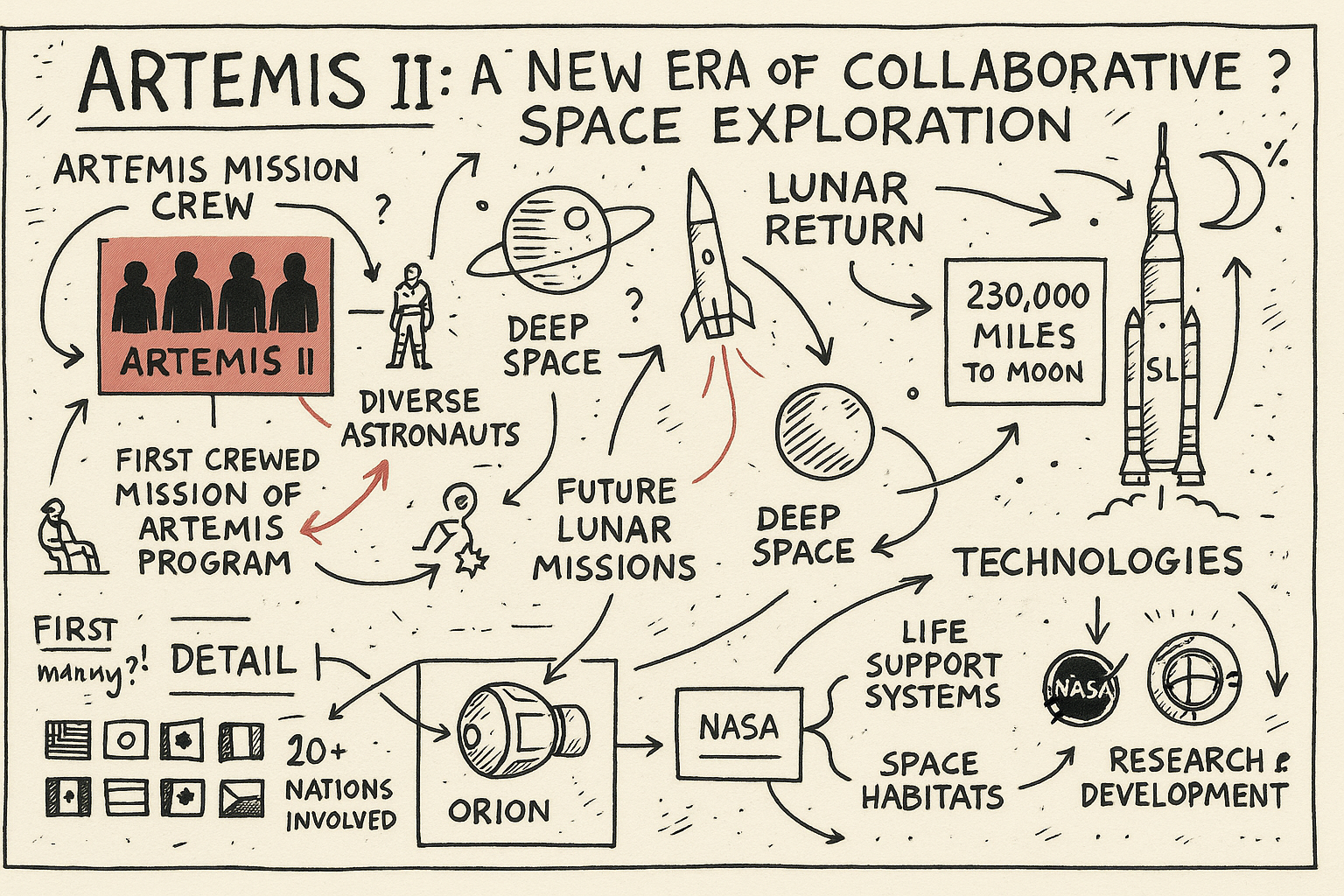
The column also covers personnel and operational changes: most of the Artemis II crew have retired from active astronaut status, including commander Reid Wiseman and pilot Victor Glover, who announced their retirements but will continue in emeritus roles mentoring NASA staff. Mission specialist Jeremy Hansen also retired from the Canadian Space Agency in July, leaving Christina Koch as the only active astronaut remaining on the Artemis II roster as reported by The Planetary Society.
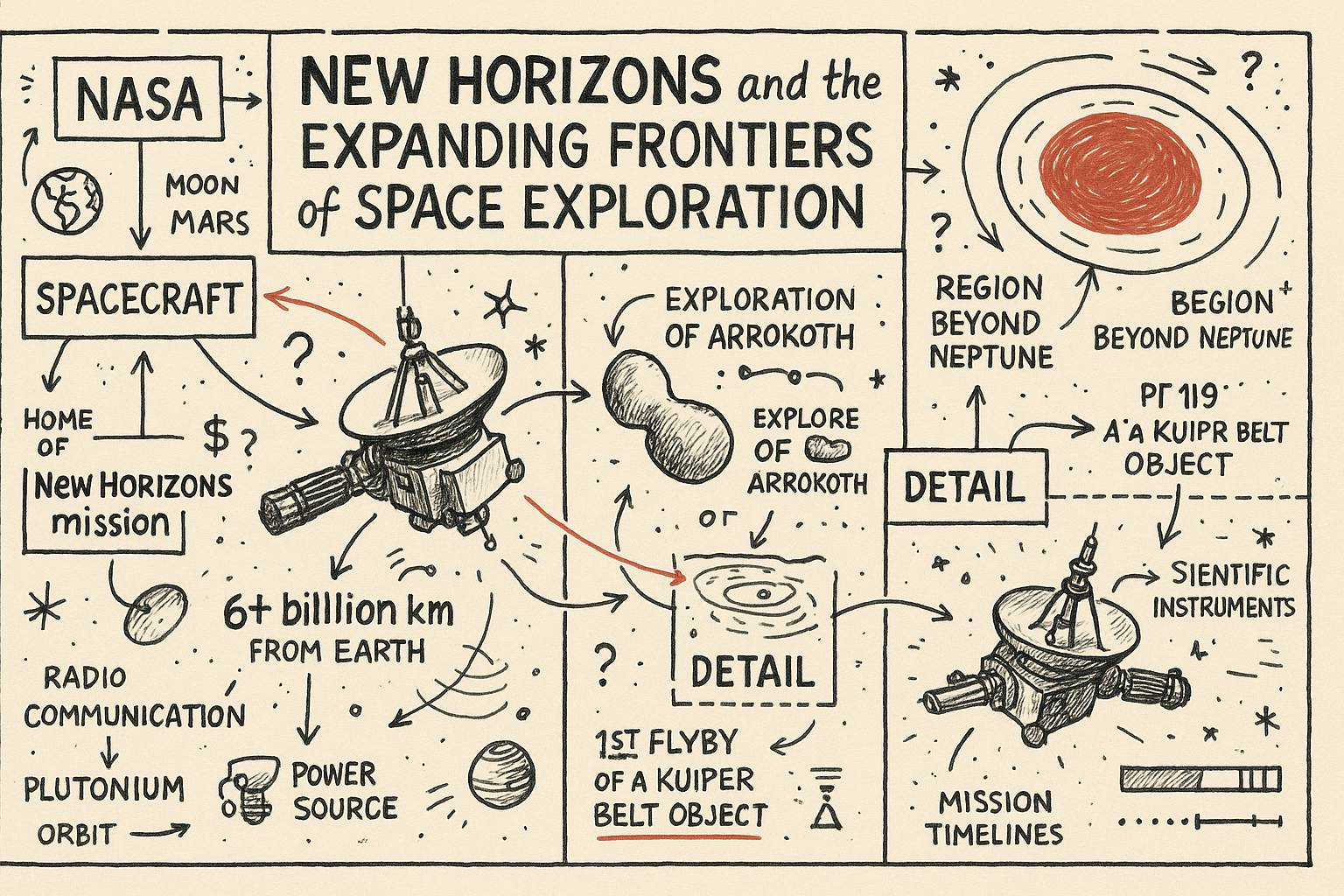
Finally, The Planetary Society urged continued support for the New Horizons mission, noting that budget pressures may force NASA to shut down two instruments aboard the spacecraft as it continues its Kuiper Belt exploration. Planetary scientist Kirby Runyon explained the scientific costs of partially disabling the mission and encouraged readers to sign a petition to keep New Horizons fully operational.
Taken together, the items in The Planetary Society’s roundup illustrate a mix of discovery, high-resolution planetary imaging and programmatic uncertainty. The candidate discovery of Elias 2-24 b — if confirmed by the broader community — promises an unusually clear window into the earliest stages of planet formation, while the Mars Express image and Roman Telescope fuel margins show the continuing scientific returns from planetary spacecraft. At the same time, changing international contributions to missions such as EnVision and budget-driven compromises for missions like New Horizons underscore the fragility of long-duration space science efforts and the dependence of those efforts on sustained funding and international cooperation.
Sources: The Planetary Society, "Newborns and old-timers," 2026-09-18; NASA Science (related reporting on Elias 2-24 b as cited in The Planetary Society column).