Hubble Network raises $200M Series C at $1.6B valuation
Hubble Network announced on Sept. 23, 2026 that it has closed a $200 million Series C financing round led by Smith Point Capital, valuing the Seattle-based startup at $1.6 billion. The round included participation from Seraphim, Carthona Capital, Earthshot Ventures, RPM Ventures and Y Combinator and brings Hubble's total funding to $300 million following a $70 million Series B in September 2025.
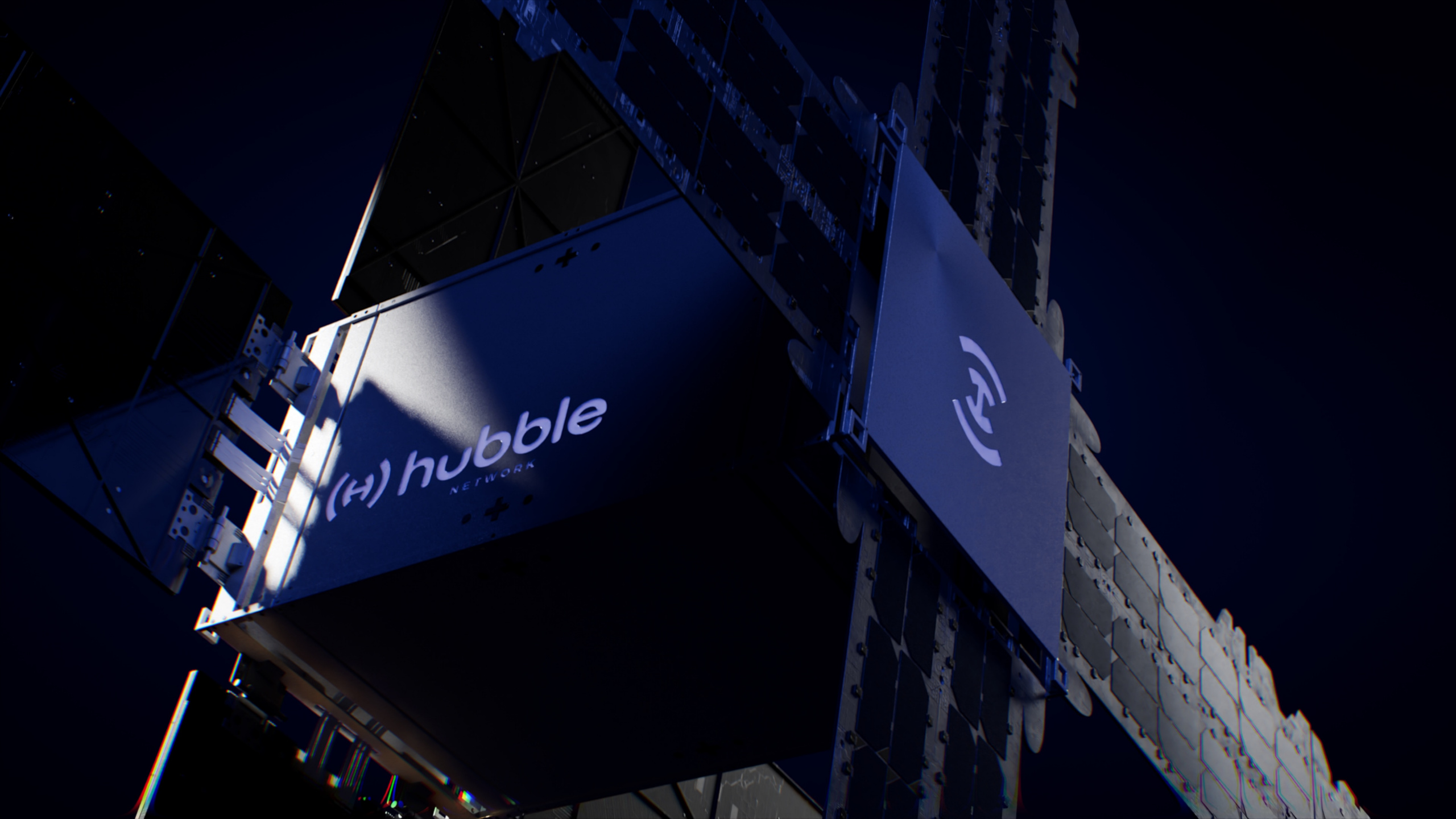
Hubble is building a hybrid terrestrial-and-space network that connects standard Bluetooth Low Energy (BLE) devices directly to low-Earth orbit satellites. The company currently operates six demonstration satellites in orbit and pairs those spacecraft with a large ground network of Bluetooth-scanning gateways to offer low-power, low-cost asset tracking and sensing for pilot customers.
"When we said we'd connect Bluetooth chips to satellites, most of the industry said the physics wouldn't allow it," Alex Haro, CEO and co-founder, said in the company's announcement. Hubble was founded in 2021 by Haro and CTO Ben Wild, the latter credited in reporting as the inventor of Amazon Sidewalk. The startup employs about 70 people, according to reporting from GeekWire.
What the funding will pay for
According to the three outlets, the new capital will finance a rapid scale-up of Hubble's space and ground infrastructure. Hubble plans to expand from its six current demonstration spacecraft to a full 60-satellite constellation by 2030. Payload reporting varies slightly in detail but is consistent on the roadmap: Payload and SatNews report that the company will build larger, custom-engineered satellites with significantly greater antenna area and processing capacity than the early demonstration cubesats.
SatNews states the next-generation satellites will incorporate phased-array antennas with roughly ten times the antenna surface area of the Spire-built demonstration cubesats and will be capable of tracking and processing transmissions from more than 10 million devices per satellite. Payload reports that the first two upgraded satellites are expected to launch in 2027 and that the augmented constellation will increase revisit rate from roughly twice per day toward near-constant connection.
Both SatNews and Payload emphasize that the upgraded platform will not only improve location tracking but will allow transmission of additional small telemetry—temperature, humidity, CO2, moisture and binary alerts such as smoke detections—helping customers monitor the condition of assets in addition to their positions. Payload quoted Haro saying such environmental sensing opens use cases in agriculture, supply chains and industrial IoT.
How the system works and economics
All three sources describe Hubble's technical approach as a firmware and software solution that enables off-the-shelf BLE chips to broadcast small packets that can be received at orbital distances. That allows unmodified Bluetooth devices—package trackers, vehicle tags, pharmaceuticals and other low-power sensors—to participate via a software update rather than redesigned chip hardware.
Hubble pairs its satellites with a terrestrial network of gateways. Reporting puts the size of the ground gateway footprint at different figures: Payload cites a network of more than 100 million ground-based Bluetooth-detecting gateways, while GeekWire reported nearly 90 million scanners. SatNews stated Hubble manages over 500,000 active devices on its ground network and noted a tenfold increase in active devices over the past 12 months. Together, the ground and space segments aim to offer coverage that replaces higher-cost cellular trackers—where chips can cost tens of dollars—with BLE chips that cost on the order of $0.50 and subscriptions reported in GeekWire as roughly $4 per month.
Operational history and partners
Hubble's six demonstration satellites were reportedly built by Spire Global for the initial space segment, according to SatNews. The company has announced a partnership with satellite operator Muon Space to build the planned full constellation, as reported by GeekWire. SatNews and Payload provide specifics on the demonstration hardware performing daily passes over North America to validate reception of standard BLE transmissions without dish equipment or modified chipsets.
Hubble already serves pilot customers, including software firm Samsara, and has moved out of closed beta into general availability, Payload reported. The company states that data speeds and update frequencies will improve as more spacecraft are launched and the constellation fills out.
Context and implications
Hubble's raise comes as several satellite companies are securing large rounds to expand production and services: recent mid‑September funding rounds for other space companies have pushed private valuations in the sector. Hubble's business model focuses on a distinct low-power niche—direct-to-satellite IoT—different from the high-bandwidth broadband constellations being built by companies such as SpaceX and Amazon.
If Hubble achieves its stated hardware and launch schedule—first two next-gen satellites in 2027 and a 60-satellite fleet by 2030—the company expects to increase per-satellite device capacity and move toward near-continuous tracking. SatNews and Payload both portray the technical upgrade as central to moving from intermittent to persistent service and to broaden the telemetry customers can collect from assets.
Uncertainties remain that the sources themselves note: the technical challenge of detecting very weak BLE signals from orbit, the pace of satellite manufacturing and launches, and the need to scale and maintain a very large complementary ground network. Hubble's claims about per-satellite capacity and the timeline for full deployment are projections tied to the Series C funding and have not yet been independently verified beyond the company's demonstrations and pilot operations.
For now, the funding positions Hubble Network to attempt a rapid commercial scaling of a novel direct-to-satellite Bluetooth architecture, betting that firmware-level changes plus larger satellite antennas and a dense ground gateway footprint can deliver low-cost, global IoT tracking and sensing.