Planet Labs signs multi-launch deal with Stoke Space for Nova missions
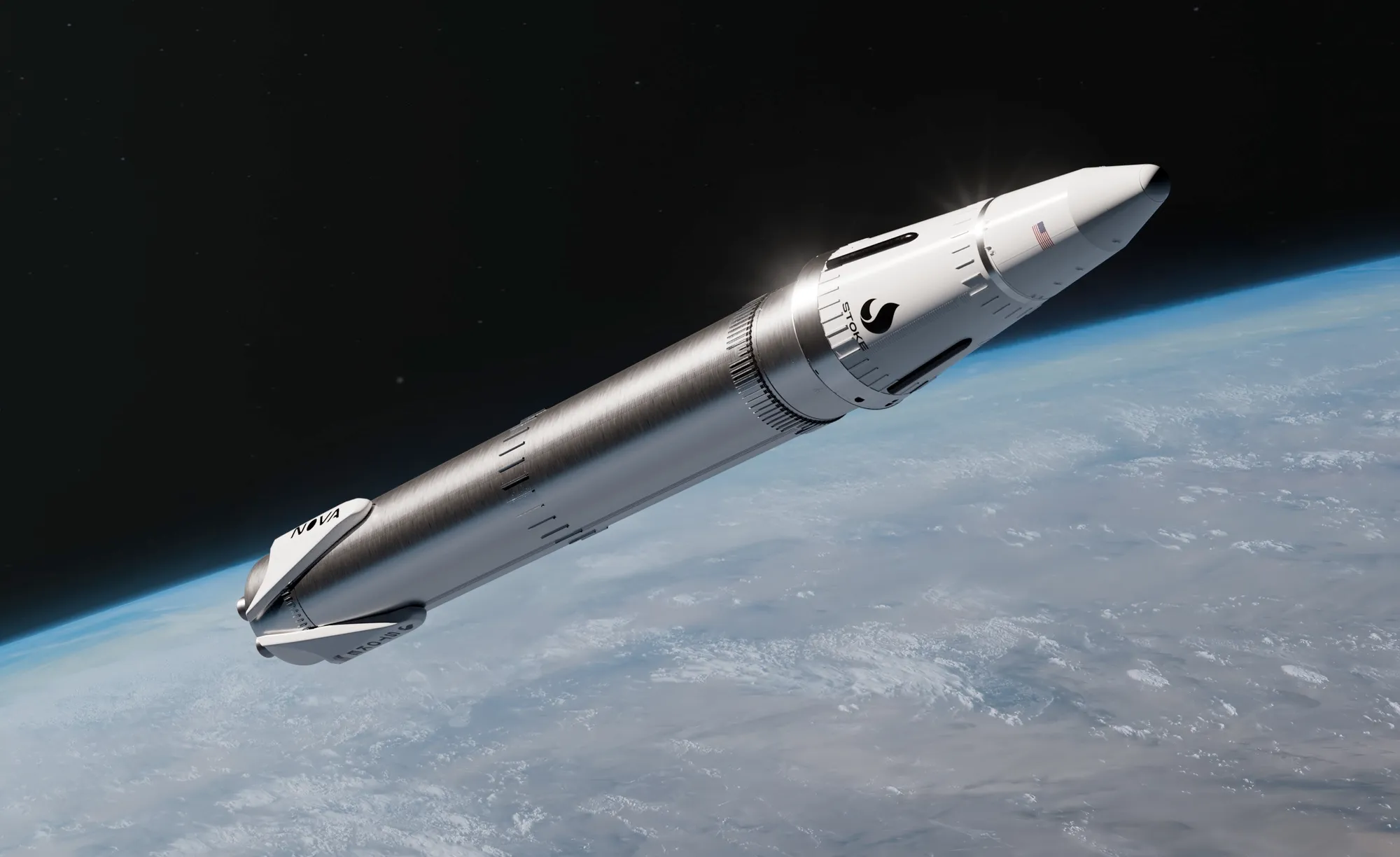
Planet Labs announced on Nov. 9 that it has signed a multi-launch agreement with Stoke Space to deploy its Earth-observation satellites aboard Stoke’s reusable Nova rocket family. Under the undisclosed multi-launch terms Planet will receive primary payload rights, enabling the company to specify launch dates and target orbital planes for its satellites. Missions under the deal will launch from Cape Canaveral Space Force Station’s Space Launch Complex 14 (SLC-14).
The contract covers deployments across Stoke’s staged development path: initial flights on the smaller Nova Pathfinder vehicle, followed by larger missions on Nova Block 2. Stoke has scheduled orbital flight demonstrations of Nova Pathfinder beginning in 2027; Block 2 is designed to deliver more than 15 metric tons to low Earth orbit in a fully reusable configuration and is planned to enter service later (Planet and Stoke cited Block 2 capacity as more than 15 metric tons). Initial Planet constellation deployments aboard Nova Pathfinder are slated for 2027, with expanded multi-satellite missions on Block 2 when that variant debuts.
Planet framed the agreement as part of a broader strategy to diversify launch providers and secure regular replenishment cadence for its Pelican and Tanager fleets without relying on a single rideshare architecture. The company has increasingly sought to be an early customer for emerging rockets: Planet previously signed with Isar Aerospace in July and has used SpaceX Bandwagon and Transporter rideshares for past deployments, including Pelican-12 on Bandwagon-5 in 2026.
Stoke Space described the deal as commercial validation while it continues vehicle and ground infrastructure development. Stoke’s Nova program recently raised significant private capital — the company announced about $1 billion in new funding in September — and has also received a conditional Pentagon loan commitment to support construction of a second Florida pad sized for Block 2 operations. Stoke is rebuilding and operating SLC-14 for rapid reuse and recovery; work at the Cape includes a horizontal integration facility and launch mount adapted for Nova operations.
Quotes in the companies’ announcements echoed these aims. Will Marshall, co-founder and CEO of Planet, said, “We need launch partners who move as quickly as we do. Stoke Space is building an exciting fully reusable launch capability, and we’re partnering to drive forward highly responsive launch options.” Stoke co-founder and CEO Andy Lapsa called Planet a pioneer of commercial space and emphasised the company’s focus on providing reliable services built around customer needs.
The multi-launch campaign follows a phased development timeline: Stoke plans Pathfinder orbital flights in 2027 to gain operational experience while Nova Block 2 development continues in parallel, with Block 2 targeted for later flights and higher-capacity missions. Public reporting places the Block 2 first flight currently around 2029. The agreement gives Planet dedicated manifest slots across both rocket variants as it reshapes its manifest away from heavy reliance on large rideshare schedules.
NovΔ mAInd's launch database: Stoke Space is recorded as having 0 launches tracked and a 7000 kg to LEO figure in our launch tracker; Planet Labs is recorded with 0 launches tracked in our launch tracker. This agreement schedules launches for Nova Pathfinder beginning in 2027 and later missions on Nova Block 2.