NASA advances PRIMA to Phase B as the first Probe Explorers mission
NASA has selected PRIMA (PRobe far-Infrared Mission for Astrophysics) to proceed into Phase B — preliminary design and technology development — as the first mission in the agency’s new Probe Explorers class, agency announcements and reporting by Media INAF, AstroSpace.it and SpaceWatch.Global confirmed this week. The selection follows a multi-year competition and places PRIMA on a development path that could lead to construction if it passes a subsequent confirmation review.
Under the terms reported, PRIMA carries a project cost cap of up to $1.2 billion, excluding launch and other non-project expenses. If it clears the confirmation review, NASA plans a launch in 2033 and an initial science mission duration of five years. The Phase B decision does not guarantee final construction funding; the mission must demonstrate technical, programmatic and cost readiness at a confirmation review before entering Phase C.
PRIMA is designed around a 1.8-meter telescope optimized for sensitive, deep observations in the far-infrared band — the wavelength range between what telescopes such as the James Webb Space Telescope can access and the domain of radio observatories. According to Nicky Fox, associate administrator of NASA’s Science Mission Directorate quoted in Media INAF coverage, “The PRIMA mission is the next window for humanity on the deep universe” and will probe questions about planet formation, star and black hole growth, and the delivery of water to Earth.
Shawn Domagal-Goldman, director of the Astrophysics Division at NASA Headquarters, placed PRIMA in the agency’s broader cadence of flagship and mid-sized missions, saying that PRIMA will extend the observing capabilities of NASA’s space telescope fleet into far-infrared wavelengths and contribute to a sustained pipeline of major missions through the coming decade (quote reported by Media INAF).
The selection concludes a process that began in 2024, when NASA initially advanced two Probe proposals — PRIMA and AXIS, an X-ray observatory — for further study. As reported by AstroSpace.it, AXIS was disqualified from the competition in March 2026, leaving PRIMA as the sole remaining candidate for this inaugural Probe Explorers slot.
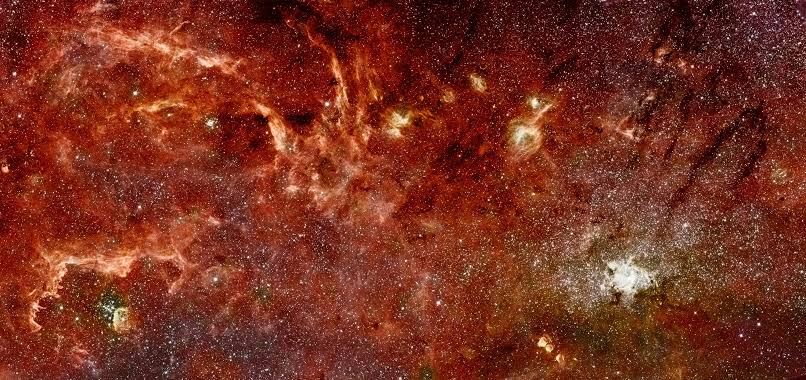
Scientific goals articulated across the sources emphasize PRIMA’s role in filling an observational gap. The far-infrared regime is uniquely sensitive to radiation emitted by cold dust and gas that are key to understanding early stages of star and planet formation, the growth of galaxies and supermassive black holes across cosmic time, and the build-up of heavy elements and dust. PRIMA’s 1.8-meter mirror and instruments will target emissions that are difficult or impossible to study from the ground because Earth’s atmosphere absorbs much of the far-infrared.
All three outlets note the Probe Explorers class itself is nested within NASA’s historic Explorers Program. Probe-class missions occupy a middle ground in scale and cost between smaller Explorers and flagship missions, providing focused, high-priority science capabilities on accelerated timelines relative to flagship projects. PRIMA, as the first of this new class, will be closely watched as a test case for how Probe Explorers execute on schedule and budget while delivering distinctive science.
International and institutional partners named in SpaceWatch.Global’s reporting include organizations such as the Canadian Space Agency, CEA (French Alternative Energies and Atomic Energy Commission), the German Aerospace Center (DLR), the Italian Space Agency (ASI), JAXA (Japan Aerospace Exploration Agency), SRON (Netherlands Institute for Space Research), the UK Space Agency and several university and laboratory partners. Those listings indicate PRIMA’s development will involve broad international collaboration, although concrete partner roles and instrument contributions will be defined during Phase B.
Looking ahead, if PRIMA proceeds into Phase C and construction, it will join NASA’s planned mission sequence that already includes the James Webb Space Telescope and the Nancy Grace Roman Space Telescope, extending the agency’s observing capabilities into new wavelength regimes. The mission’s five-year baseline would enable surveys and targeted programs to trace the lifecycle of dust and gas from galaxies to planetary systems, and to measure faint far-infrared signals that can reveal obscured star formation and black hole activity over cosmic history.
As with all missions still in preliminary design, uncertainties remain. The confirmation review will scrutinize PRIMA’s technical maturity, cost estimates and schedule before NASA authorizes full implementation. If approved, PRIMA’s development through the late 2020s and early 2030s will be a focal point for the far-infrared astrophysics community and for international partners seeking access to data in a wavelength band that has been observationally sparse since the era of past far-infrared observatories.
Sources: Media INAF, AstroSpace.it, SpaceWatch.Global (NASA news release excerpts cited by outlets).