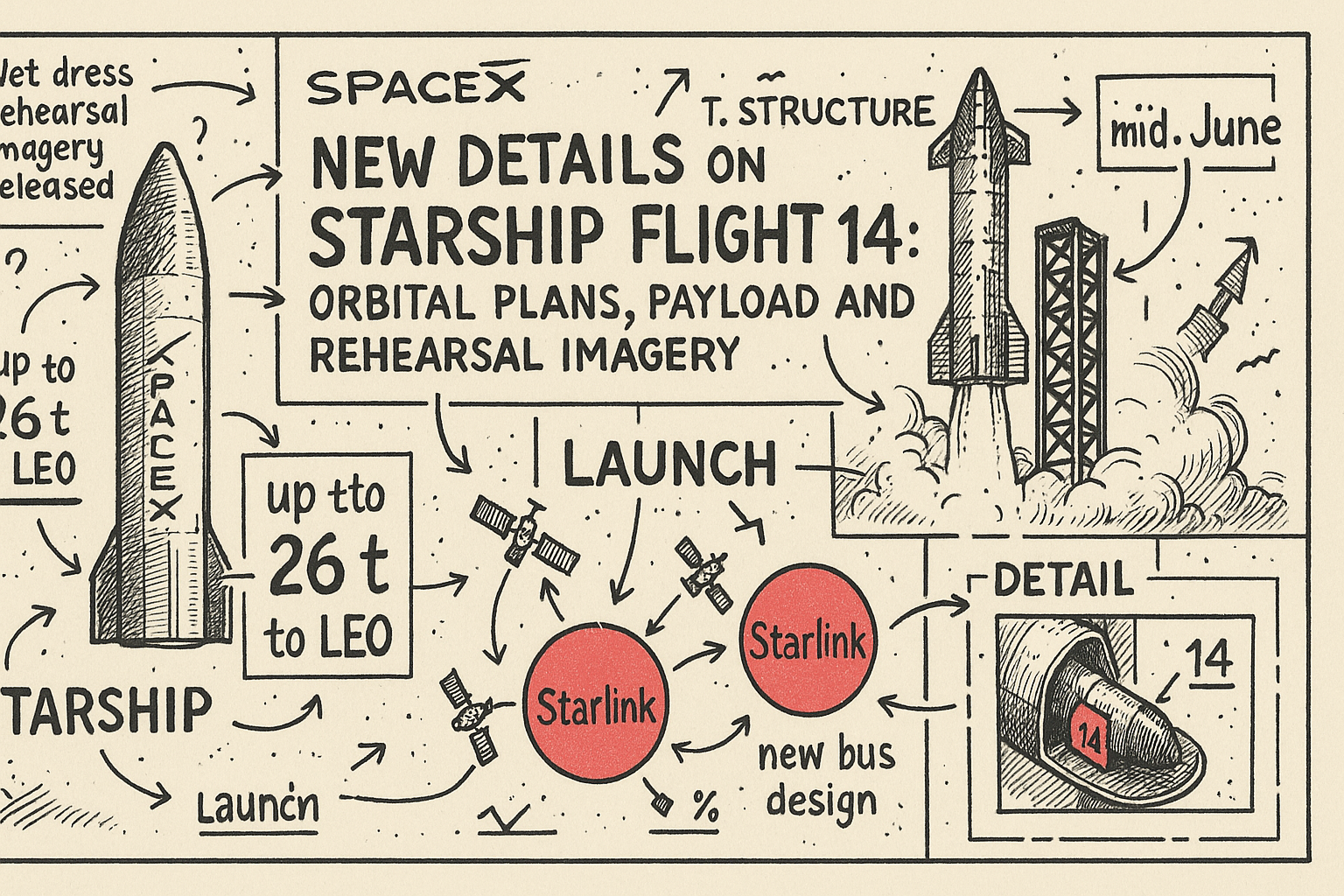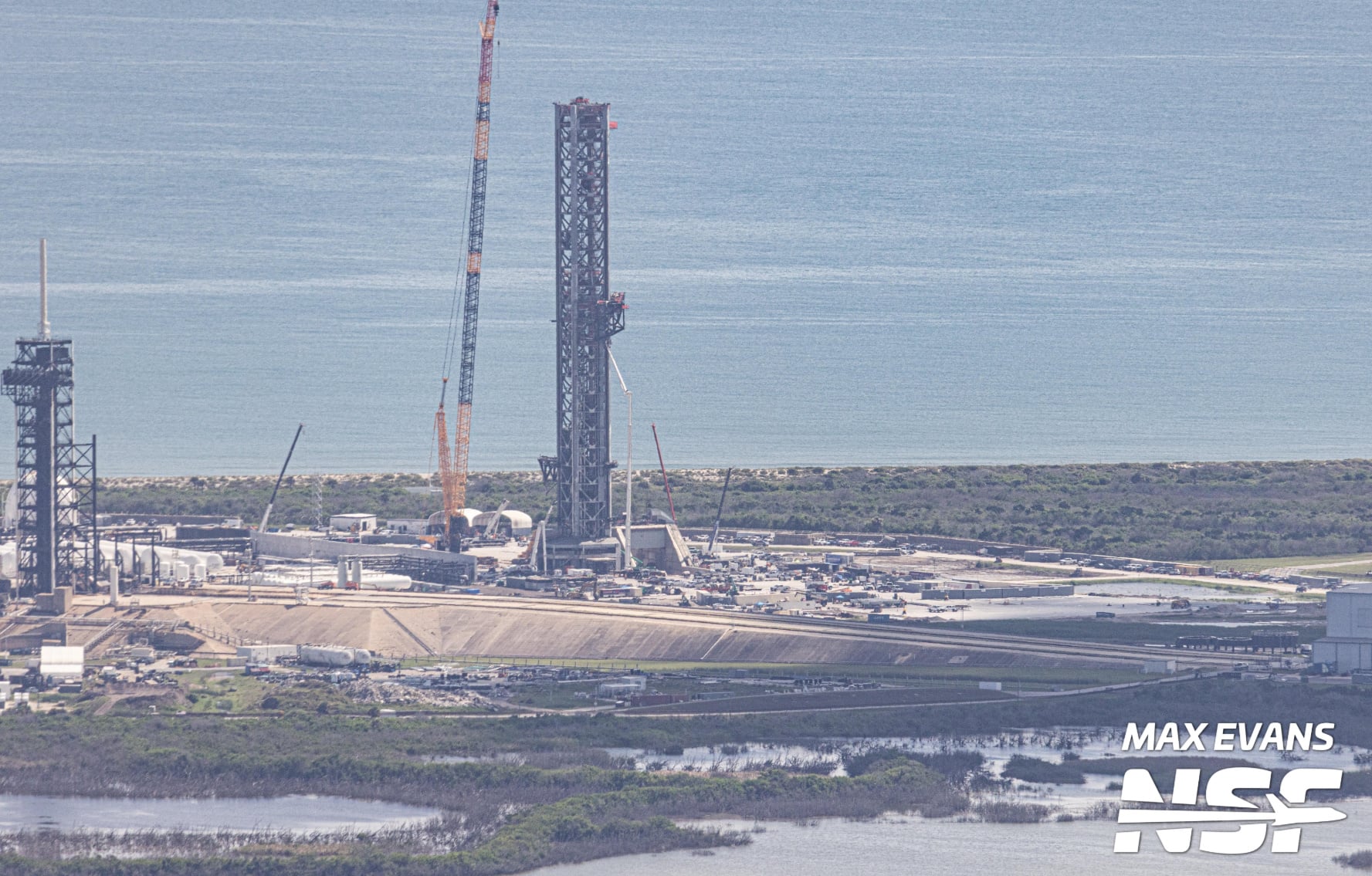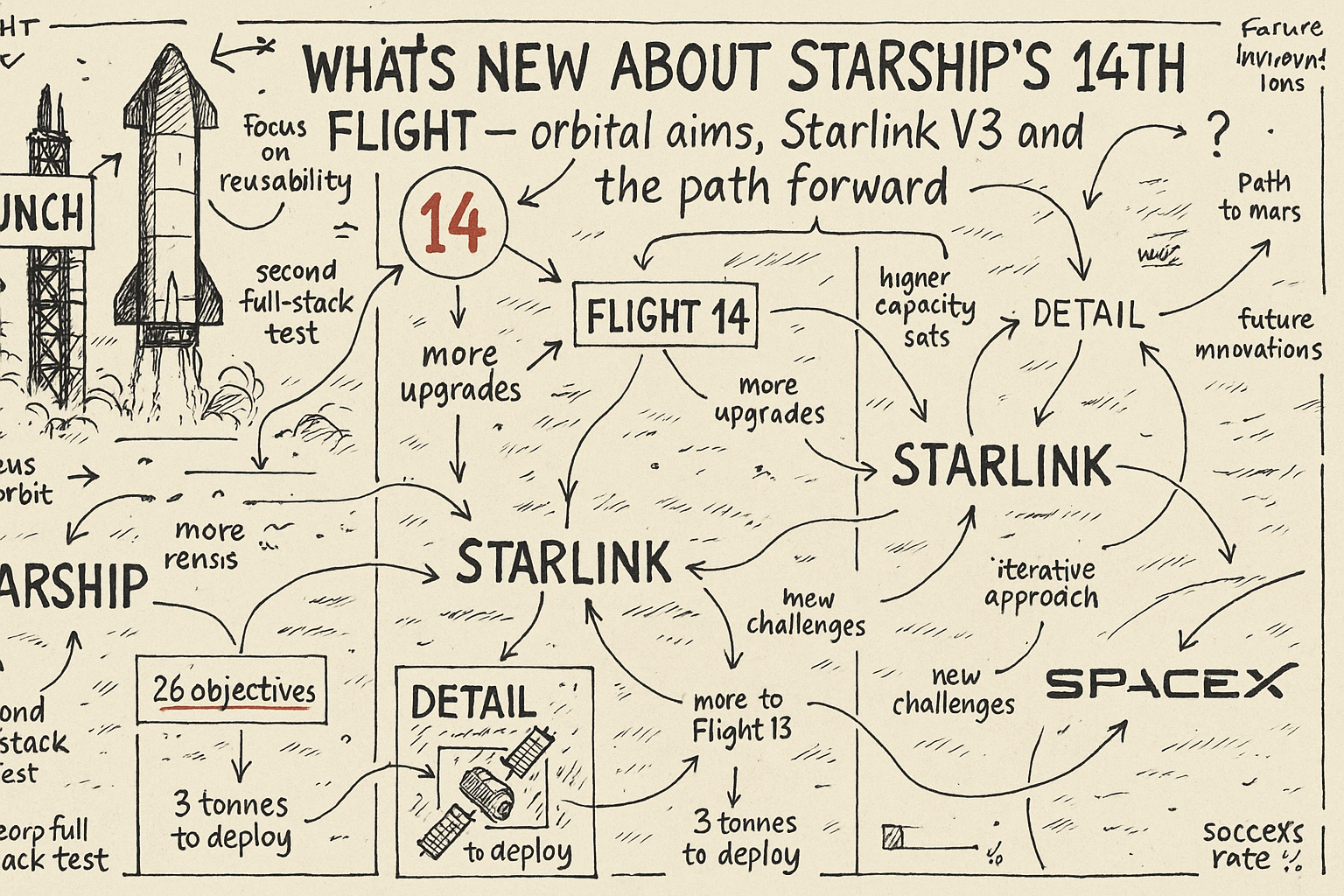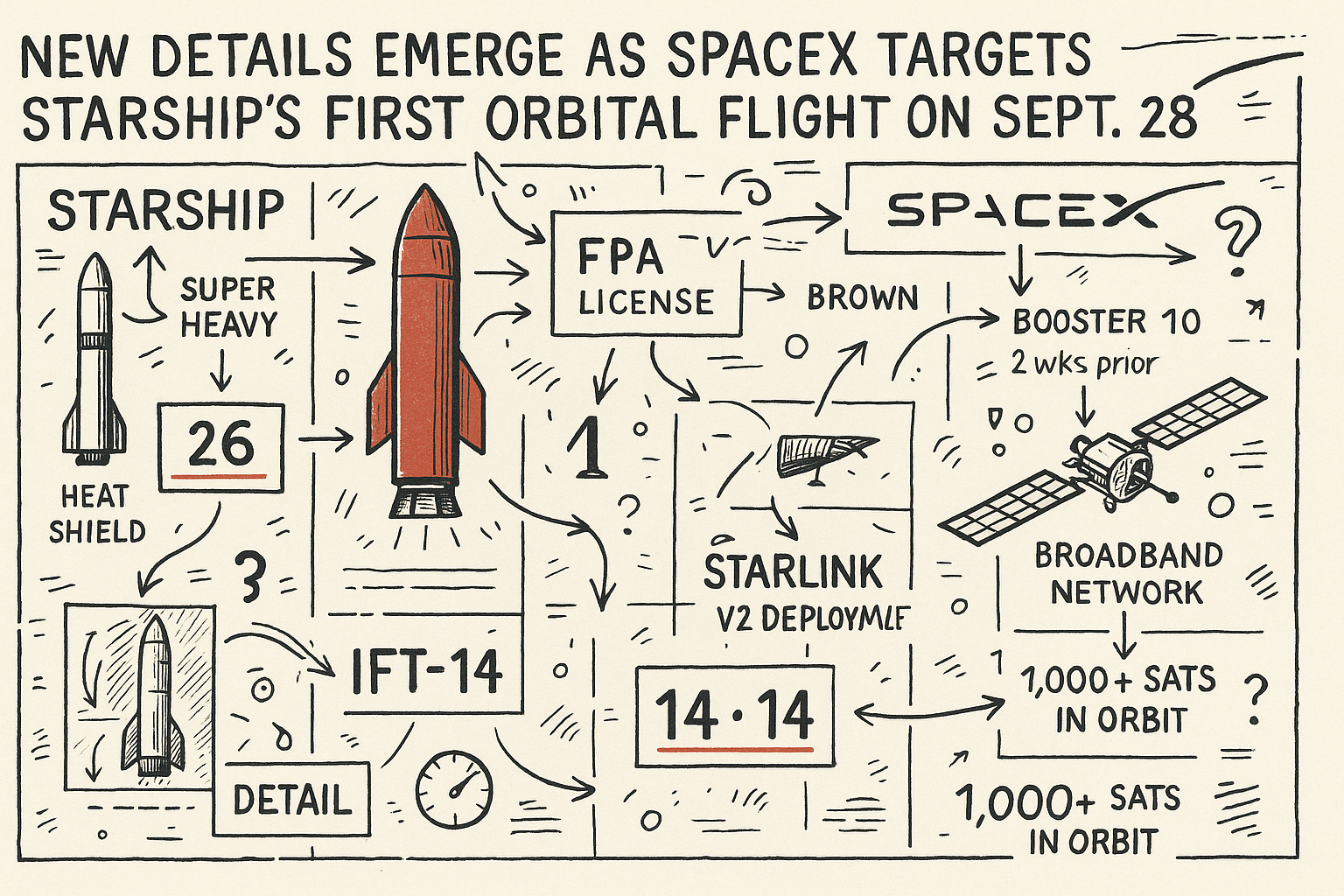
On Sept. 28 SpaceX will attempt something its previous 13 integrated Starship-Super Heavy flights did not: reach orbit. Designated Integrated Flight Test-14 (IFT-14 or Starship Flight 14), the 124-meter-tall launch vehicle will lift off from Starbase during a mid-morning window and, if successful, complete multiple orbits of Earth while releasing 26 Starlink V3 satellites before a planned splashdown.
What’s new about Flight 14
All prior integrated Starship-Super Heavy flights were intentionally suborbital. Flight 14 is the first orbital attempt for the full 407-foot (124-meter) system, and its mission profile departs substantially from those earlier tests. According to reporting from Spaceflight Now and SpacePolicyOnline, the Ship 41 upper stage will monitor ascent and the first coast, then — about 25 minutes after liftoff per Spaceflight Now — reignite one of its three sea-level Raptor engines to raise and circularize its trajectory and place payloads into orbit. If nominal, the mission will deploy 26 Starlink V3 satellites and is planned to complete six orbits before a deorbit and splashdown west of Chile, per SpacePolicyOnline.
Mission timing reported across outlets places liftoff on Monday, Sept. 28. Space.com lists a liftoff time of 8:15 a.m. EDT (1215 GMT). NASA Spaceflight gives a regional time of 7:15 a.m. CDT and a 75-minute launch window; Astrospace reports an Italian window between 14:15 and 15:30 local time and projects an overall mission duration of about 9 hours and 50 minutes, with splashdown occurring between 00:05 and 01:20 on Sept. 29 if things go as planned.
Regulatory review and new FAA permissions
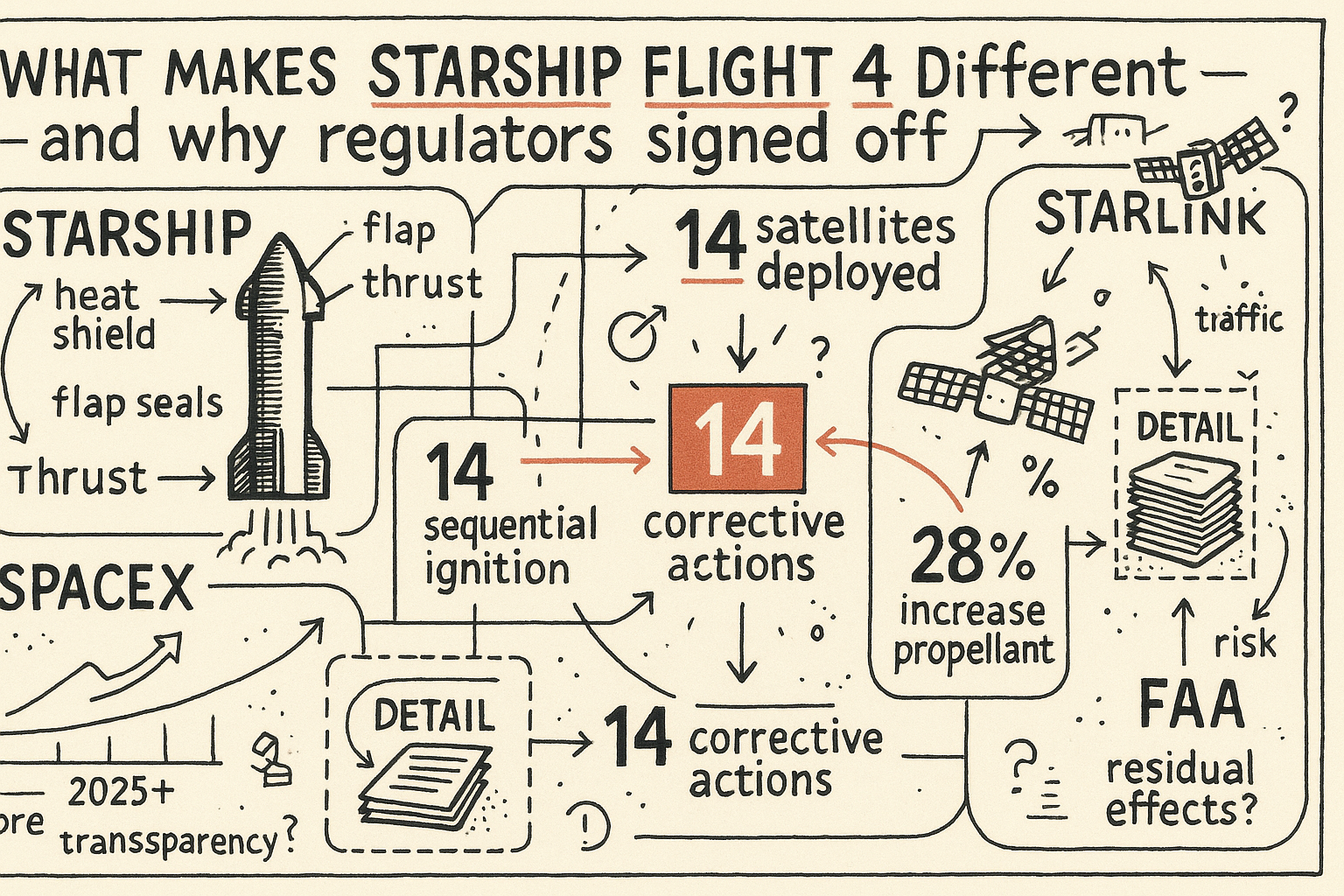
Flight 14’s different trajectory required fresh regulatory scrutiny. Astrospace notes that on Sept. 26 the Federal Aviation Administration (FAA) issued new flight permits for this mission because the flight profile differed significantly from previous launches. The agency evaluated potential failure scenarios so it could respond to contingencies, according to that reporting. SpacePolicyOnline also framed Flight 14 as contingent on regulatory approval as the company attempts to place Starship into orbit for the first time.
The novelty of the orbital attempt — and the larger geographic footprint of potential reentry or debris trajectories compared with suborbital tests — explains why the FAA’s revised permissions were necessary and issued close to the planned launch date.
Payload and mission objectives
Unlike earlier flights that were purely developmental, Flight 14 has an operational element: deployment of 26 Starlink V3 satellites. SpacePolicyOnline reports the satellites will be released during the mission’s orbits, while Spaceflight Now and SpacePolicyOnline describe the upper stage’s planned reignition and circularization burn 25 minutes after liftoff to reach orbit.
Spaceflight Now places this attempt in historical context: it comes 18 years after SpaceX’s Falcon 1 first reached orbit, and follows 13 suborbital integrated launches. SpacePolicyOnline traces the Starship program’s checkered history — including successes like booster catches and previous in-flight failures — and frames Flight 14 as another step in SpaceX’s ‘‘fail fast, learn faster’’ development approach.
What to watch and what’s at stake
The mission will test Starship’s ability to perform an orbital insertion and to operate as an on-orbit delivery vehicle for Starlink hardware. Success would represent the first orbital flight of the integrated Starship-Super Heavy system and advance SpaceX’s use of Starship for operational satellite deployment. The FAA’s late-stage issuance of new flight permissions underscores regulatory concerns tied to the changed risk profile of an orbital mission, and the outcome of Flight 14 will influence both technical development and ongoing oversight.
Observers will be watching the upper stage reignition about 25 minutes after liftoff, the deployment of the 26 Starlink V3 satellites, and the planned splashdown area west of Chile. If the mission proceeds as some sources project, it will be one of the most consequential flights in the program’s history.