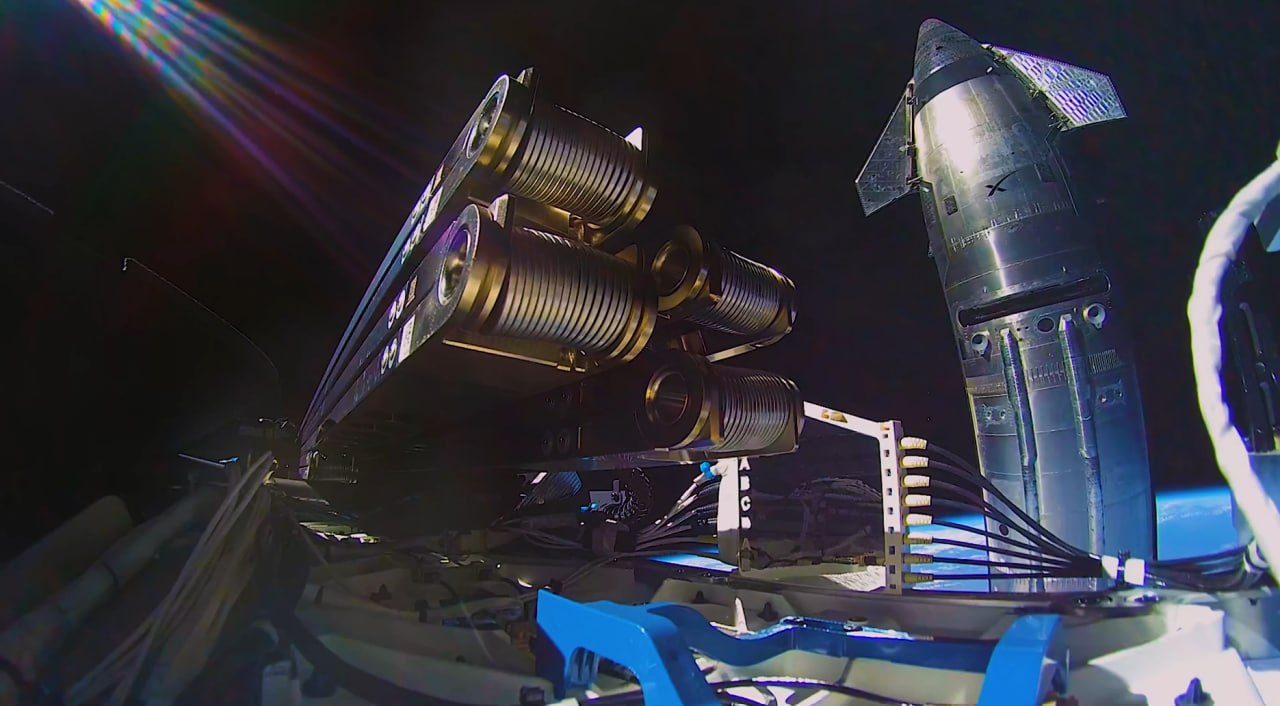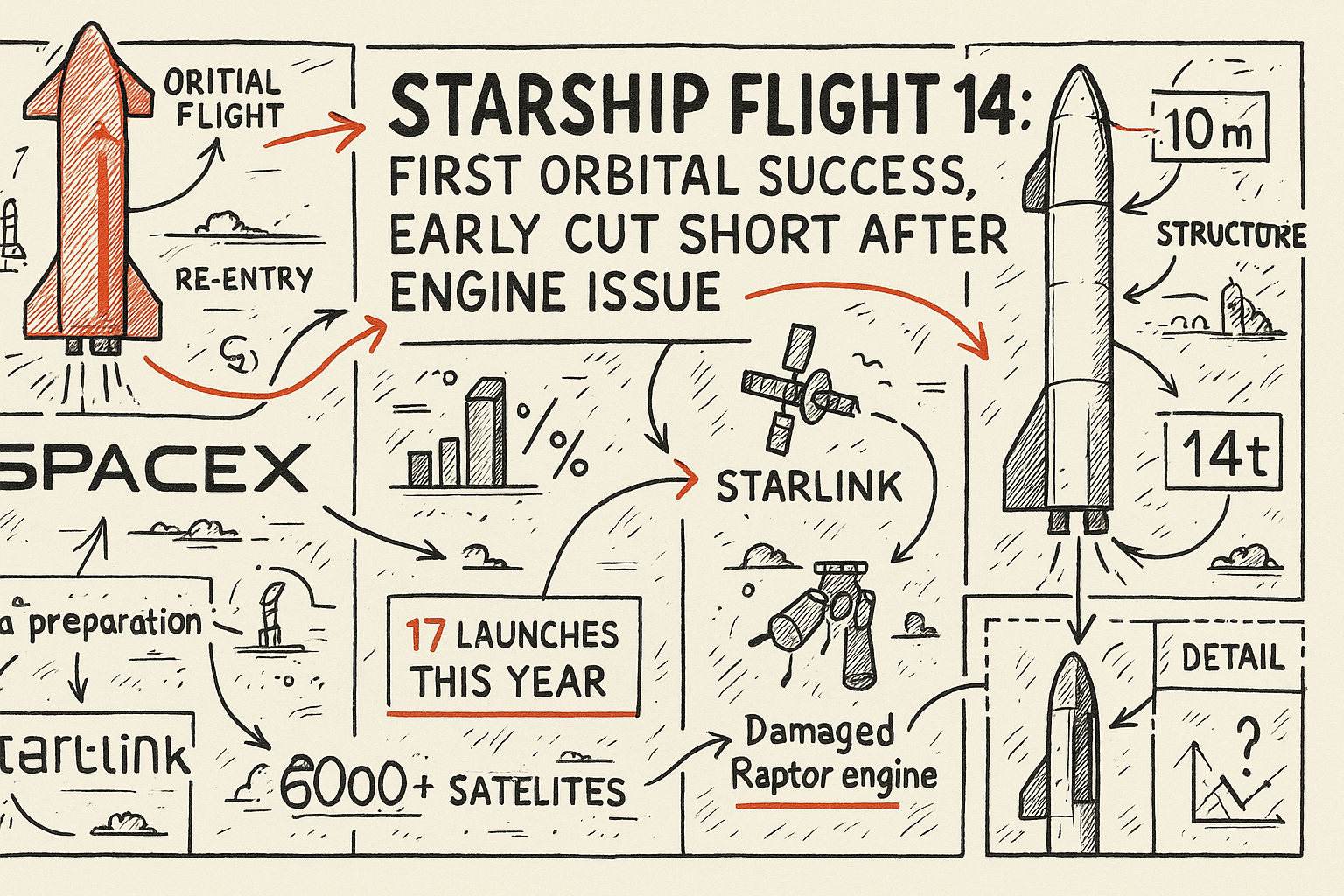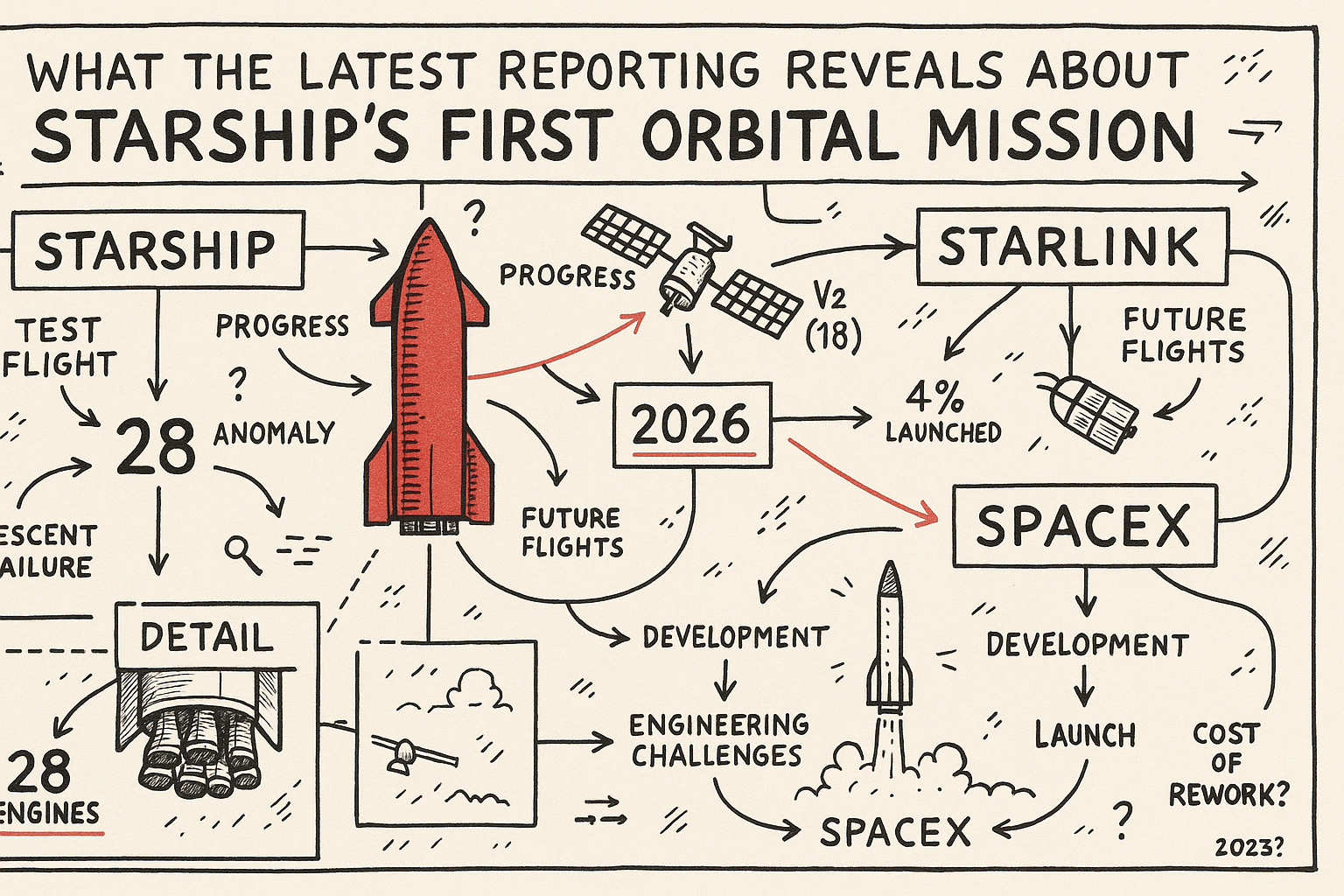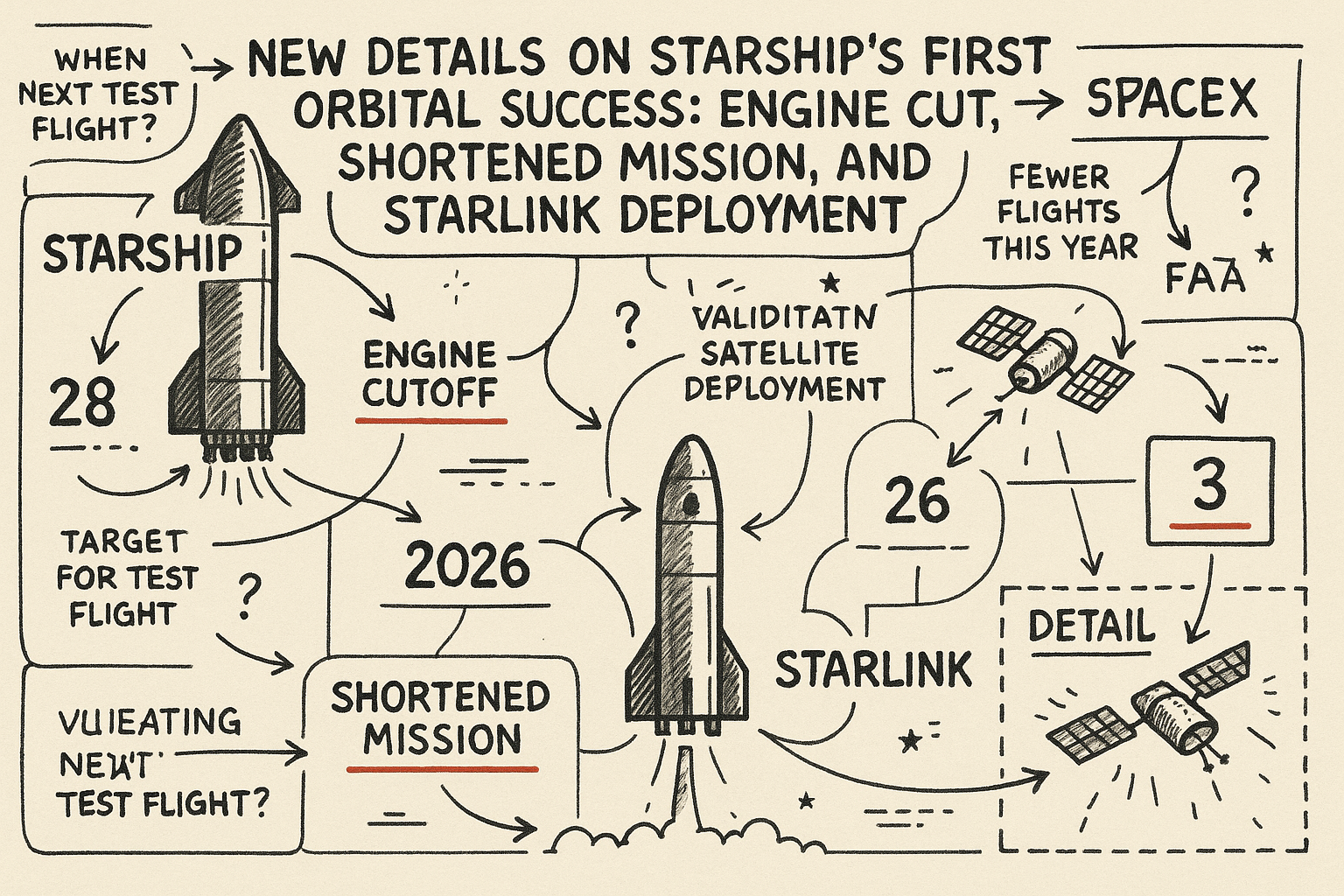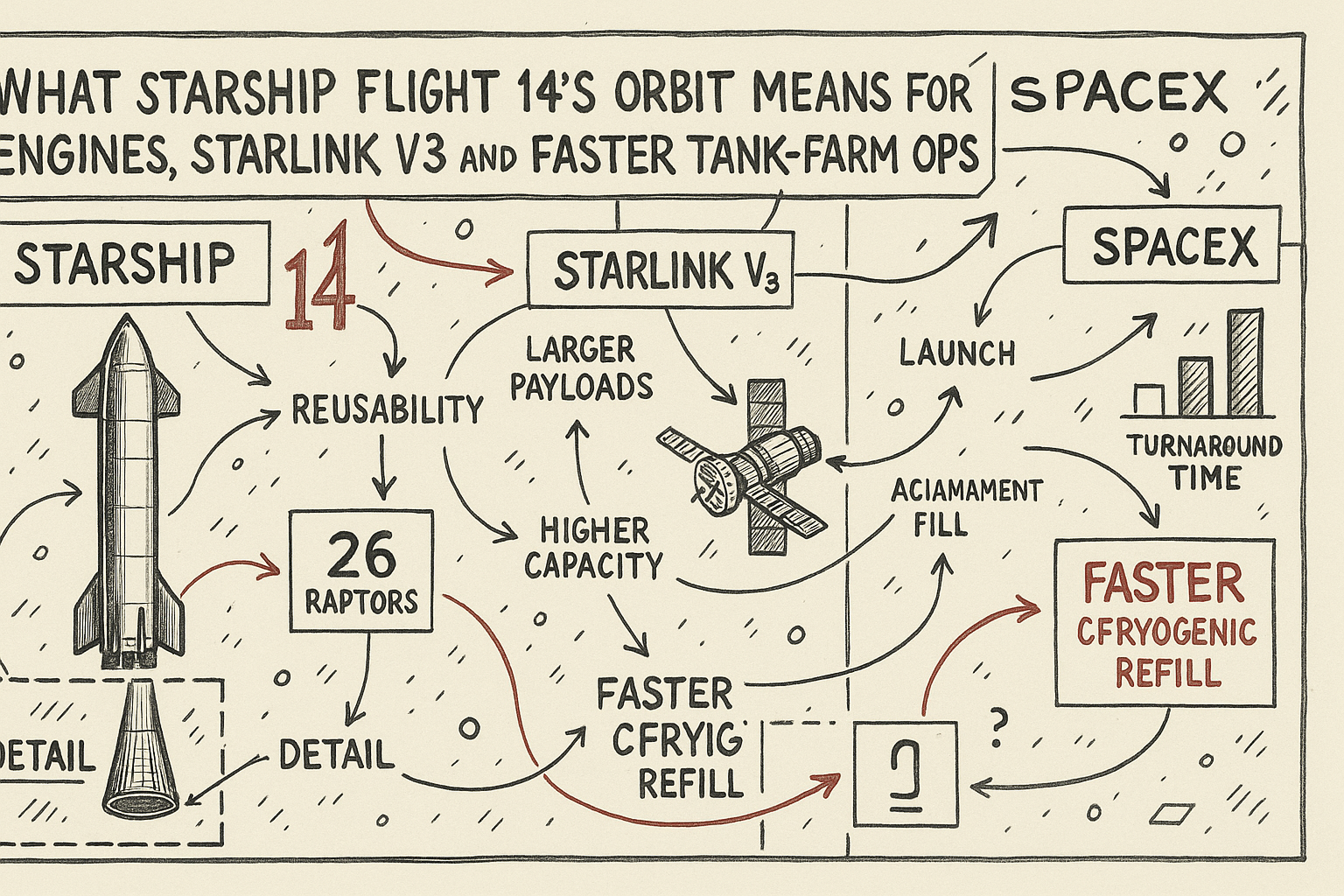
On Sept. 28, 2026, SpaceX’s Integrated Flight Test‑14 (IFT‑14) achieved a program milestone: Ship 41 reached orbit and deployed 26 operational Starlink V3 satellites. The flight did not follow its original plan to complete multiple orbits, but it represents the first time the complete two‑stage Starship/Super Heavy stack attained orbit.
Flight performance: engines, staging and splashdowns
IFT‑14 lifted off from Starbase’s Pad 2 at 7:48:59 a.m. CDT with Booster 21 beneath Ship 41. Booster 21 lost one of its 33 Raptor engines shortly after liftoff, but continued its mission and completed its boost‑back burn and subsequent flight profile. According to flight reporting, the booster performed a boost‑back burn with 31 engines, ignited 11 of 13 engines for the landing burn, splashed down on target in the Gulf and was intentionally destroyed with the Flight Termination System after splashdown.
The Ship 41 upper stage also experienced engine anomalies: one of its vacuum Raptor engines reportedly cut off early during ascent. Flight controllers proceeded with the orbital insertion burn despite the early shutdown, but SpaceX chose to bring the vehicle back to Earth without completing the multiple orbits that had been planned.
Payload and operational significance
SpaceX deployed 26 Starlink V3 satellites on IFT‑14, identified in reporting as the first operational satellites of the V3 generation. These deployments mark a transition from prior test flights to carrying operational payloads on an orbital Starship mission.
While the flight omitted the full multi‑orbit sequence, the successful insertion and deployment of operational satellites establishes an important step for the Starship program and for SpaceX’s Starlink rollout.
Process improvements seen in tank‑farm operations
Reporting on prelaunch operations highlighted a procedural change during the prelaunch chilldown that more closely resembled a Wet Dress Rehearsal conducted a few days earlier. On IFT‑14 the methane reclaim vent started up about one hour 30 minutes before propellant loading, rather than two hours earlier as had been done for Flights 12 and 13. Spaceflight reporting suggested this change will make tank‑farm operations with a full stack quicker in future launches.
Looking ahead: next flights and catching ambitions
SpaceX’s internal review of the flight was expected, and groundwork for Flight 15 was already underway. Reporting indicates that Booster 22 is being prepared to be the first Block 3 booster to be caught on a future flight, and that Flight 15 could take place in October. SpaceX did not attempt a tower catch on IFT‑14; the company’s last reported catch attempt was on IFT‑8.
Taken together, the mixed‑outcome nature of IFT‑14—engine shutdowns on both stages coupled with successful orbital insertion and operational payload deployment—illustrates both remaining technical risk and pragmatic operational progress. The flight delivered tangible results for Starlink while producing procedural lessons and setting the stage for a cadence of subsequent flights and technology refinements.