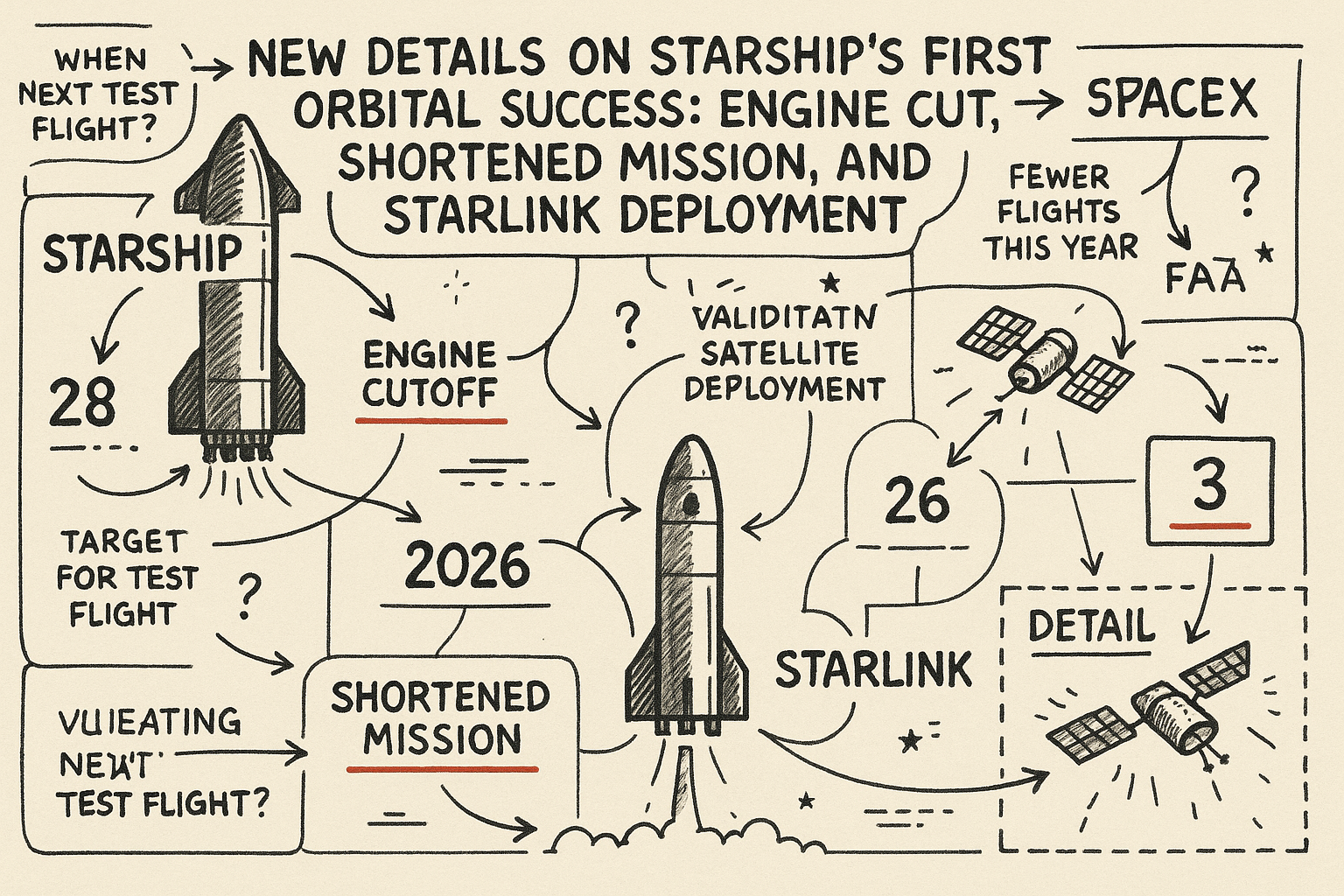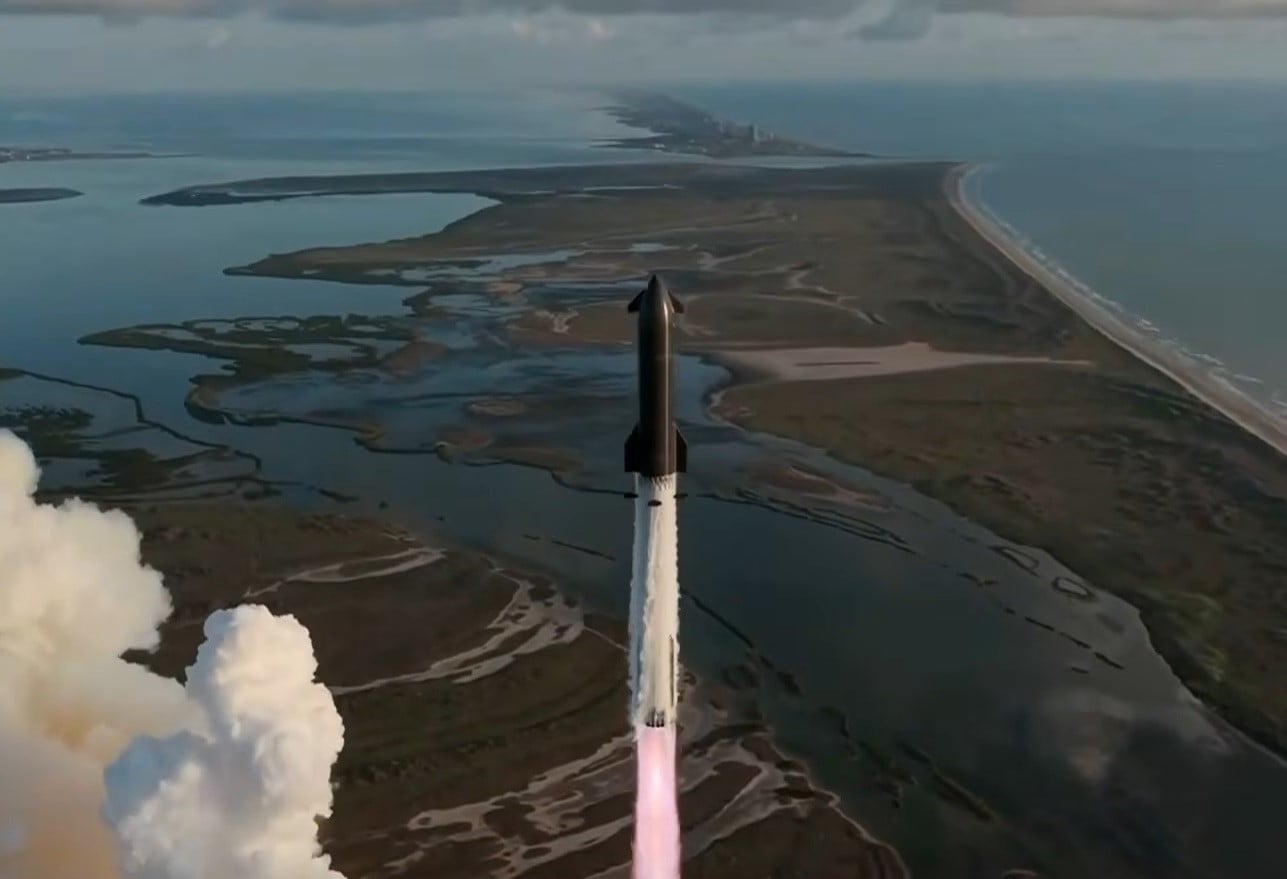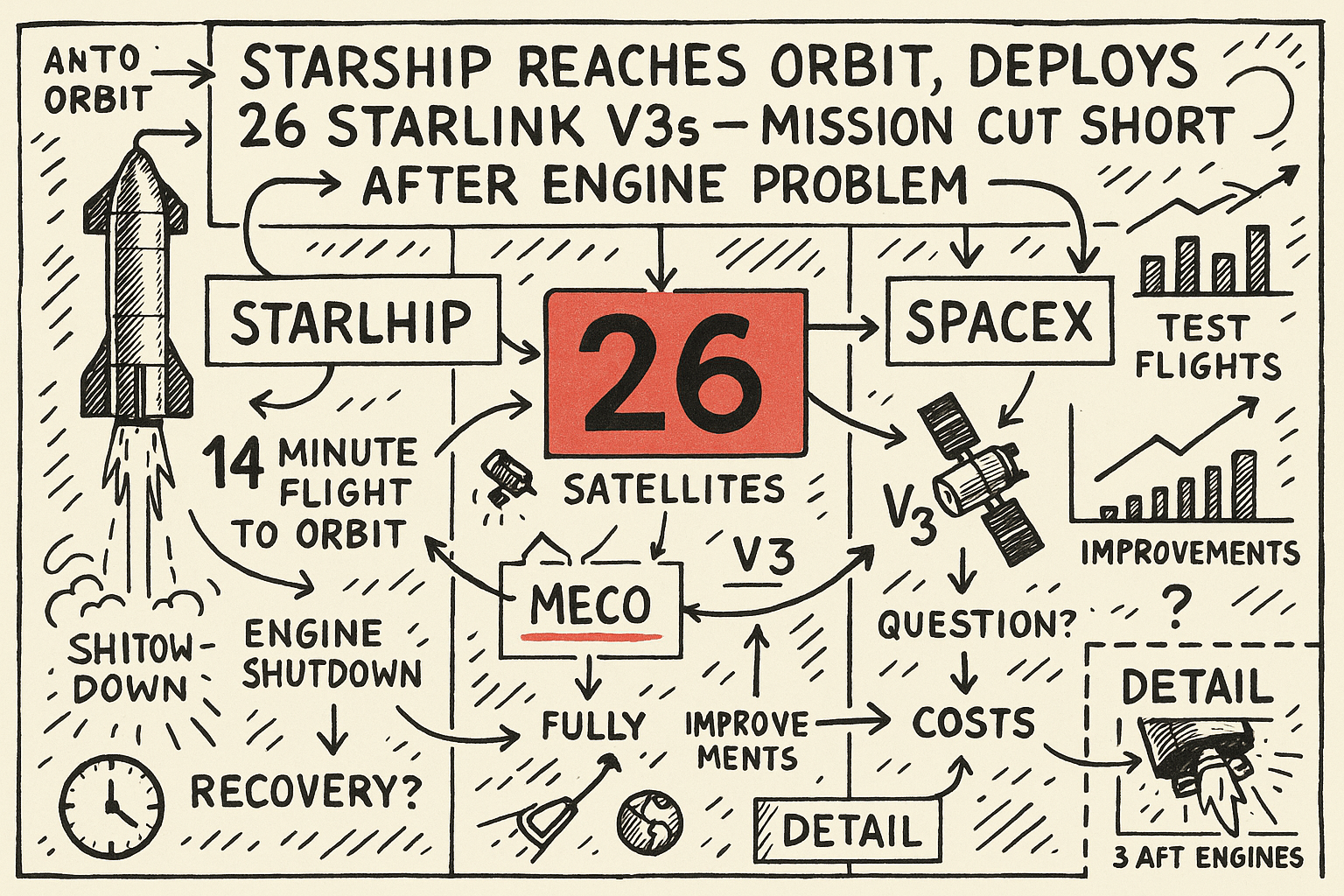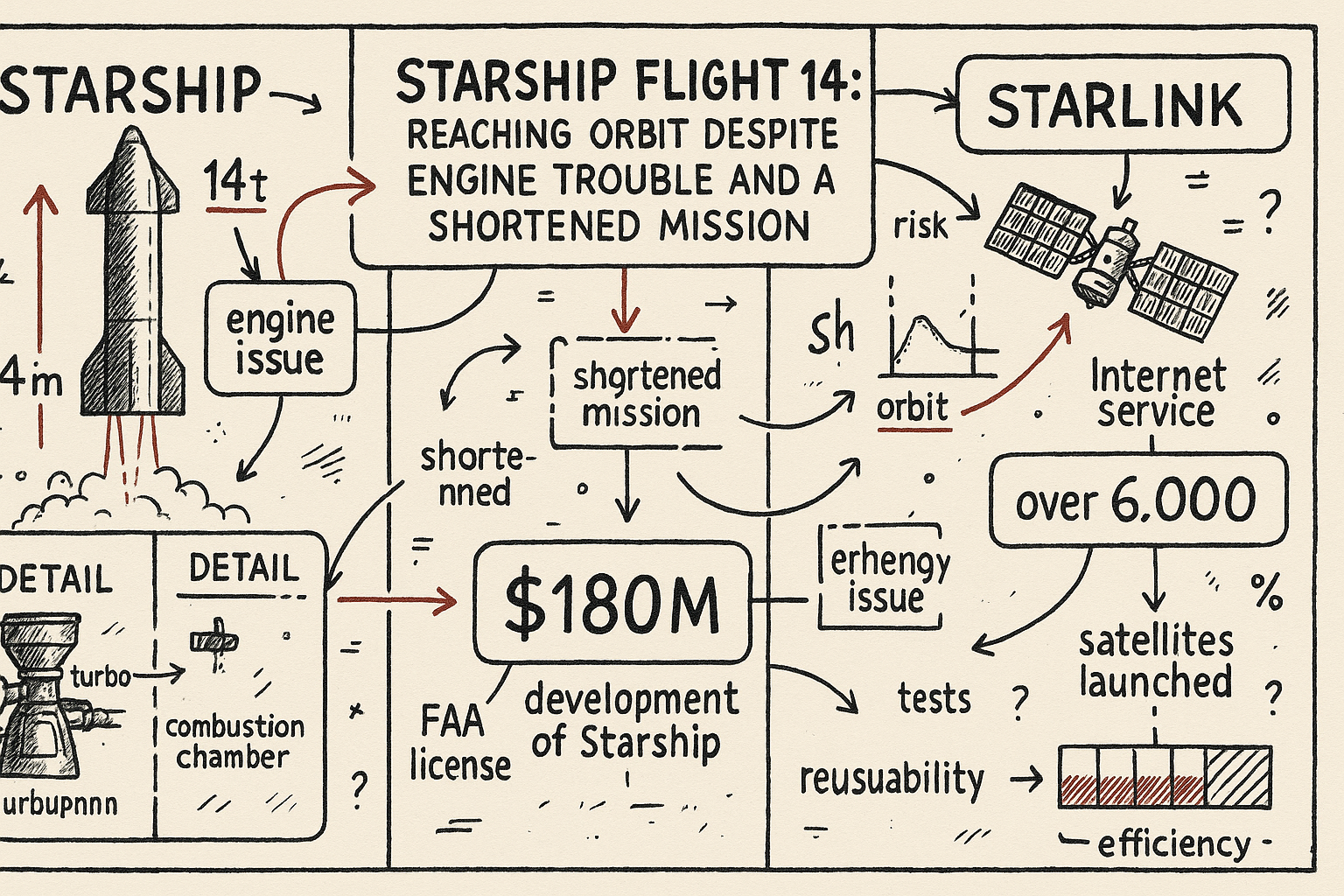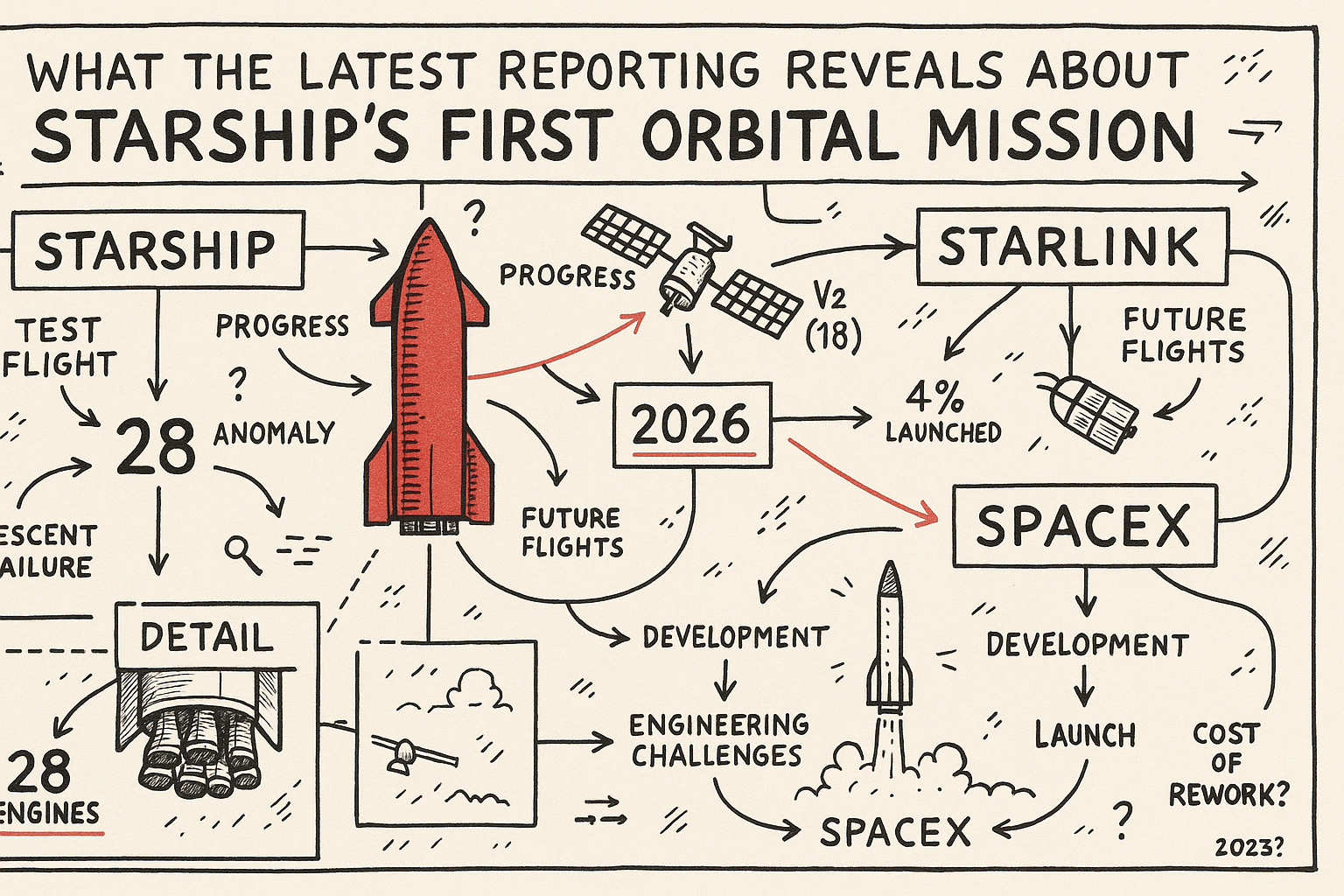
SpaceX’s Starship reached Earth orbit for the first time on Sept. 28, 2026, marking a milestone for the 14th test flight of the vehicle. Fresh reporting published after initial coverage adds concrete detail about how the flight actually progressed: an engine failure during ascent, an altered mission plan that cut a planned 10‑hour, six‑orbit test down to roughly two orbits, the deployment of operational Starlink satellites, and a splashdown that ended in an explosive loss of the vehicle’s booster stage.
Engine loss early in ascent — and a go decision
Multiple outlets reported that Starship lost power to an engine shortly after liftoff. SpaceX mission control quickly determined the vehicle could still reach orbit despite the loss and elected to continue the flight. That assessment shaped the rest of the mission: rather than pressing into the full, planned profile, controllers shifted to a shorter flight that prioritized getting to orbit and deploying payloads.
From six planned orbits to two
Originally, the mission was expected to last about 10 hours and to complete six orbits of Earth. After the engine issue, SpaceX reduced the flight to a far shorter test — the vehicle completed nearly two orbits before reentry operations began. Sources describe the decision as an operational pivot to preserve the primary objective: demonstrating Starship’s ability to reach orbit and to place payloads into the existing constellation.
Operational Starlink satellites on board
Unlike previous suborbital test flights, this mission carried payloads that will remain operational in orbit. Reports agree that Starship deployed 26 next‑generation V3 Starlink satellites into the larger Starlink constellation. That deployment represents the first time Starship has placed operational Starlink nodes on orbit, marking a step beyond purely test hardware rides.
Splashdown and the end of the booster
The mission did not conclude with intact recovery of the booster. Coverage indicates that the vehicle’s return into the Pacific ended in a loud explosion rather than the soft splashdown SpaceX had hoped for. That explosive loss capped a flight that was historic in achieving orbit but still unfinished from a reusability and recovery perspective.
Context within the test program
This was Starship Flight 14 and the first time the system achieved orbital velocity. All previous flights had been suborbital. The rocket that launched from SpaceX’s Starbase complex in Texas is 407 feet (124 meters) tall, and liftoff for this mission occurred in the morning U.S. Central time, with one outlet noting a 7:50 a.m. CT (12:50 p.m. UTC) liftoff. The mission’s success in reaching orbit — and in deploying operational satellites — advances Starship’s role in SpaceX’s broader plans, but the engine loss, shortened flight profile, and destructive splashdown underline that the program still has development work remaining.
What this means going forward
The most immediate takeaway from the additional reporting is that reaching orbit does not equate to a finished vehicle. Engineers and program managers will use the telemetry from this flight — including the sequence around the engine power loss and the vehicle’s behavior during the abbreviated two‑orbit profile — to refine designs and flight procedures. The fact that mission control elected to continue after an engine loss and still accomplish the primary payload deployment will be analyzed alongside the vehicle recovery failure to prioritize upgrades in propulsion reliability and recovery hardware or procedures.
Finally, the flight demonstrated a practical capability that had not been shown on prior Starship tests: delivering operational satellites to orbit. Deploying 26 V3 Starlink satellites integrates Starship into an operational commercial constellation and signals a higher bar for future missions, even as recovery and reliability remain active development goals.