Newly surfaced coverage of two separate SpaceX activities provides a clearer picture of how the company is juggling Falcon 9 Starlink flights from the U.S. West Coast while advancing its Starship-Super Heavy vehicle, which reached orbit for the first time in September.
On Oct. 12, SpaceX launched a Falcon 9 from Vandenberg Space Force Base carrying a batch of Starlink satellites. Liftoff of the Starlink 15-25 mission from Space Launch Complex 4 East occurred at 5:28 p.m. PDT (8:28 p.m. EDT / 0028 UTC). The rocket followed a southerly trajectory along the California coast, targeting an orbit inclined 70 degrees to the equator.
The Falcon 9’s first-stage booster on that flight was serial number B1088. That booster was launching for the 20th time and landed on the drone ship Of Course I Still Love You nearly 8.5 minutes after liftoff. According to the report, B1088’s flight history includes the NROL-126, Transporter-12, SPHEREx, NROL-57 and USSF-366 missions, plus 14 prior Starlink delivery runs.
How this fits into SpaceX’s Starlink cadence
The Vandenberg launch underscores SpaceX’s continued use of Falcon 9 to replenish and expand Starlink constellations, with West Coast launches used to place satellites into higher-inclination orbits. The documented use of a heavily flown booster — B1088’s 20th mission — continues a pattern of high recapture and reuse rates for Falcon 9 first stages on operational Starlink and government missions.
Starship’s first orbital flight: context from recent coverage
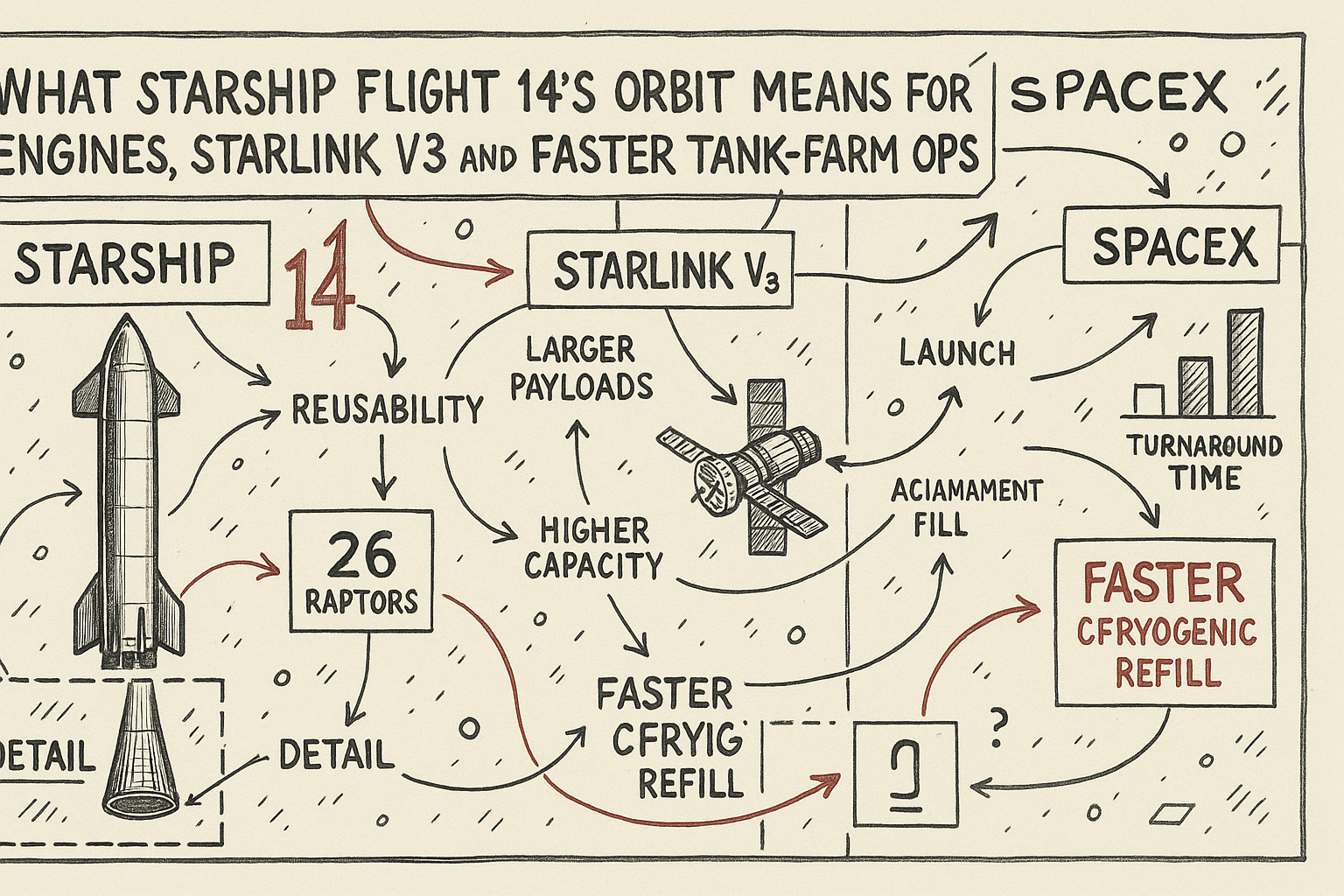
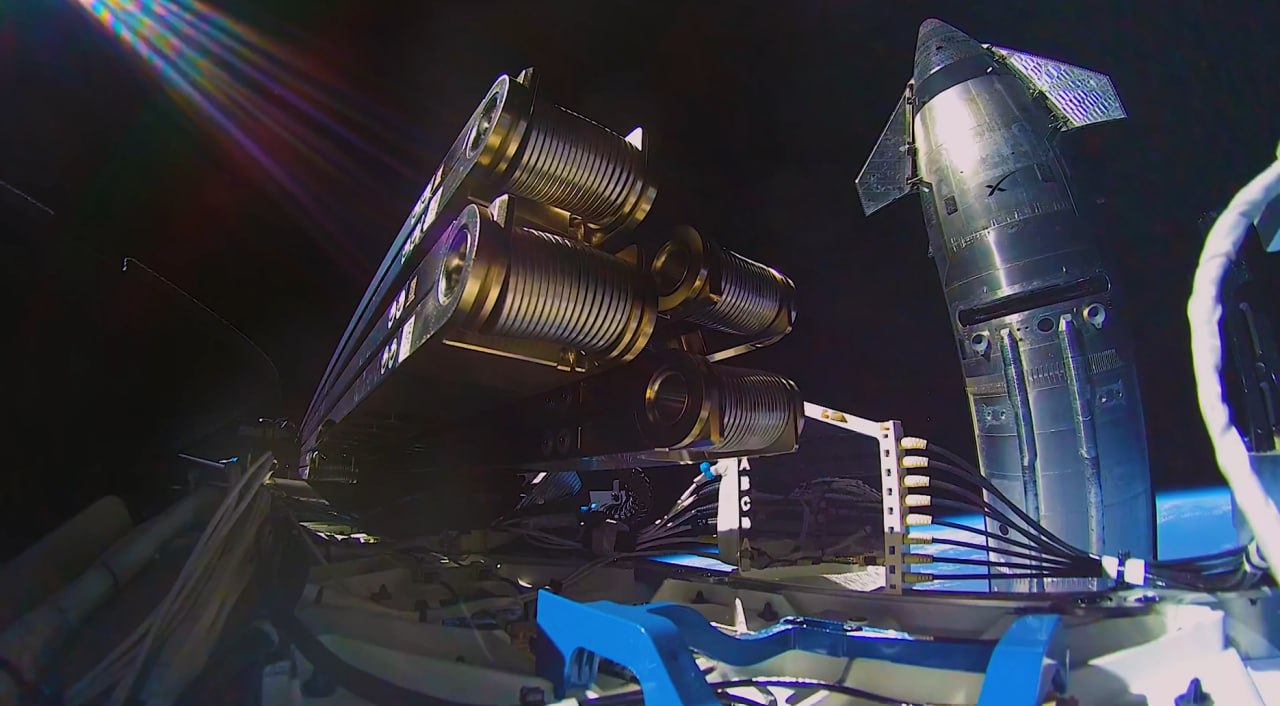
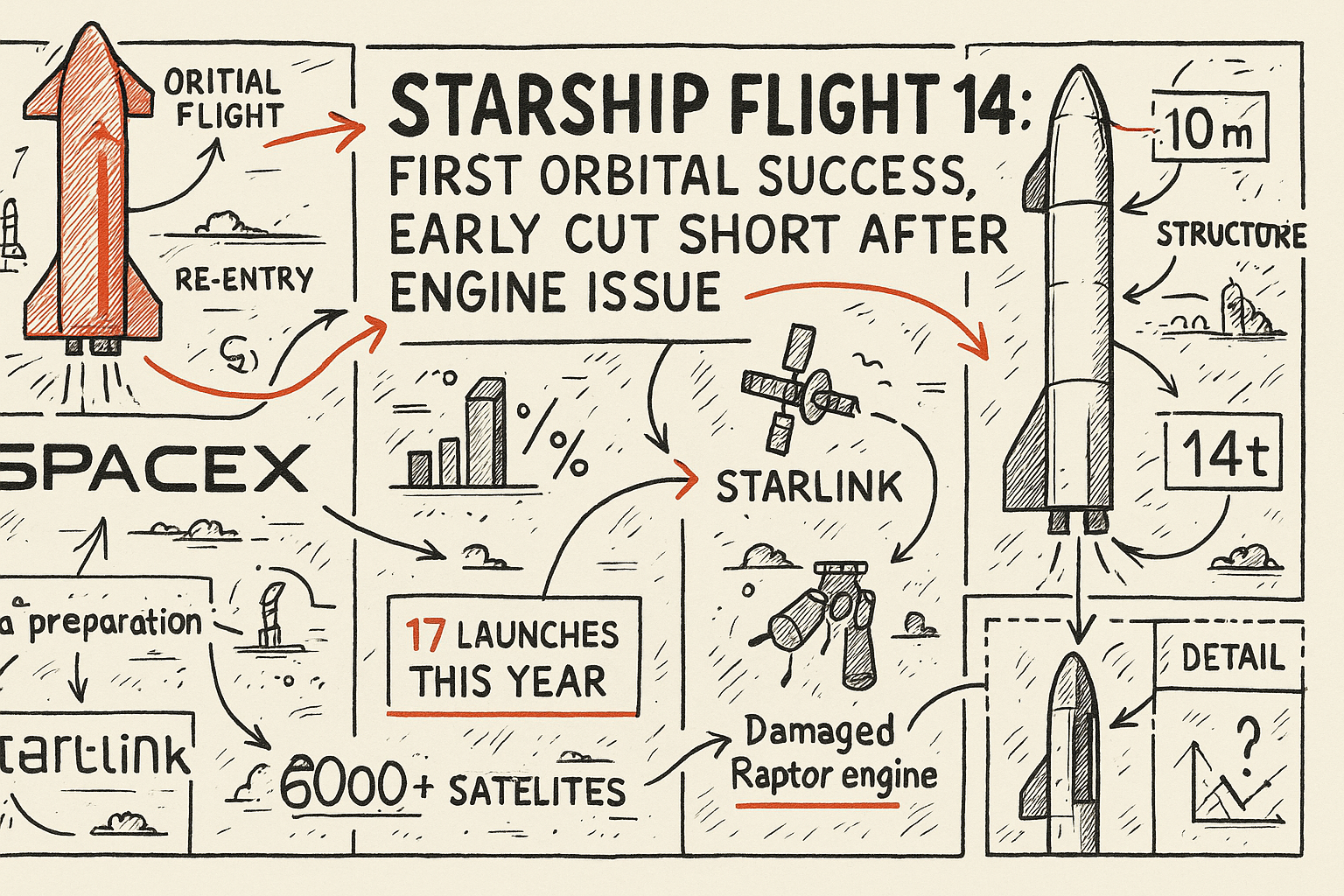
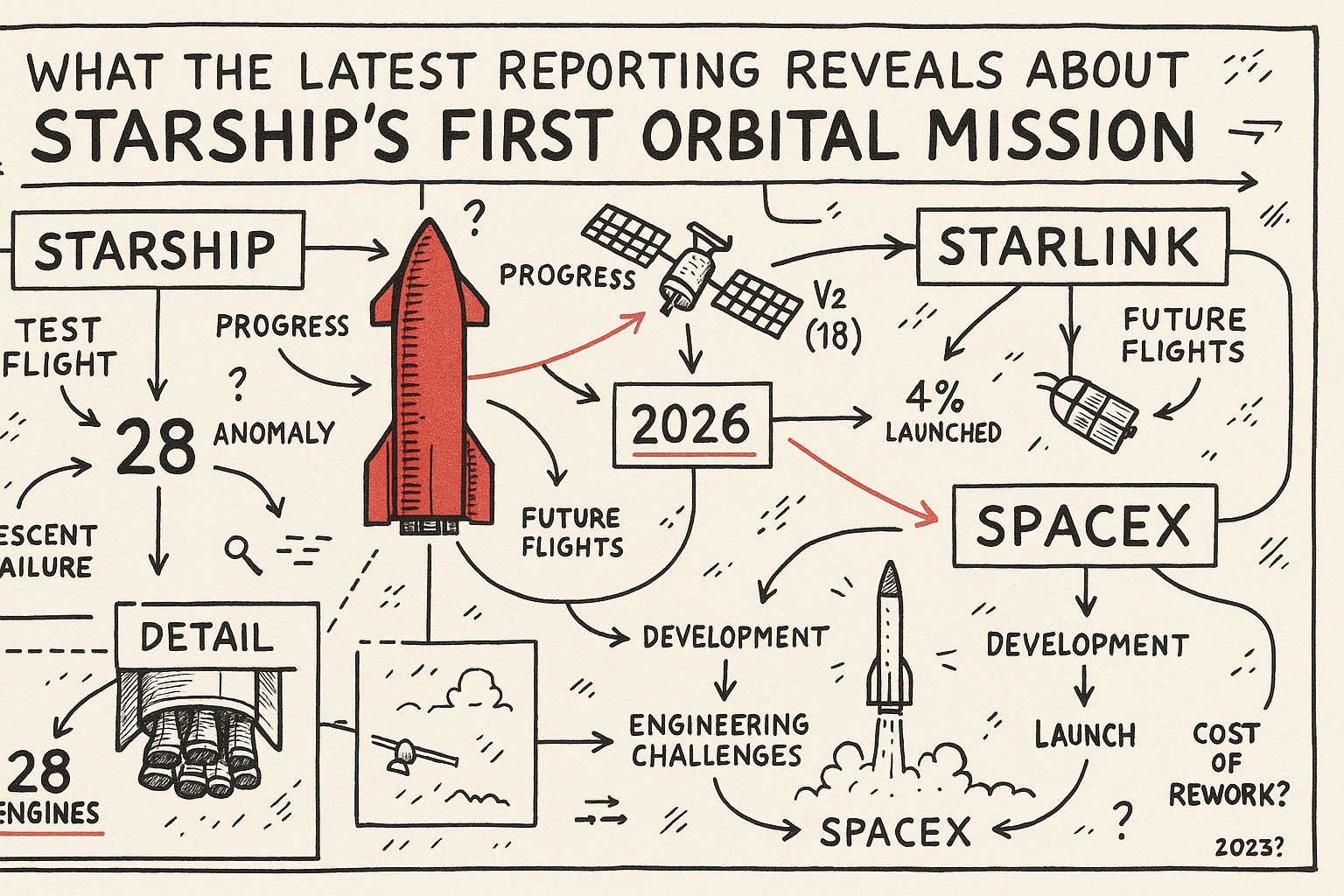
Starship reached orbit for the first time on Flight 14, on Sept. 28, and successfully deployed the 26 Starlink V3 satellites it carried, Space.com reported. The flight came after 13 prior integrated flights that were intentionally flown on suborbital trajectories. It was the 14th flight of the integrated Starship-Super Heavy rocket and came 18 years after the company’s Falcon 1 reached orbit for the first time.
Before launch, Spaceflight Now reported that SpaceX planned to monitor vehicle health during ascent and the initial coast phase. If those checks were satisfactory, the Ship 41 upper stage was to reignite one of its three sea-level Raptor engines about 25 minutes after liftoff to raise and circularize its trajectory and place the vehicle into orbit.
Putting the pieces together
Viewed together, the new material documents concurrent operational streams at SpaceX: ongoing Falcon 9 missions delivering Starlink satellites from established launchpads like Vandenberg, and an intensified development schedule for Starship, which has now reached orbit. The Vandenberg flight’s details — exact liftoff time, orbital inclination target, and a 20th-flight booster landing on Of Course I Still Love You — add operational color to routine Starlink deployment. The Starship reporting lays out the program milestone and the upper-stage restart sequence planned to reach orbit with Ship 41.
These accounts do not offer detailed telemetry, but together they illustrate how SpaceX continues to operate Falcon 9 as a workhorse fleet while Starship, still in the test-flight phase, moves from suborbital flights to orbit.