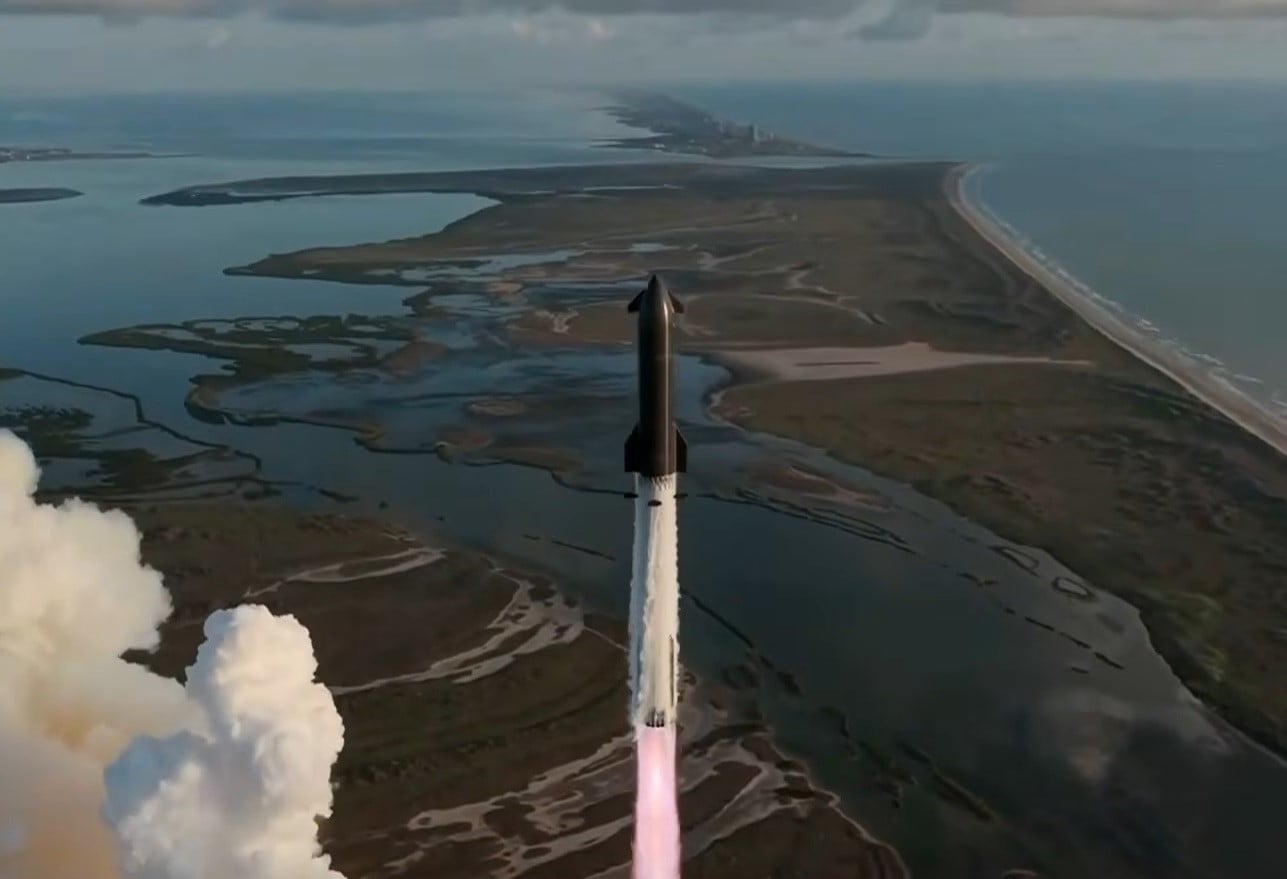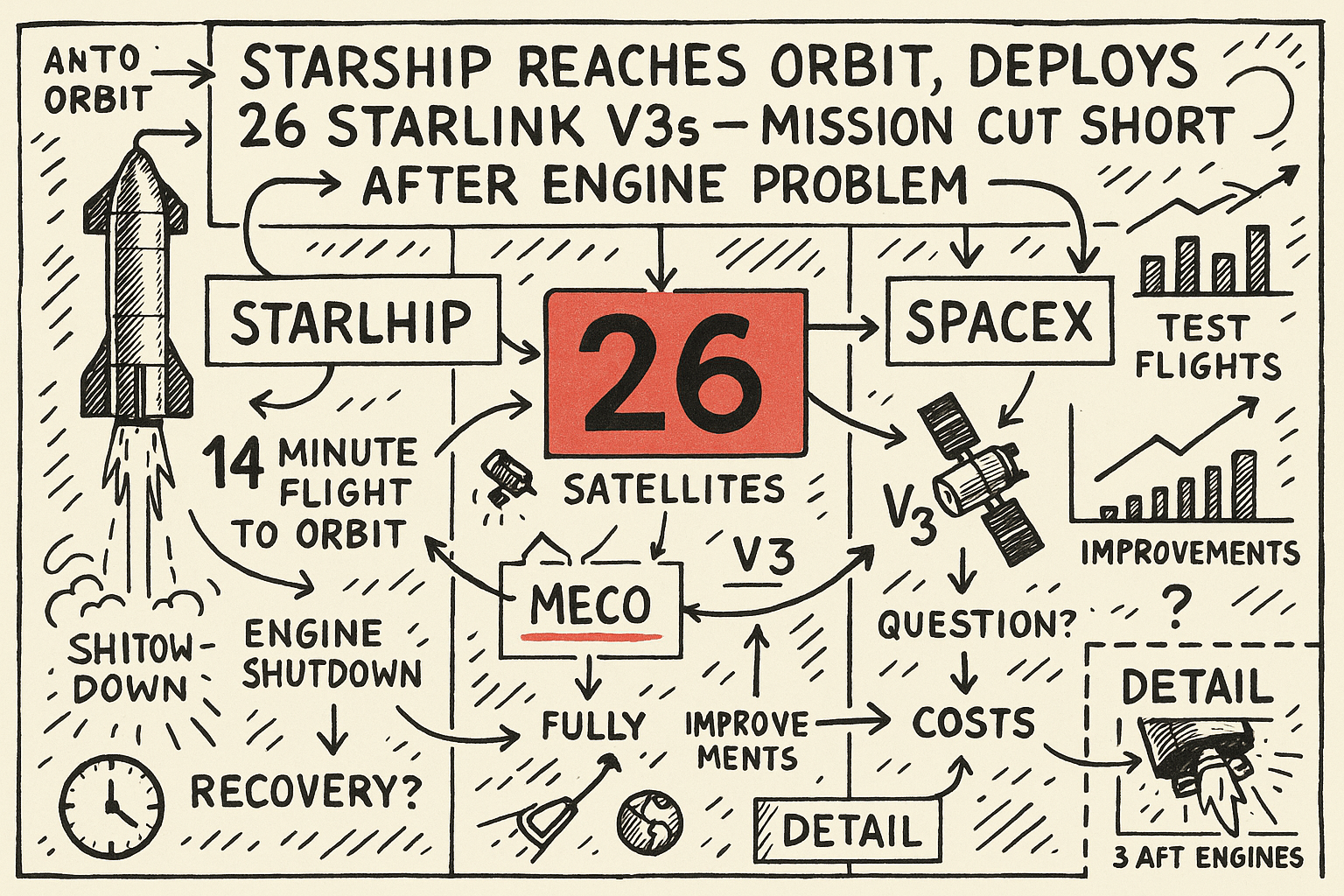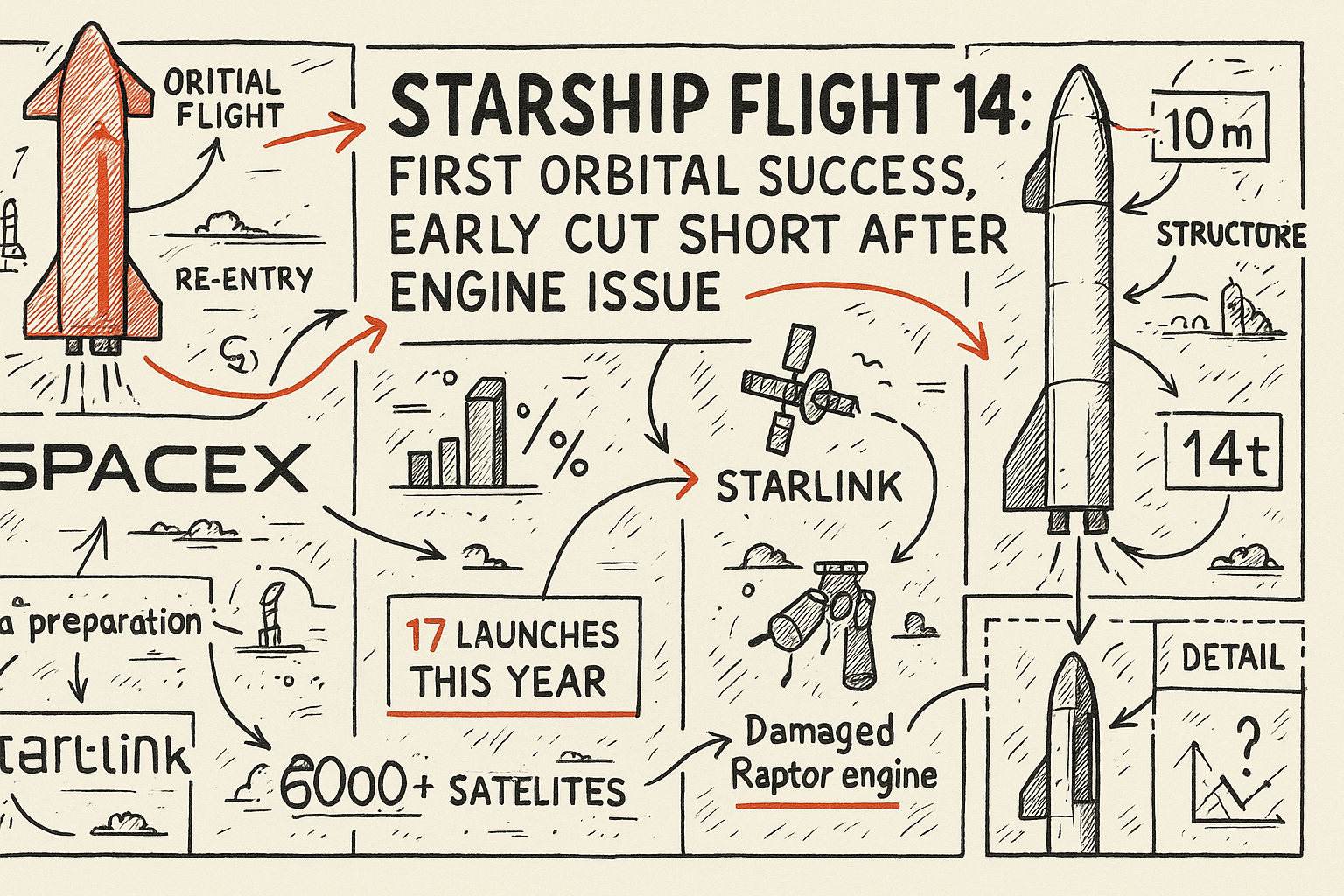
SpaceX’s Starship reached a major milestone on its 14th test flight, achieving Earth orbit and placing operational Starlink satellites into space for the first time. The mission, launched from SpaceX’s Starbase complex on the Texas coast, also represented the first orbital flight in a program where the previous 13 missions had been suborbital.
The vehicle lifted off at 7:50 a.m. CT (12:50 p.m. UTC). Reported measurements describe Starship as 407 feet (124 meters) tall. According to multiple reports, the flight completed nearly two orbits before the mission was cut short about 10 hours early due to an engine issue.
What the flight accomplished
Despite the shortened timeline, the mission put operational Starlink satellites into orbit for the first time using Starship. Earlier Starship test flights had remained suborbital, making this flight a key step in the vehicle���s development toward future lunar and Mars ambitions.
The milestone comes three years after Starship’s first test flight, and follows SpaceX’s shift into a more accelerated phase of activity described in coverage around the company’s initial public offering in June. Industry outlets highlighted the significance of attempting an orbital insertion on the 14th flight as SpaceX moves the massive launch vehicle closer to operational status.
How the flight ended
Officials and subsequent reporting indicated the mission ended early after an engine issue. The cut-short flight still demonstrated orbital capability and deployment of operational payloads, but the engine problem truncated a mission that had been planned to last significantly longer.
Context and implications
Observers have framed the orbital attempt as a key development step for Starship in the context of longer-term goals, including missions to the moon and Mars. The flight’s partial success—orbital insertion and Starlink deployment—provides material data for SpaceX as it continues testing and refining the Starship system.
Coverage noted that this flight was the 14th in the Starship test program and the first to attain orbit after a series of suborbital tests. While the engine issue prevented completion of the full mission plan, the achievement of orbit and operational Starlink deployment mark important technical and commercial milestones for SpaceX.