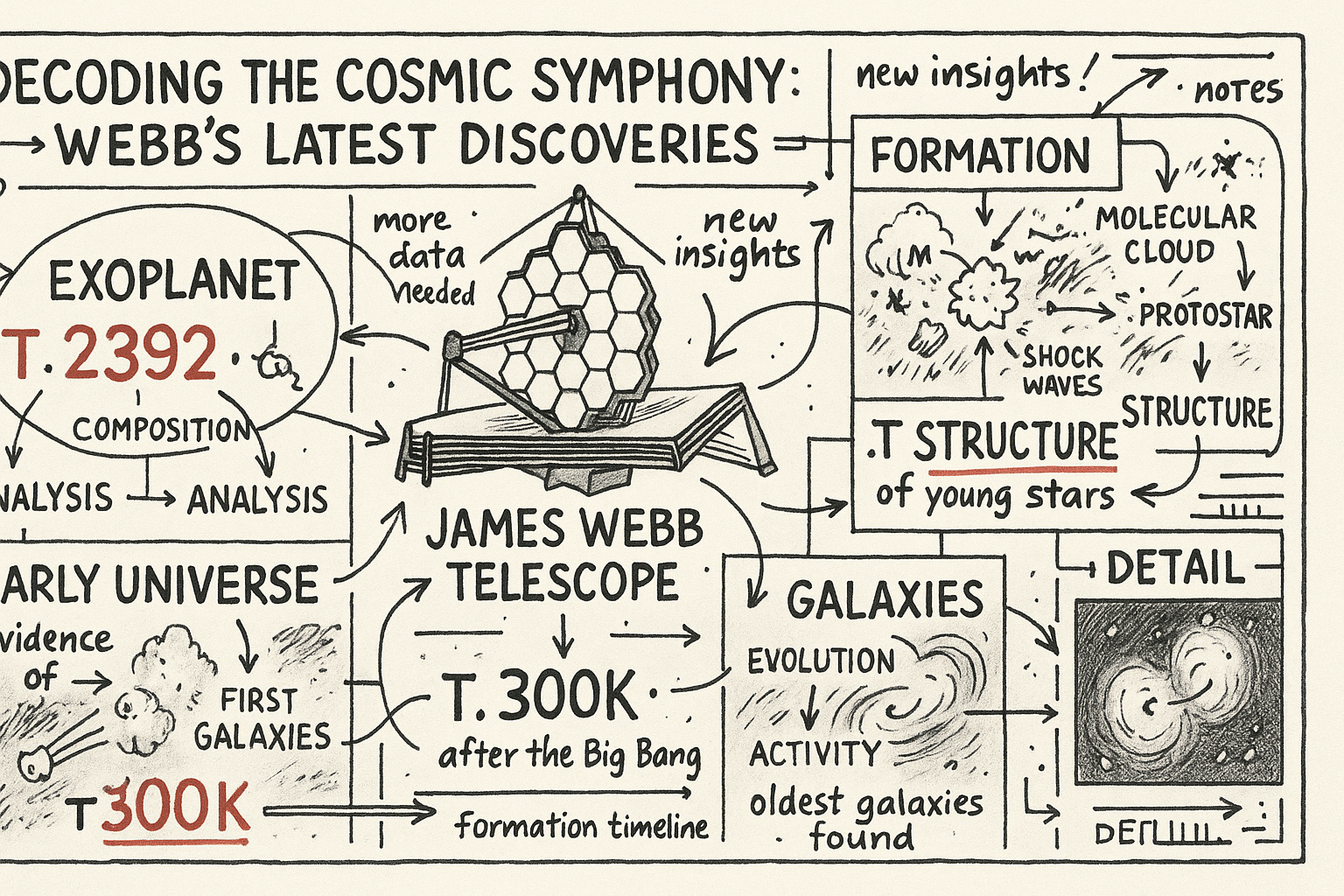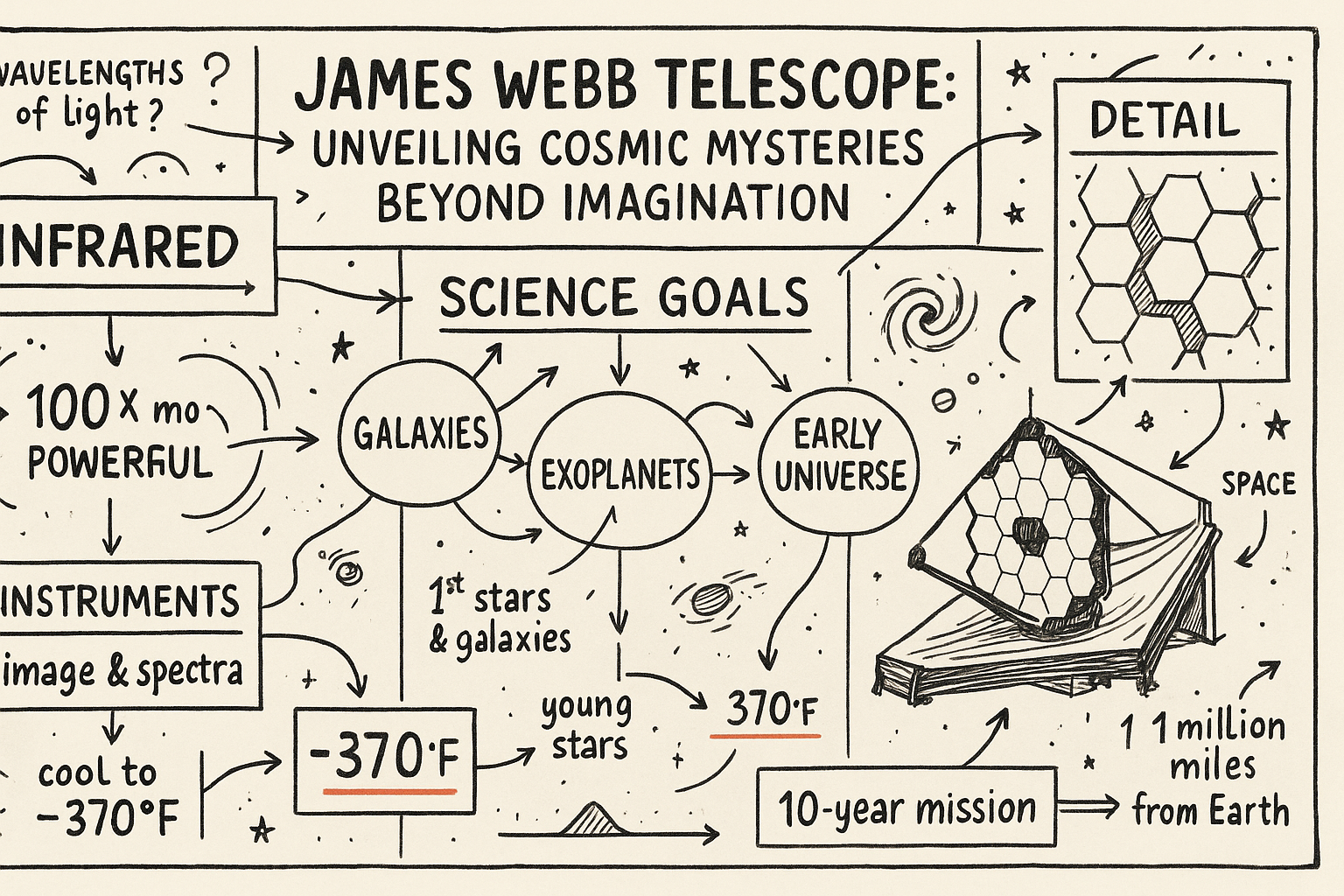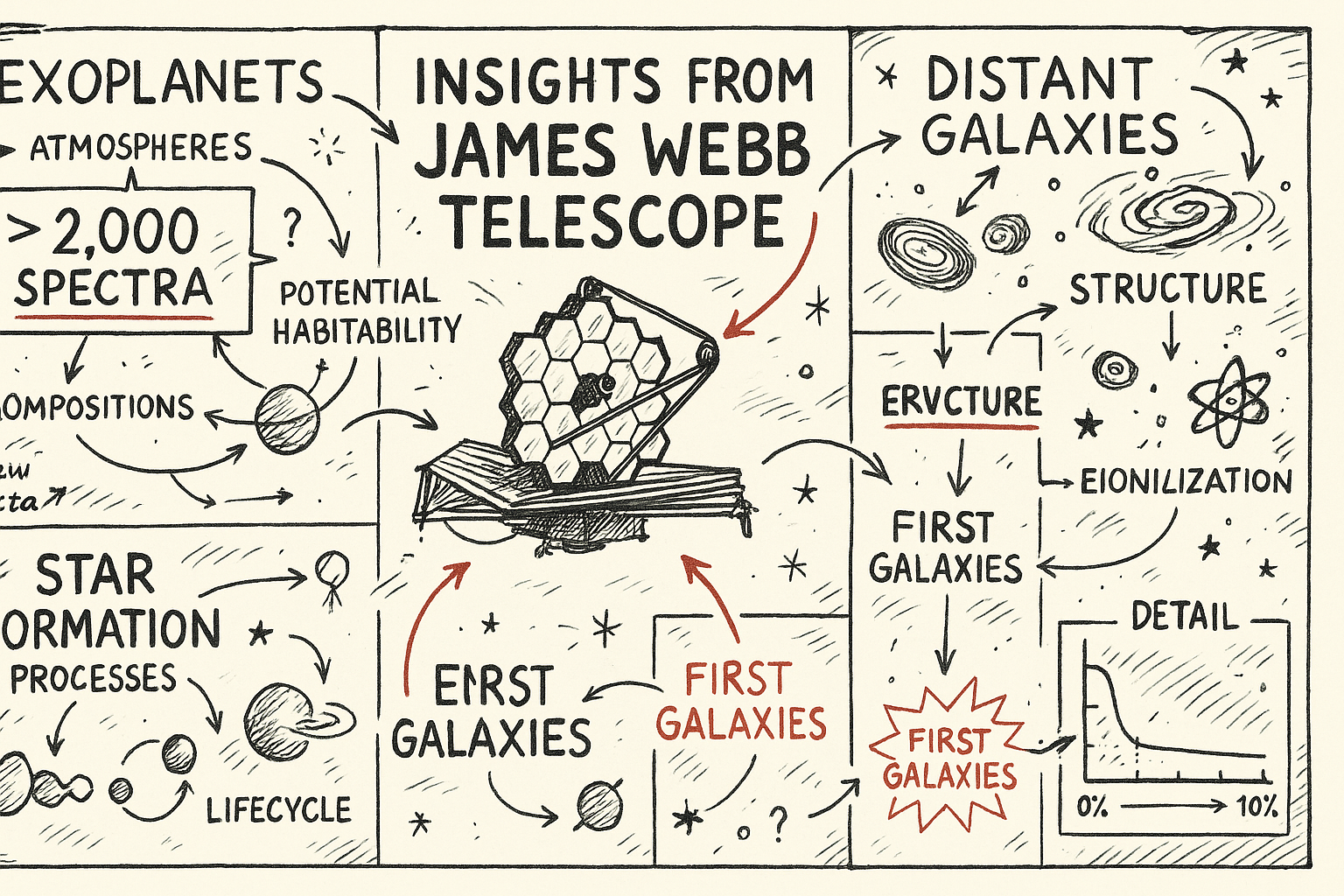
The cosmos has long been a source of wonder, posing questions that challenge our understanding of the universe itself. Recent discoveries by the James Webb Space Telescope (JWST) are not just answering these questions but are also presenting new ones. From unraveling the mysteries of early galaxy formation to exploring the atmospheric complexities of exoplanets, JWST is redefining our perception of space.
Early Galaxy Evolution: A Deeper Look
The recent observations of early galaxies, as reported by Nature Astronomy, have shed light on the rapid production and redistribution of heavy elements such as oxygen, carbon, and silicon during the universe's infancy, mere hundreds of millions of years post-Big Bang. This suggests that the processes of stellar evolution and nucleosynthesis began much earlier than previously thought, challenging our models of cosmic evolution (Source 1).
Furthermore, JWST's ability to detect hundreds more galaxies compared to its predecessor, the Hubble Space Telescope, showcases the telescope's superior sensitivity to infrared light. This capability was highlighted by the discovery of a galactic cluster acting as a gravitational lens, revealing a merger of galaxies dating back to 2 billion years after the Big Bang (Source 3). Such insights not only enhance our understanding of galaxy formation but also provide a more detailed tapestry of the universe's early days.
Exoplanetary Atmospheres: A Complex Web
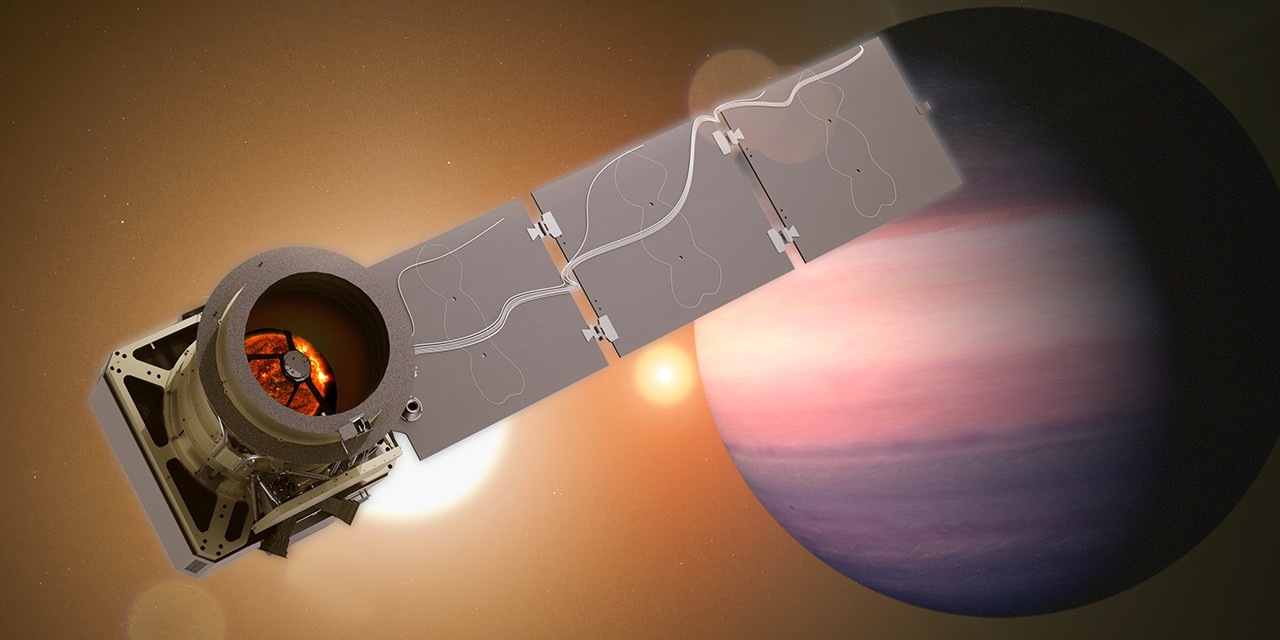
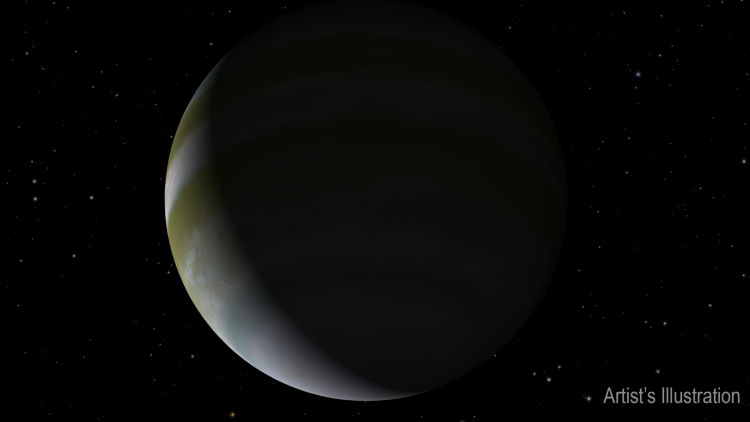
JWST's exploration isn't limited to distant galaxies. It has also provided a glimpse into the atmospheric composition of exoplanets like Hats-6 b, a gas giant orbiting an M dwarf star. The detection of water, methane, ammonia, and carbon dioxide in its atmosphere is intriguing, especially since the planet's temperature is much lower than expected. This has prompted astrophysicists to reassess how such planets interact with their host stars and the implications for potential habitability (Source 2).
The findings also connect to a larger narrative about the formation and evolution of planetary systems. As detailed in a study published in ScienceDaily, JWST has shown that young planetary systems lose their planet-building gas due to jets, molecular winds, and radiation-driven outflows. This highlights the race against time for giant planets to form massive atmospheres before their gas disks dissipate (Source 5).
Pulsar Discoveries: New Frontiers
Beyond galaxies and exoplanets, JWST's observations have extended to rare stellar phenomena. The discovery of a binary system comprising a millisecond pulsar and the youngest white dwarf observed in such a system is a testament to JWST's prowess. This discovery, led by a team from INAF and the University of Bologna, offers the first evidence of circumstellar material around a young white dwarf, opening new avenues in the study of stellar evolution and material accretion (Source 4).
The Future of Space Exploration
What do these findings mean for the future of space exploration? They suggest that our understanding of cosmic phenomena is still in its infancy, and each discovery by JWST is a step towards a more comprehensive cosmic narrative. The telescope's ability to provide high-resolution data across various astrophysical domains demonstrates its potential to revolutionize not just our understanding of the universe's past but also the mechanisms driving its present and future.
As we continue to decipher the data beamed back by JWST, the potential for groundbreaking discoveries remains vast. Whether it’s the early universe's galaxy evolution, the complexities of exoplanetary atmospheres, or the intricacies of stellar phenomena, JWST is a powerful beacon guiding our quest for knowledge.