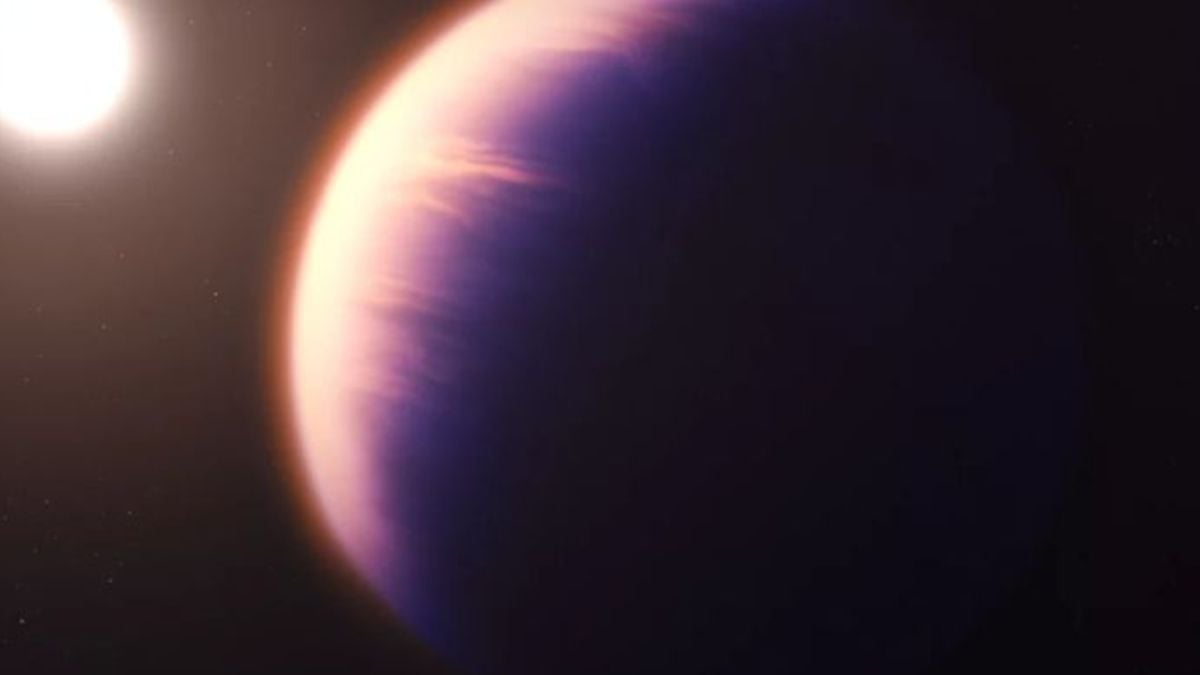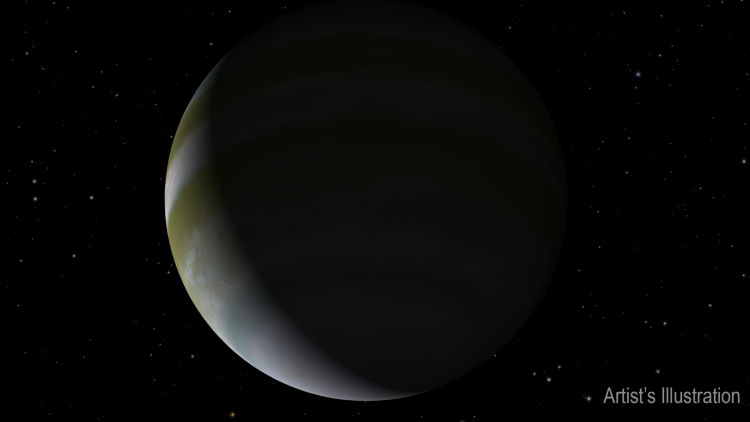
Sub-Neptune exoplanets have emerged as the most common type of planet in the Milky Way Galaxy, yet their characteristics remain largely enigmatic. These celestial bodies, slightly smaller than Neptune, account for almost 3,300 out of the more than 6,300 confirmed exoplanets to date. However, the lack of a sub-Neptune analogue within our own solar system, coupled with their thick and hazy atmospheres, poses significant challenges for telescopic observations, even with advanced instruments like NASA's James Webb Space Telescope (JWST).
Recent findings by a team of researchers from the United States and Canada, spearheaded by the University of Chicago, could potentially illuminate the mystery surrounding these elusive worlds. The study, published in The Astrophysical Journal, focused on TOI-270 d, a sub-Neptune located approximately 73 light-years away, discovered in 2019. TOI-270 d's radius and mass are about twice and 4.2 times that of Earth, respectively, and it completes an orbit around its red dwarf star every 11.4 days.
Previous JWST observations identified the presence of carbon dioxide, methane, and hydrogen in TOI-270 d’s atmosphere, suggesting the possibility of water. However, the state of this water—whether solid, liquid, or gas—remains uncertain. The study utilized computer models to simulate the atmospheric and interior composition of TOI-270 d and found that the temperature and the water-hydrogen ratio play critical roles in determining the mixing and separation of water and hydrogen.
The warmer temperatures of TOI-270 d, reaching up to 537 degrees Celsius (1,000 degrees Fahrenheit), coupled with a higher concentration of water compared to hydrogen, might cause the water to sink below the hydrogen atmosphere. This phenomenon could shield the water from detection by JWST, indicating that sub-Neptunes may possess more water than previously estimated. This challenges earlier hypotheses that proposed well-mixed interiors for sub-Neptunes, suggesting instead the possibility of separated interiors.
Dr. Caroline Piaulet-Ghorayeb, a postdoctoral researcher at the University of Chicago and lead author of the study, highlighted the implications of these findings, stating, "It’s very possible these planets are hiding much more water than their atmospheres let on." This revelation opens new avenues for understanding the dynamics of sub-Neptunes and the potential for water-rich environments beyond our current observational capabilities.
The study's implications extend beyond TOI-270 d, as it prompts a reevaluation of the composition of the galaxy's most common planets. Astronomers have long speculated about the interior makeup of sub-Neptunes, debating whether they are rocky planets enveloped in hydrogen-rich atmospheres or volatile-rich worlds teeming with water. The potential for hidden water reservoirs could significantly alter our understanding of these planetary bodies and their potential habitability.
As researchers continue to probe the mysteries of sub-Neptunes, the limitations of current observational technologies become apparent. While the JWST provides unprecedented insights into distant worlds, the study underscores the need for further advancements in telescopic capabilities to explore the depths of these enigmatic planets fully.
The findings also highlight the importance of interdisciplinary research, combining observational data with sophisticated modeling techniques to unravel the complexities of exoplanetary systems. As our technological prowess advances, so too will our ability to uncover the hidden secrets of the universe, reshaping our understanding of planetary formation and the potential for life beyond Earth.