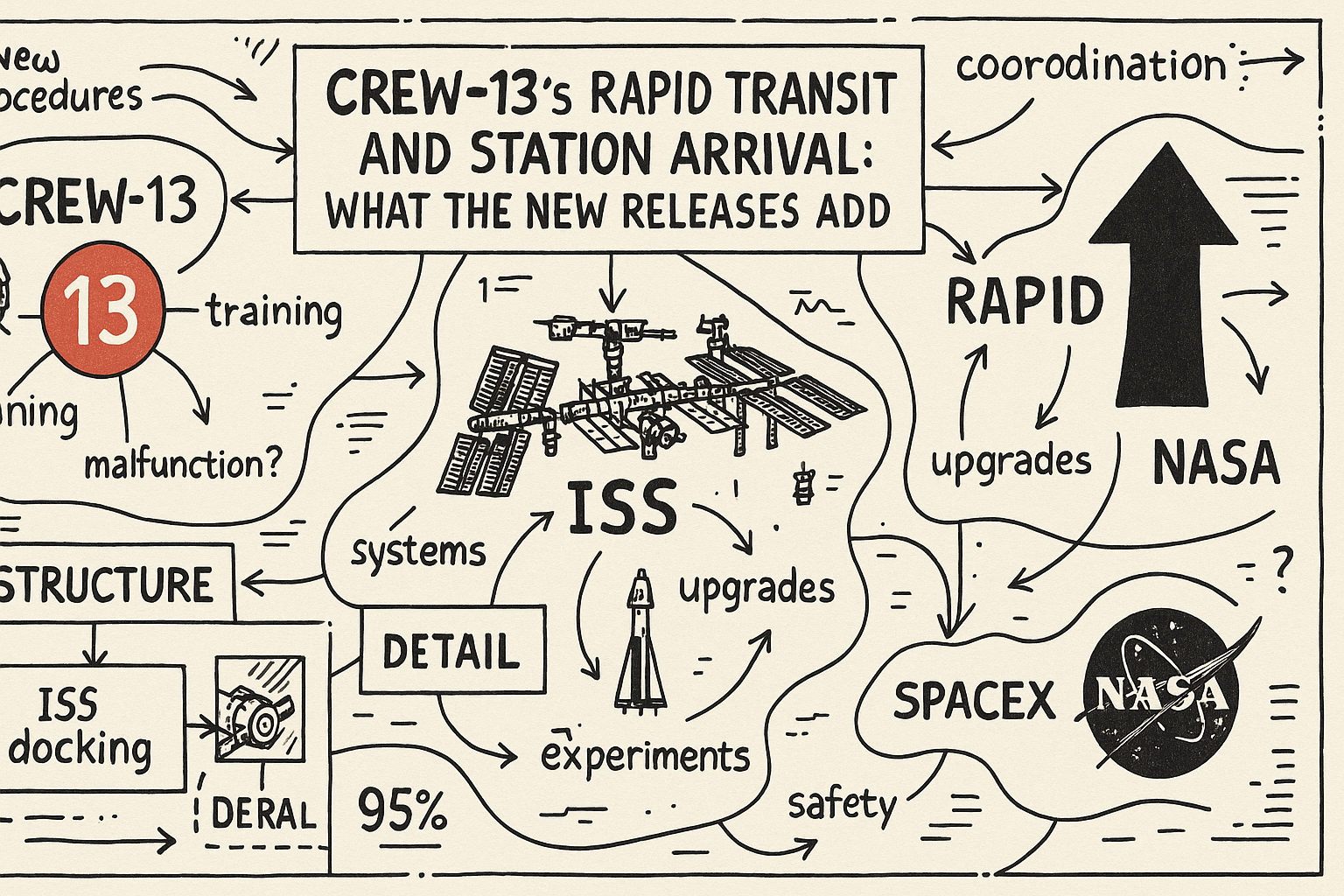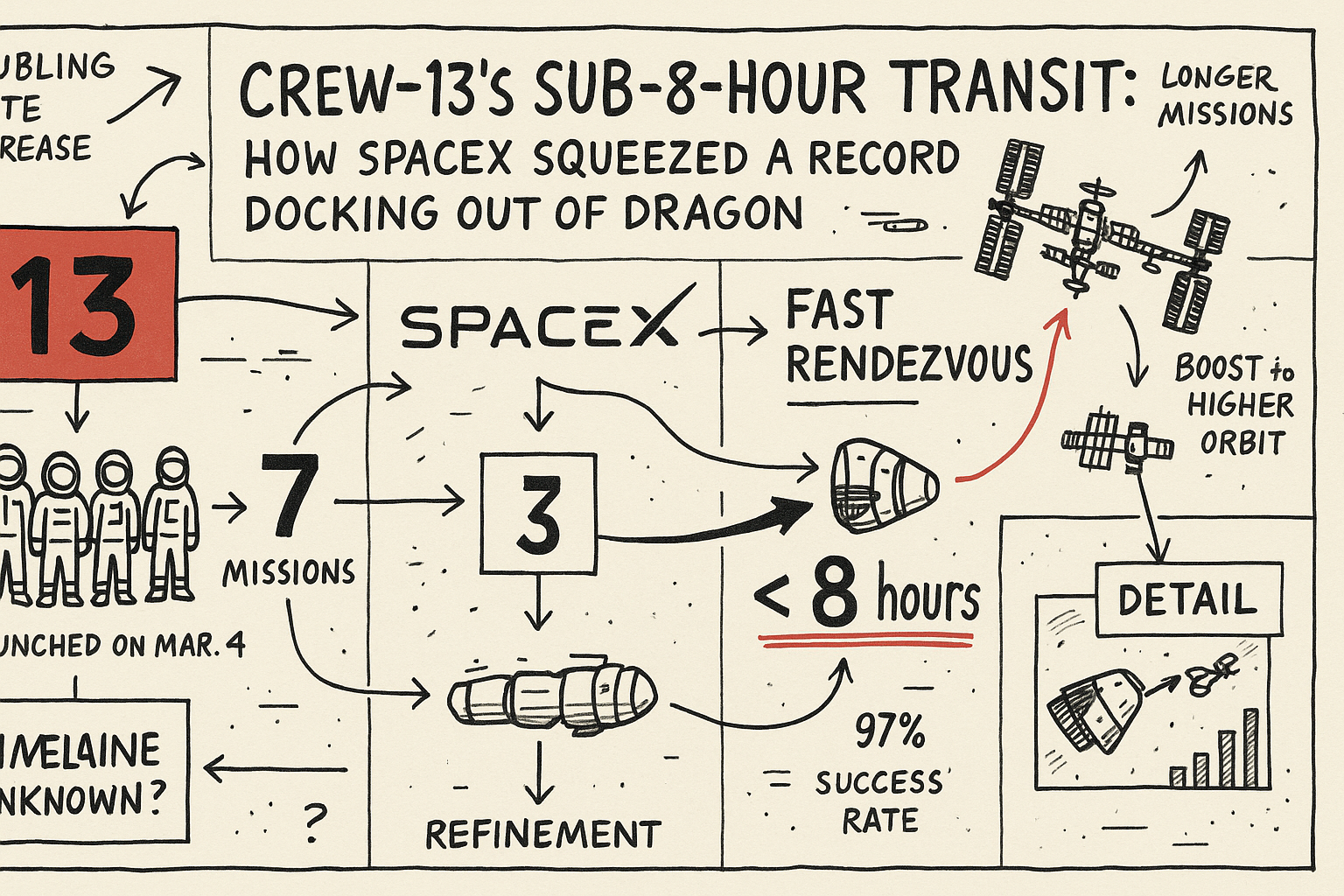
On Oct. 1, 2026, NASA’s SpaceX Crew-13 mission completed a record-setting transit from Florida to the International Space Station, with the Crew Dragon docking in 7 hours and 55 minutes according to NASA — the fastest trip to the orbital outpost by any U.S. spacecraft.
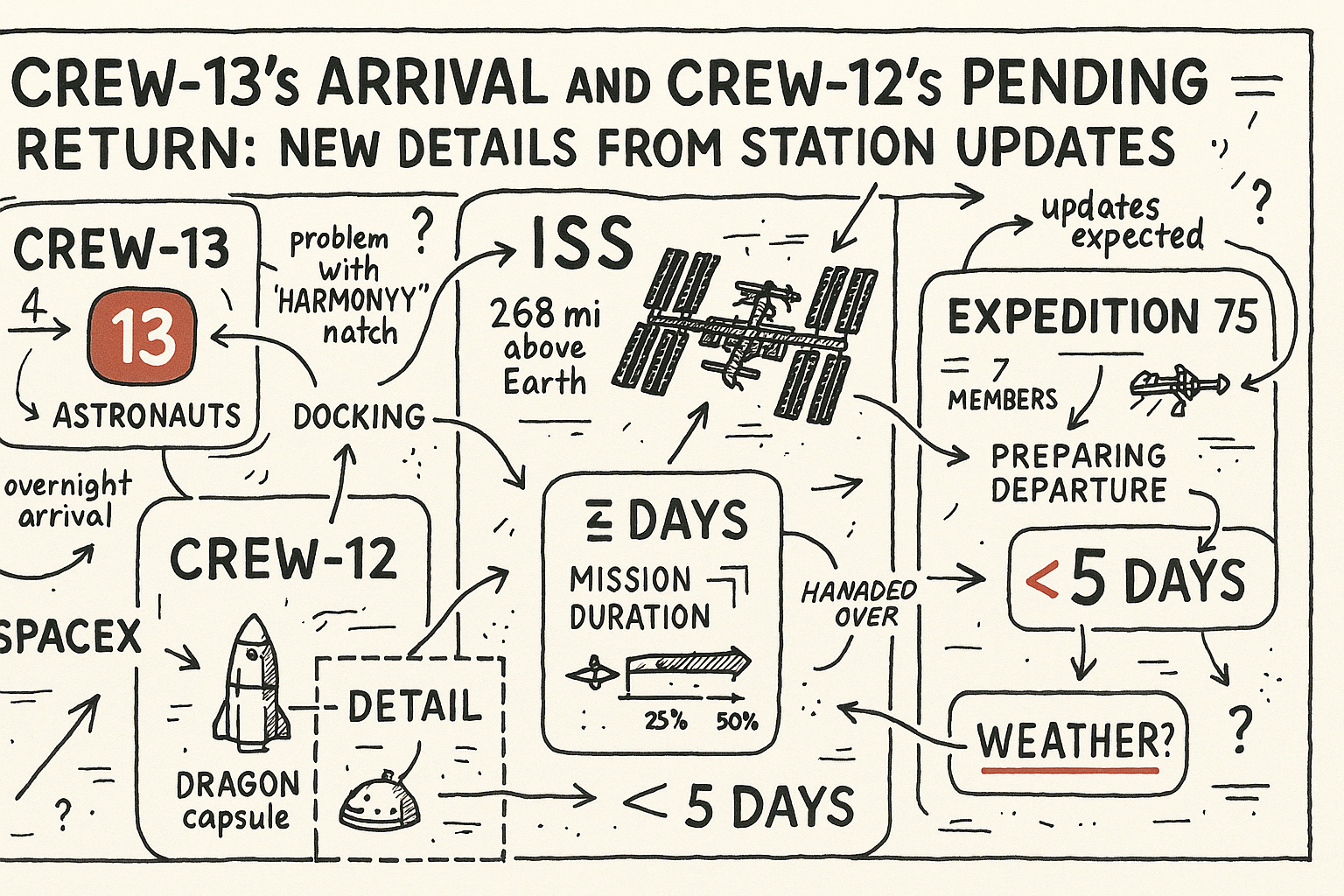
The mission carried four crew members: two Americans, a Russian and Canadian astronaut Joshua (Josh) Kutryk, who entered the station after the rapid docking. NASA said the arrival brought the number of people aboard the station to 11 as Expedition 75’s roster expanded and Crew-12 prepared to depart.
What the record means
NASA described the flight time as "record-setting" and explicitly reported the 7-hour, 55-minute elapsed time from launch to docking. Multiple outlets covering the event repeated that figure and noted the milestone as the fastest by a U.S. vehicle. SpaceQ’s reporting emphasized the under-eight-hour arrival and identified Kutryk’s entry into the ISS following that docking.
SpaceX’s short-profile rendezvous contrasted with longer, multi-day approaches used historically by some spacecraft. Coverage around the launch highlighted the mission’s speed: commentary in news reports and agency posts framed the event as a fast rendezvous achieved on this Crew-13 flight.
Operational context and human details
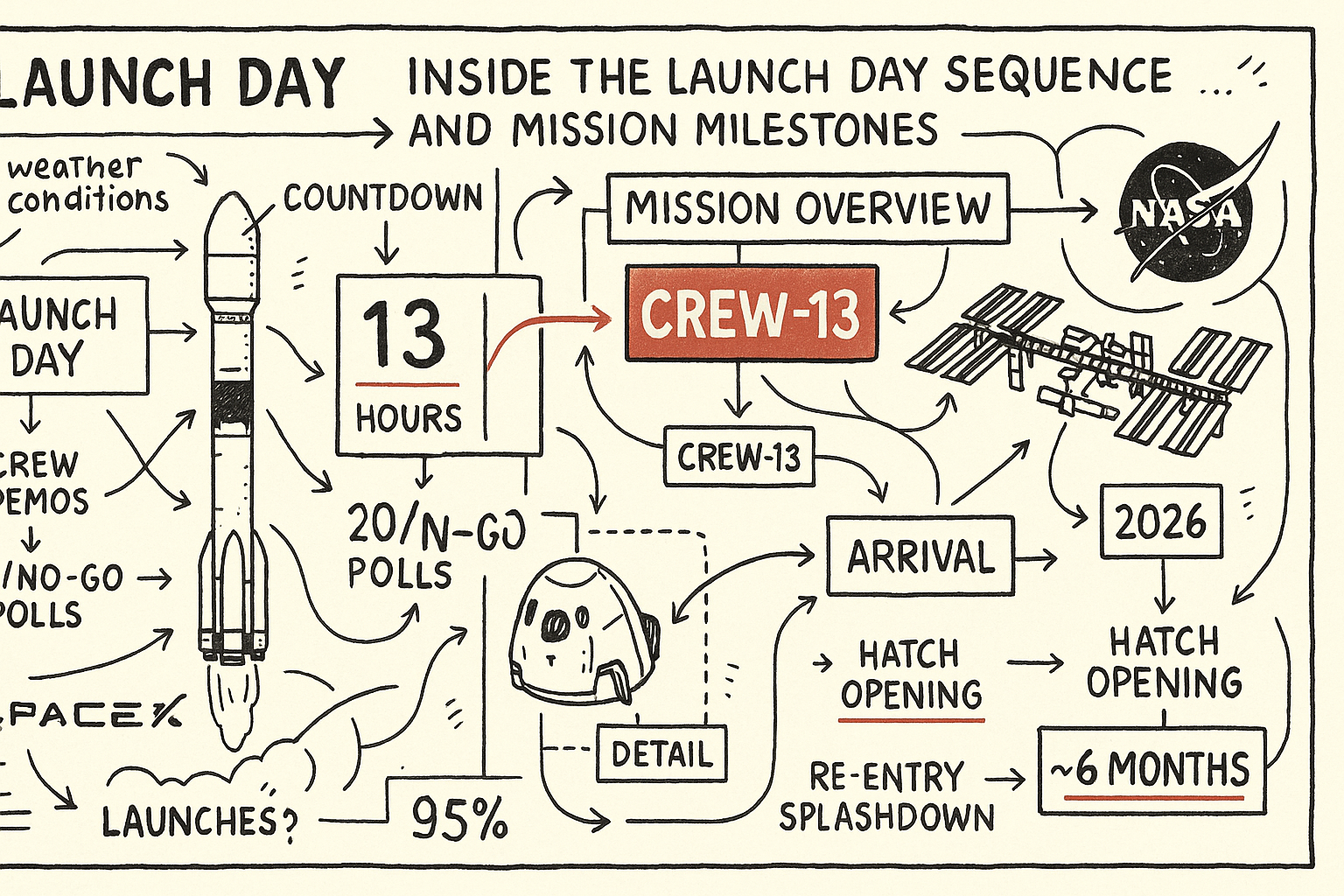
BBC video coverage of the launch noted the crew composition and mentioned that the four will spend up to six months aboard the station. The outlet also reported that the launch had been delayed from mid-September to replace a valve in the Crew Dragon’s propulsion system, a detail included in post-launch reporting on the mission.
NASA’s post-arrival blog described a relaxed station environment the day after arrival: the Expedition 75 crew slept in and spent the day relaxing following the Oct. 1 arrival of Crew-13. NASA’s coverage reiterated the 7-hour, 55-minute flight time and the resulting increase to 11 people living on the orbital outpost.
How the timeline was reported
Different outlets cited slightly varied short-form summaries of the transit time — phrases such as "under eight hours," "record-fast," and the precise 7 hours 55 minutes appear across reporting — but all pointed to the same fact: Crew-13 reached the station in well under a single day, marking a U.S. spacecraft speed milestone.
SpaceQ’s accounts framed the event as boosting the onboard population to 11 and noted that Crew-12 was preparing to depart, providing immediate operational context for the rapid docking. NASA’s narrative added human detail about station life after the arrival, while BBC coverage placed the mission in broader human-interest terms, noting family circumstances of crewmembers and the planned duration of the mission.
Takeaway
The Crew-13 flight stands out in public reporting as a demonstrable operational achievement: a Dragon spacecraft delivered crewmembers to the ISS in 7 hours, 55 minutes, the fastest docking time reported for a U.S. vehicle. Agency and media accounts together document the milestone, the resulting increase to an 11-person station complement, and the immediate post-arrival routine aboard the outpost.