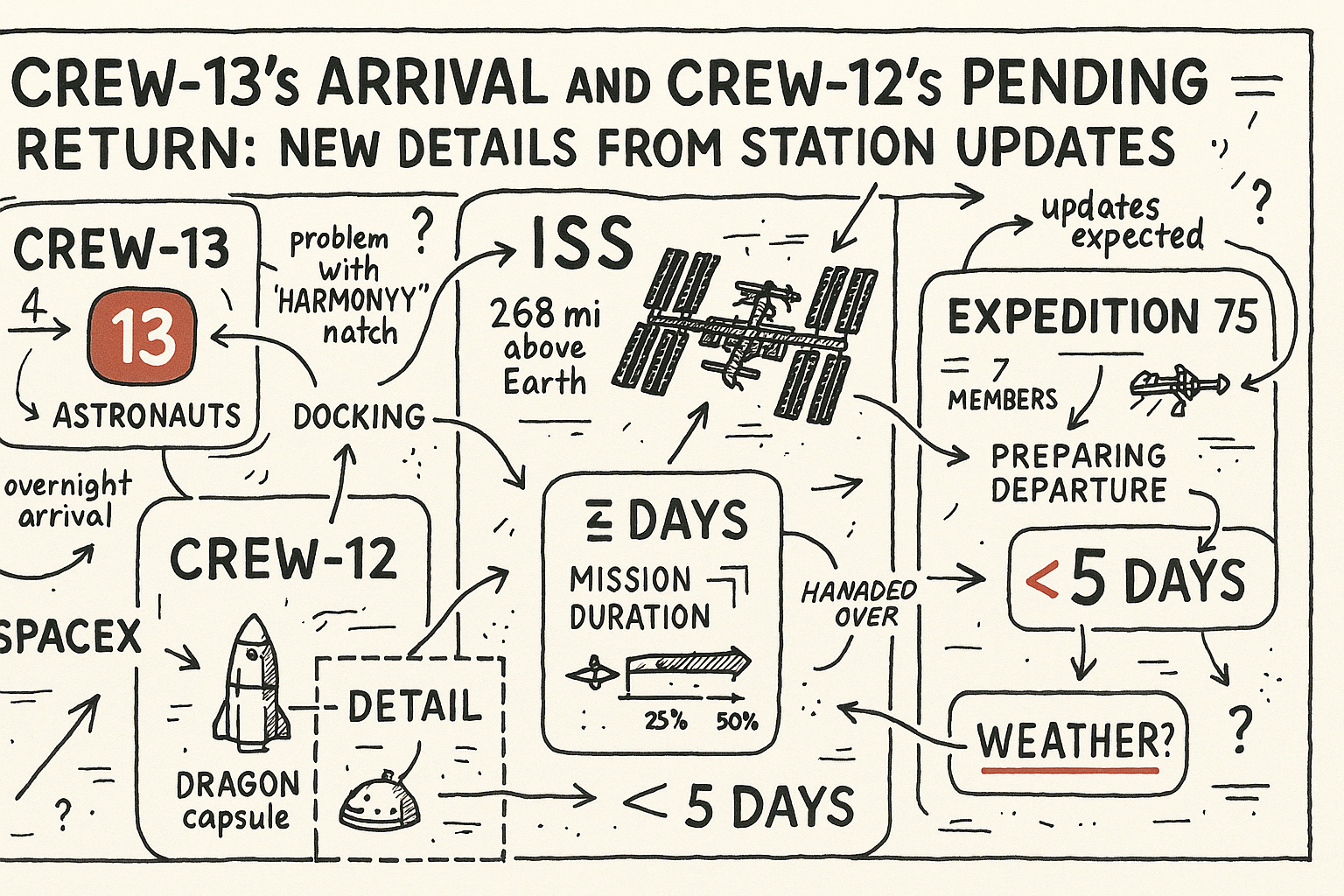
NASA’s recent station blog posts and mission notices fill in operational context around the rapid arrival of SpaceX Crew-13 and the planned departure of Crew-12, highlighting how Expedition 75 adjusted to an expanded crew and how agencies are sequencing a safe return for the outgoing team.
Record transit and station intake
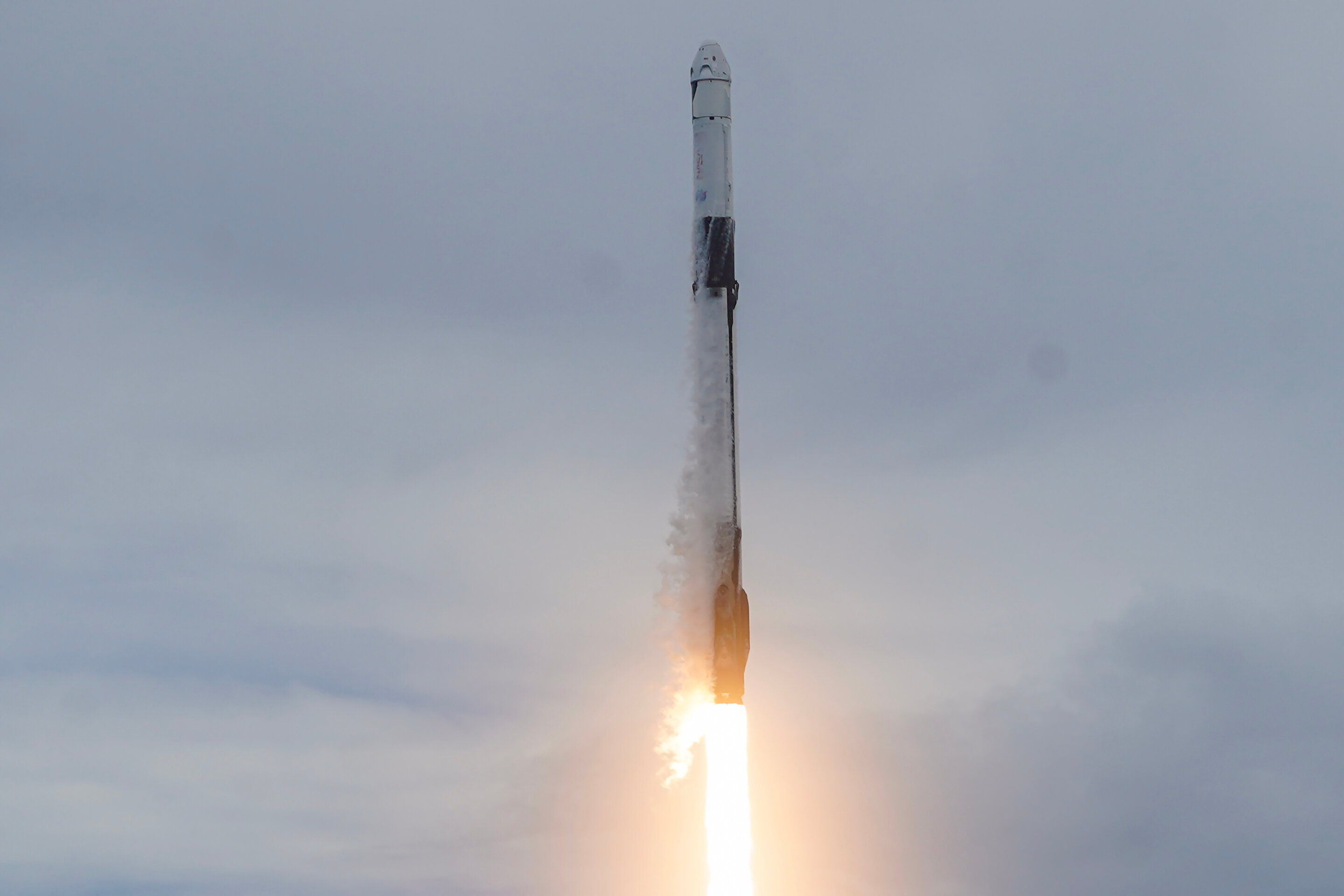
On Oct. 1, four Crew-13 members launched from Cape Canaveral and completed what NASA calls a record-setting sub-eight-hour transit to the International Space Station. The Dragon spacecraft’s hatch was opened at 9:19 p.m. EDT, and NASA astronauts Jessica Watkins and Luke Delaney, Canadian Space Agency astronaut Joshua Kutryk, and Roscosmos cosmonaut Sergey Teteryatnikov entered the station that evening. NASA’s account notes the delivered crew arrived after a 7-hour, 55-minute Dragon flight from Florida, and the new arrivals increased the number of people aboard the orbital outpost to 11.
Expedition 75’s cadence: science, maintenance, and a relaxed handover
Expedition 75 had been preparing the station to receive Crew-13 while continuing regular research and maintenance activities in the days leading up to the arrival. After the new crew came aboard, the station’s existing members allowed the newcomers time to rest: the crew slept in on Friday and spent much of the day relaxing following the Oct. 1 arrival. NASA’s log emphasizes that normal operations and scientific work continued alongside crew-processing tasks and the formalities of welcoming new crewmates.
Timing the return: Crew-12 undocking target
Following a review of weather and splashdown conditions off the coast of California, NASA and SpaceX jointly set a no-earlier-than target for Crew-12’s undocking: 1:05 a.m. EDT on Wednesday, Oct. 7. That timing reflects post-arrival sequencing to ensure safe handover and suitable recovery conditions for the returning crew. The announcement frames the undocking decision as contingent on weather and splashdown assessments carried out ahead of the planned departure.
Operational notes and public coverage
NASA’s communications describe the agencies’ complementary monitoring roles during these operations: SpaceX monitored the Dragon’s automated rendezvous and flight maneuvers from its mission control in Hawthorne, California, while NASA monitored station operations from the Johnson Space Center in Houston. NASA also provided public live coverage of Crew-13’s arrival events, including rendezvous, docking, and hatch opening.
Taken together, the recent posts document a tightly scheduled period for the ISS: a rapid Crew-13 launch-and-dock sequence that raised station population to 11, routine station work and rest for Expedition 75, and a carefully timed, weather-dependent plan for Crew-12’s departure and California splashdown recovery efforts.