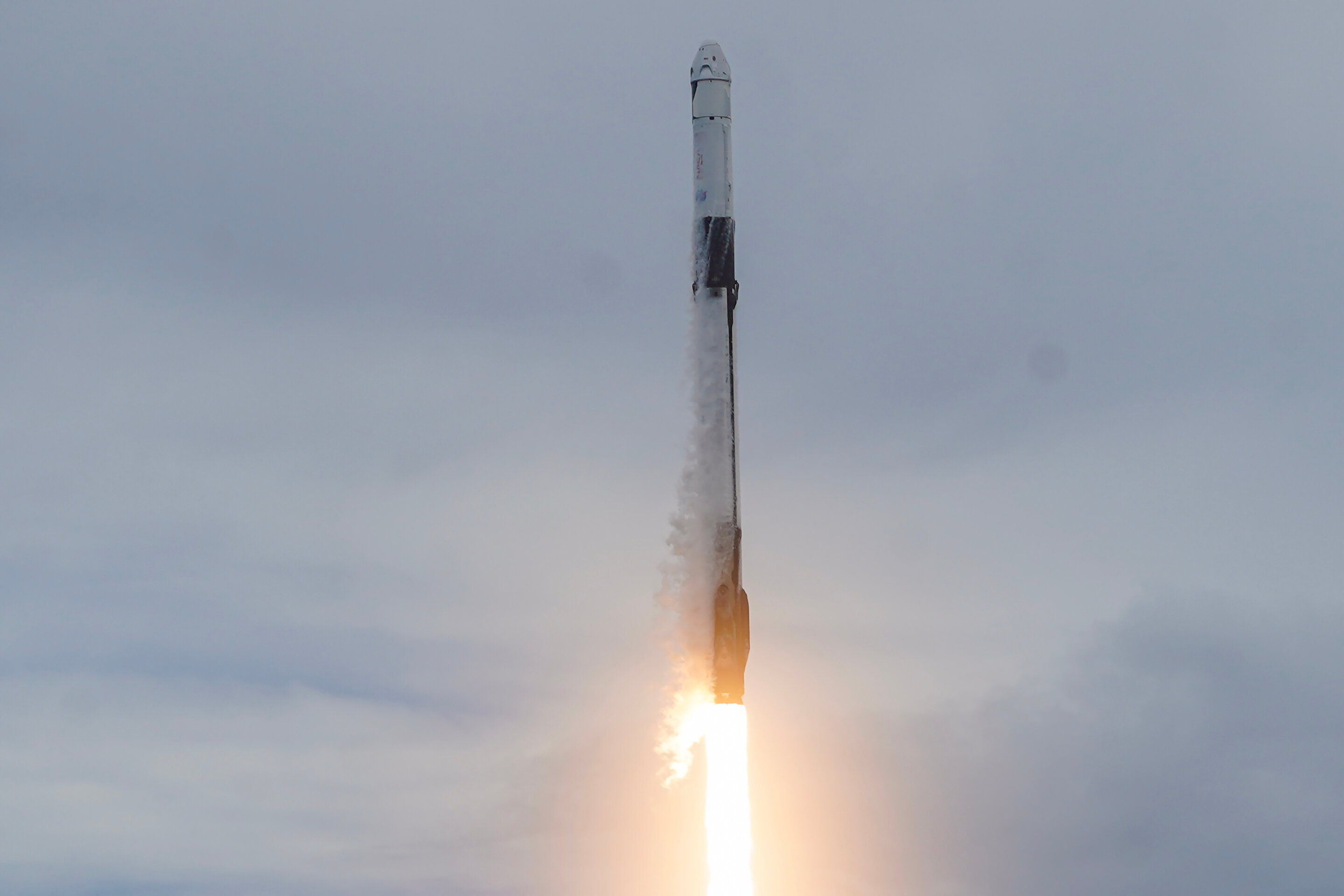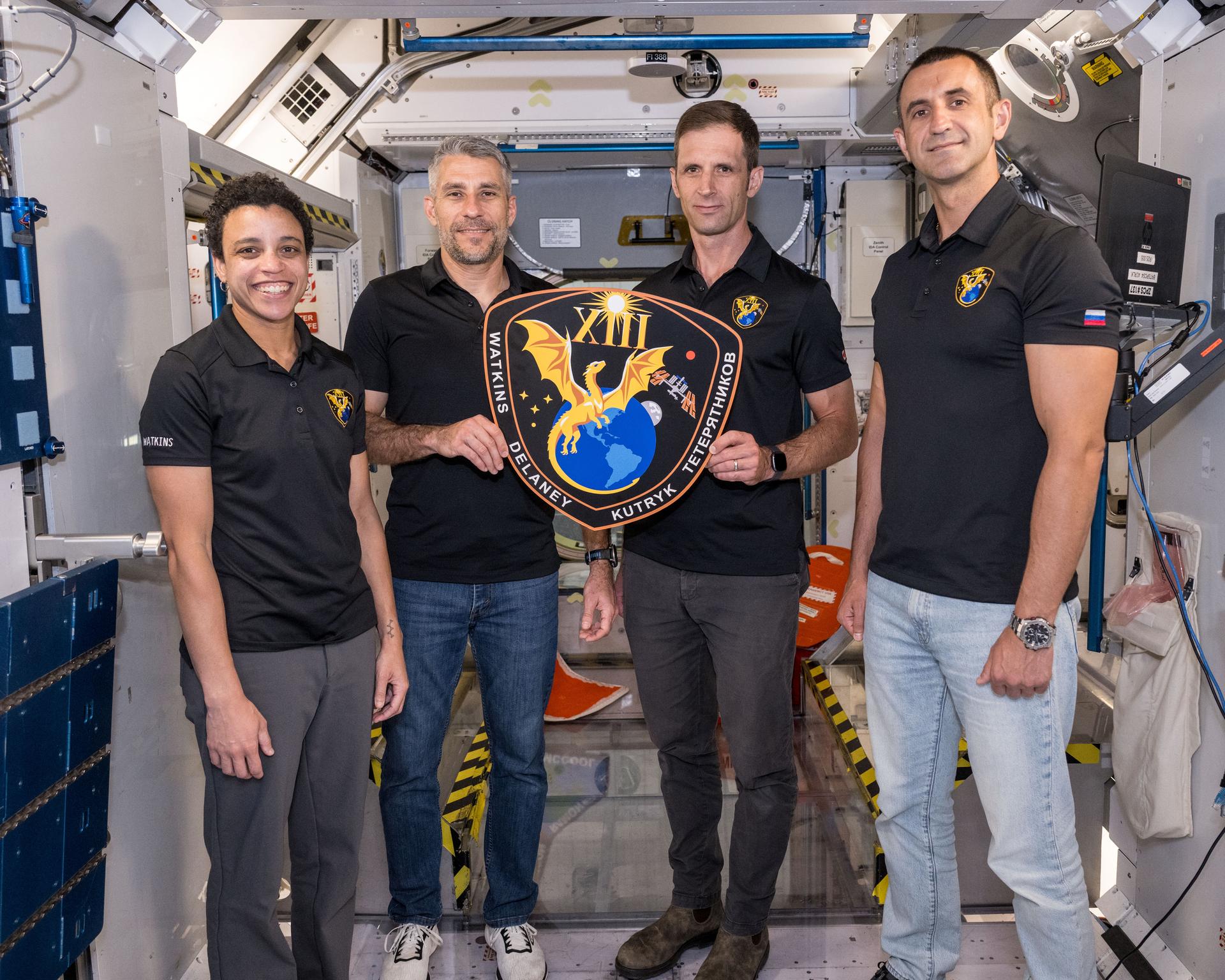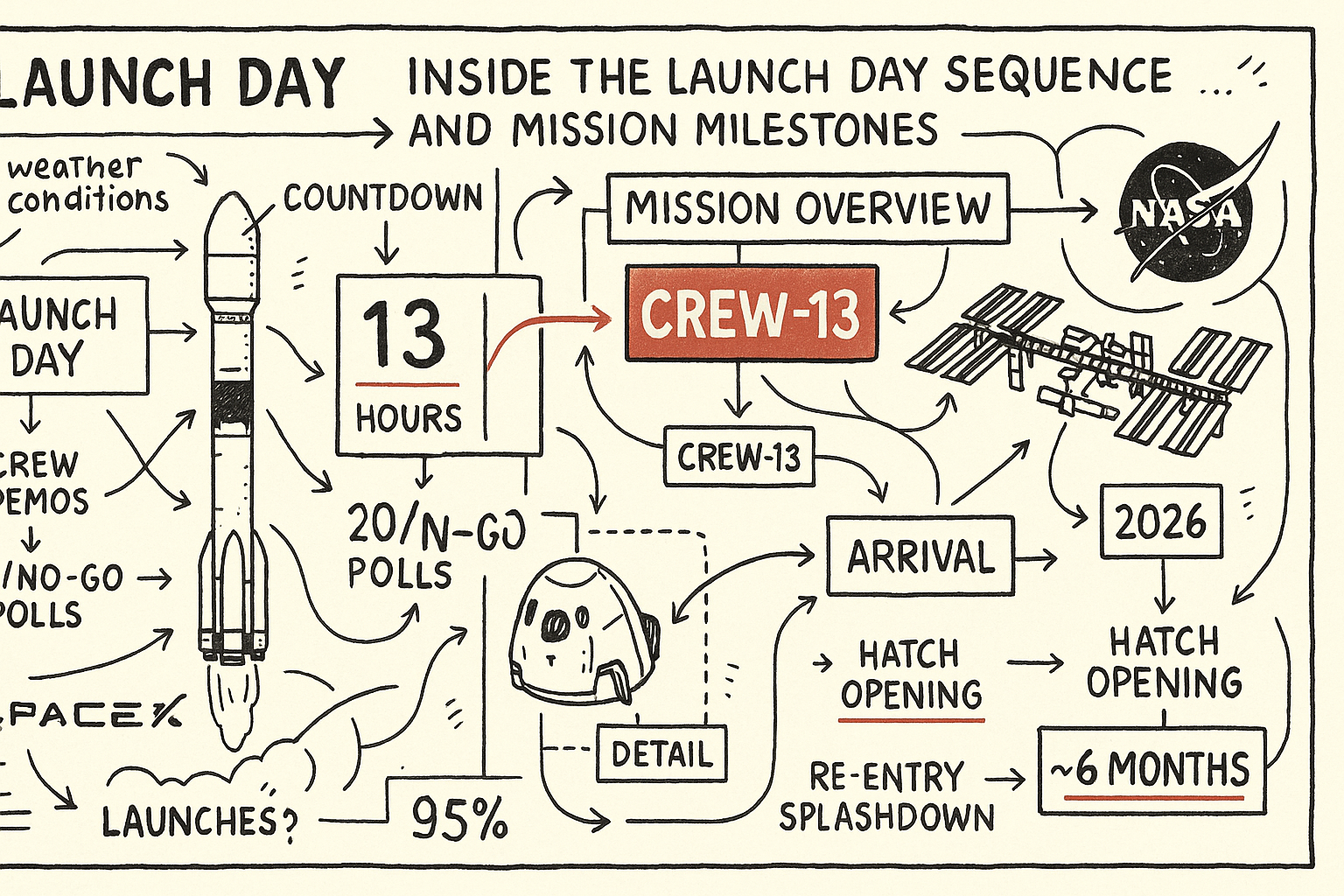
SpaceX’s Crew-13 mission launched from Cape Canaveral Space Force Station at 11:10 a.m. EDT on Oct. 1, 2026, sending a Dragon spacecraft and its Falcon 9 booster from Space Launch Complex 40 toward the International Space Station (ISS). The four-person complement aboard Dragon included NASA astronauts Jessica Watkins and Luke Delaney, Canadian Space Agency (CSA) astronaut Joshua Kutryk, and Roscosmos cosmonaut Sergey Teteryatnikov.
Launch timeline and immediate post‑launch events
NASA’s news release and imagery identify the official liftoff time as 11:10 a.m. EDT and show the Falcon 9 and Dragon stack clearing the pad at Space Launch Complex 40. NASA’s coverage notes that the mission reached orbit and that a news conference was scheduled at 12:45 p.m. EDT to discuss the orbital insertion and initial checkouts.
Images released by NASA document the vehicle ascent and early flight phases from multiple ground perspectives, underscoring the routine choreography between SpaceX and NASA for Crew Dragon launches. NASA’s mission statements and blog posts describe the mission in the standard framework used for commercial crew flights: liftoff from Cape Canaveral, ascent on a Falcon 9, separation of Dragon from the second stage, and insertion into orbit before the team pursues rendezvous operations with the ISS.
Crew composition and roles
The Crew-13 astronaut and cosmonaut roster is confirmed across NASA materials and broadcast coverage: mission crewmembers are Jessica Watkins and Luke Delaney from NASA, Joshua Kutryk representing the Canadian Space Agency, and Sergey Teteryatnikov from Roscosmos. Public briefings and launch coverage present the flight as a multinational crew operating aboard a U.S.-provided commercial spacecraft for transport to the ISS.
Public communications and coverage
NASA’s pre- and post-launch material established a formal public timeline for coverage, with live launch broadcasts and a post-launch news conference scheduled shortly after orbital insertion. NBC News provided live coverage of the launch and the ascent sequence, naming the crewmembers and relaying the official liftoff time. NASA’s website published images and blog updates documenting the launch and confirming that Dragon reached orbit.
Those communications reflect the cooperative media approach NASA and its partners employ for human spaceflight missions: simultaneous real-time telemetry and commentary via agency channels, scheduled briefings to summarize vehicle performance and crew status, and curated image releases to document the event for public record.
Mission context
NASA’s news release positions Crew-13 within the ongoing cadence of commercial crew operations to the ISS, emphasizing that the Falcon 9/Dragon combination launched from an established Space Launch Complex at Cape Canaveral. The mission continues the practice of international crews flying on U.S. commercial vehicles to the station.
Official materials stop short of detailed technical telemetry or a full rendezvous timeline in the items released on launch day; they instead focus on launch time, crew identity, confirmation of orbit, imagery of the launch, and the scheduling of a midday news conference to brief the public on initial mission status.
As the mission proceeds, NASA’s scheduled briefings and updates, along with imagery and blog posts, will remain the primary sources for verified operational details, crew activities, and docking timelines.