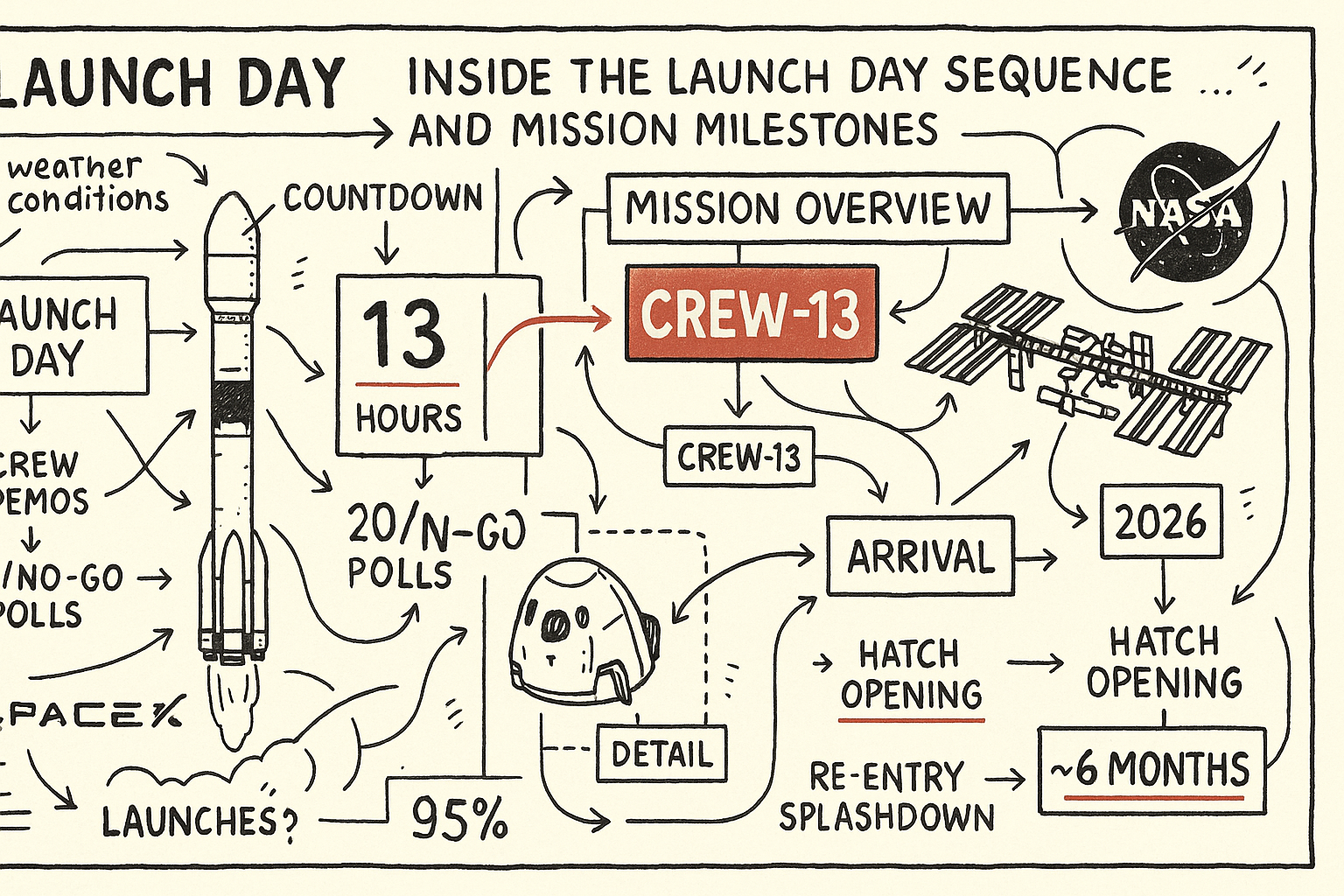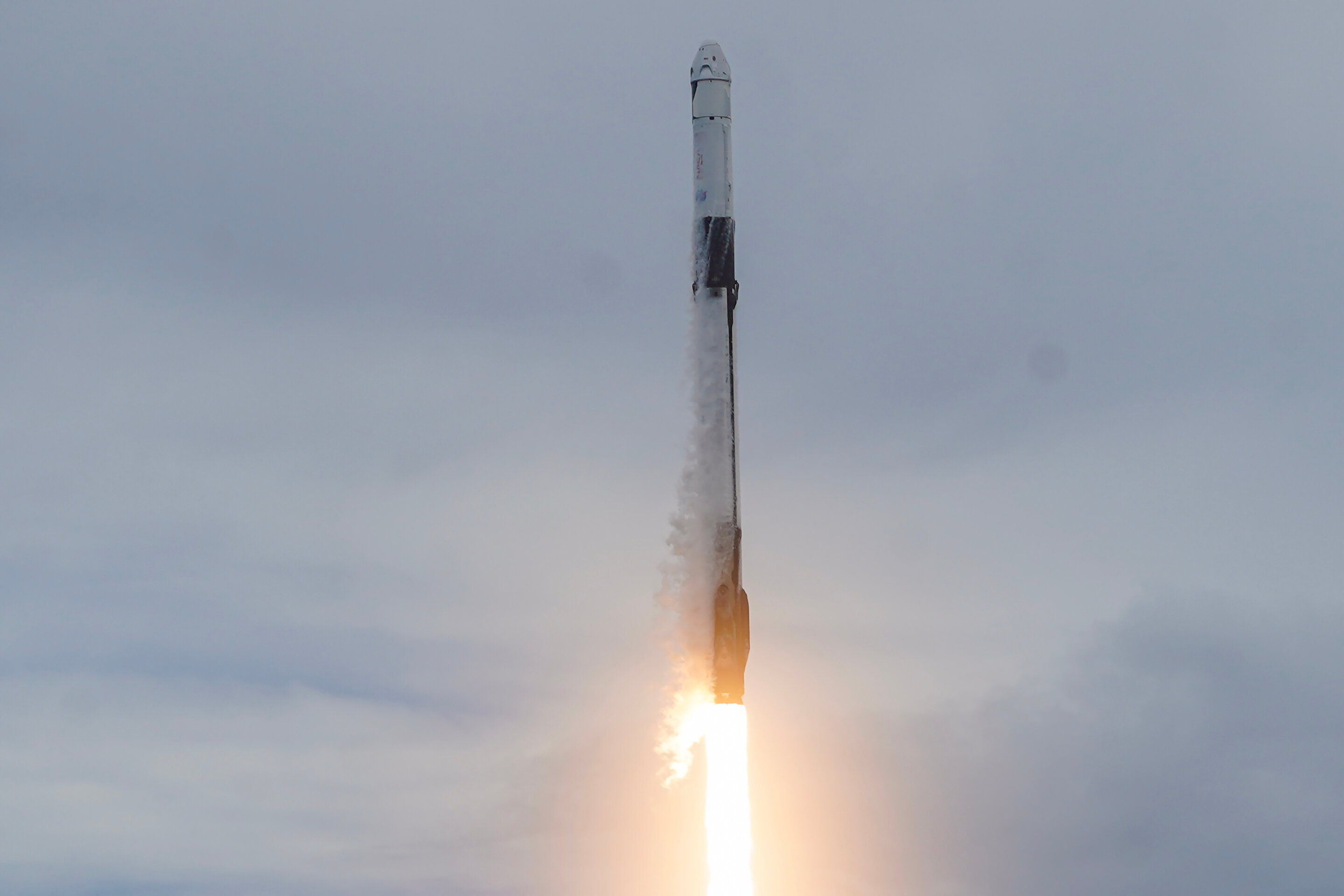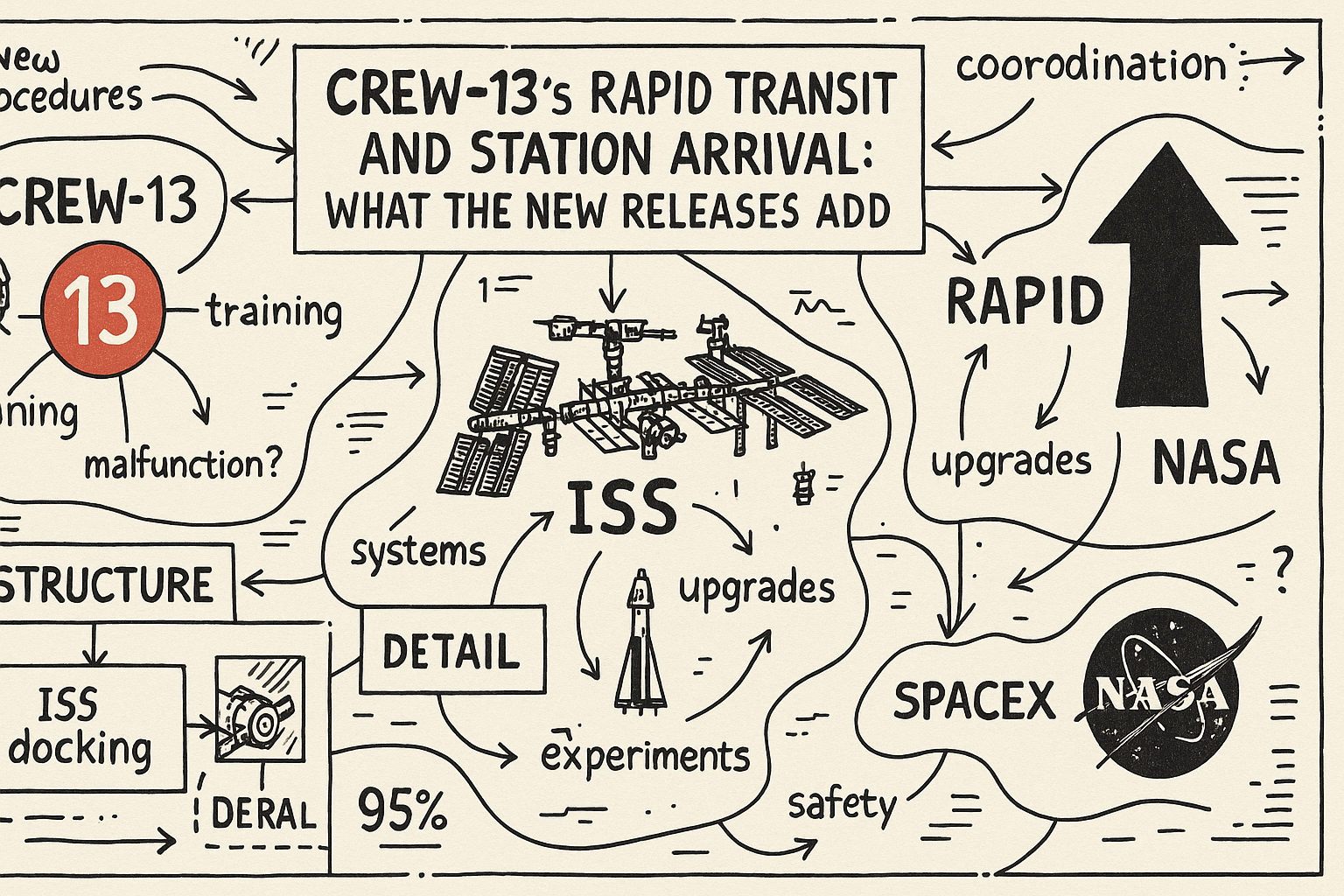
NASA’s SpaceX Crew-13 mission launched from Cape Canaveral Space Force Station on Oct. 1, 2026, carrying four crewmembers to the International Space Station (ISS). A Falcon 9 rocket lifted a Dragon spacecraft off Space Launch Complex 40 at 11:10 a.m. EDT, and the mission proceeded to a rapid rendezvous and docking with the orbiting laboratory.
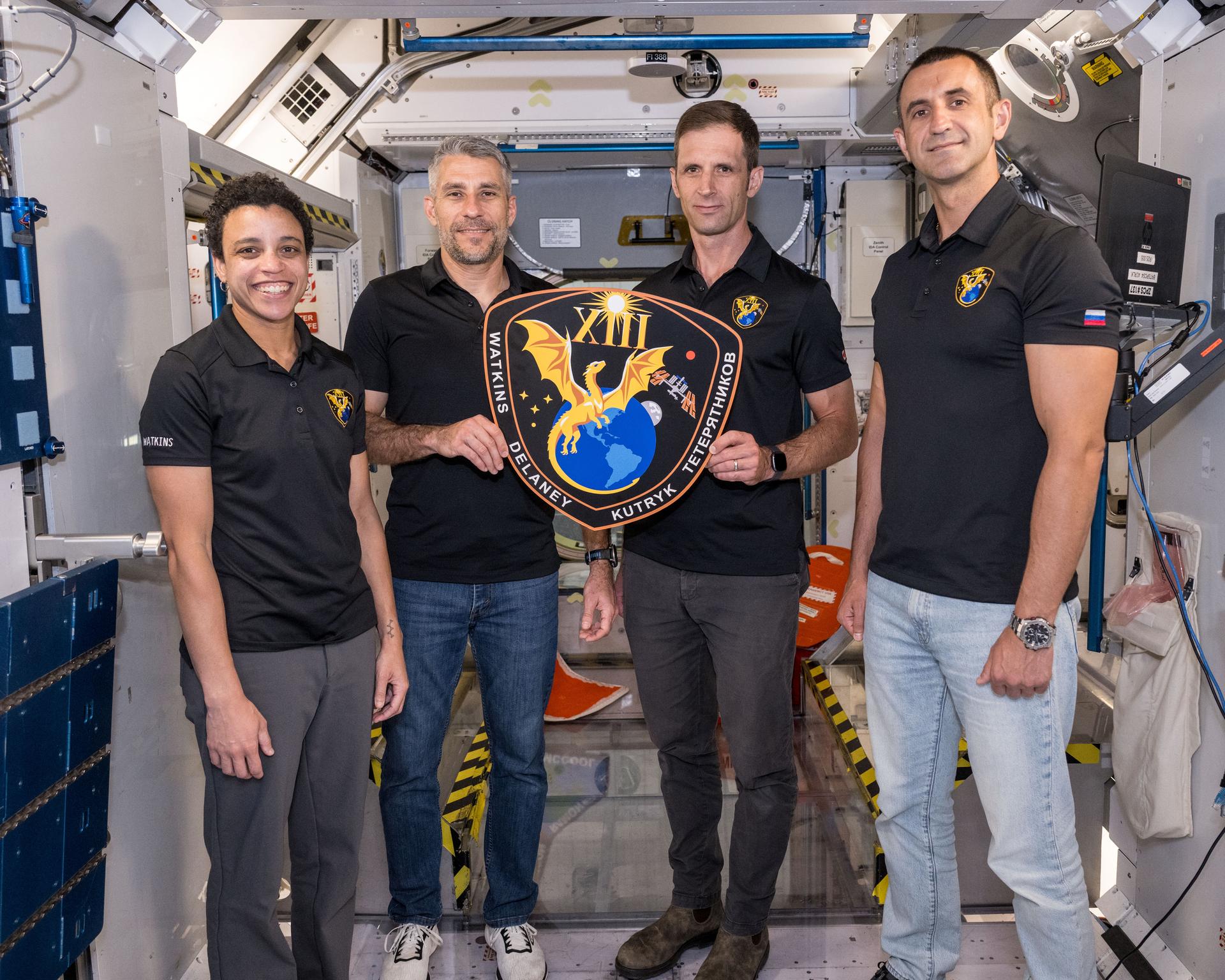
Earlier coverage focused on the launch and the mission’s record-setting transit time, but additional NASA releases now provide concrete timing for the crew’s arrival and access to the station. NASA reported that Dragon’s hatch was opened at 9:19 p.m. EDT, and that NASA astronauts Jessica Watkins and Luke Delaney, Canadian Space Agency (CSA) astronaut Joshua Kutryk, and Roscosmos cosmonaut Sergey Teteryatnikov entered the ISS following hatch opening.
Fastest US Dragon transit to ISS
NASA documentation accompanying the launch noted that the Dragon vehicle’s approach and docking marked the fastest start-to-dock timeline for a U.S. spacecraft in the history of the International Space Station program. Other NASA material specifies that the overall automated flight from launch to docking was completed in roughly seven hours and 50 minutes, with SpaceX monitoring automated maneuvers from its mission control center in Hawthorne, California and NASA overseeing station operations from Johnson Space Center in Houston.
Mission roles and public coverage
NASA’s releases identify the four Crew-13 crewmembers by name and agency: Jessica Watkins and Luke Delaney (NASA), Joshua Kutryk (CSA), and Sergey Teteryatnikov (Roskosmos). NASA also published imagery from the Oct. 1 launch, showing the Falcon 9 and Dragon ascent from SLC-40.
NASA began live coverage of the Dragon arrival sequence—rendezvous, docking and hatch opening—earlier in the evening, with public-facing broadcasts timed to the vehicle’s approach. The agency’s imagery and news items underline the collaborative monitoring arrangement: SpaceX handled the Dragon’s automated flight maneuvers from Hawthorne while NASA’s Johnson Space Center monitored station operations throughout the flight.
Why the updated details matter
These additional NASA disclosures close gaps left by earlier reporting by documenting the crew’s exact hatch opening time and confirming the moment the four crewmembers officially entered the station. The confirmed sequence—launch at 11:10 a.m. EDT, docking procedures concluding after an accelerated transit, hatch opening at 9:19 p.m. EDT and subsequent crew ingress—gives a clearer timeline for the mission’s fastest U.S. Dragon transit to date.
Beyond timeline specifics, NASA’s materials emphasize the operational division between SpaceX and NASA during the flight and highlight the ongoing role of commercial crewed launches in sustaining presence and research aboard the ISS.
As Crew-13 transitions into station operations as part of Expedition 75, the newly released timing and entry details complement earlier reporting by tracing the mission from liftoff through the crew’s arrival inside the orbiting complex.