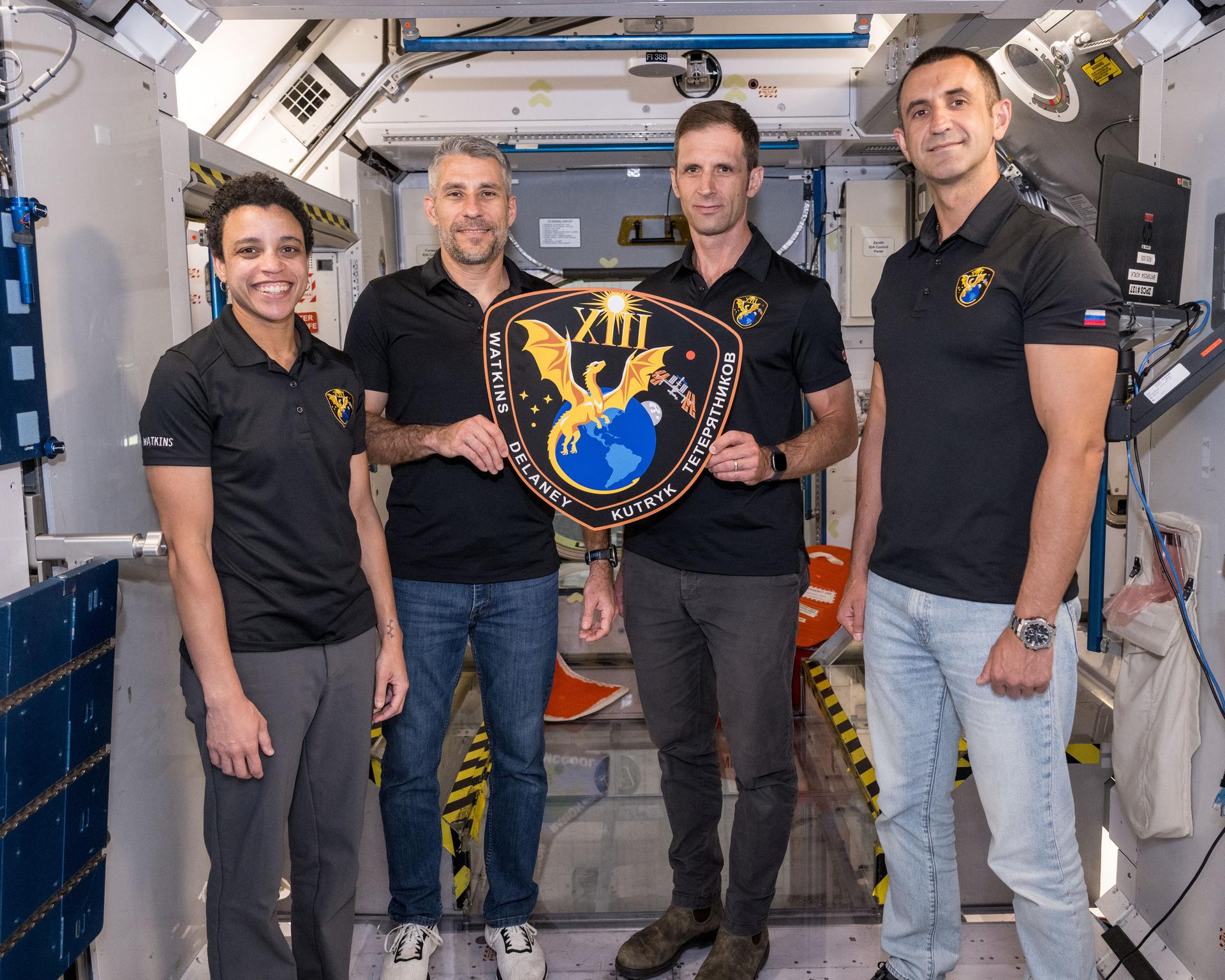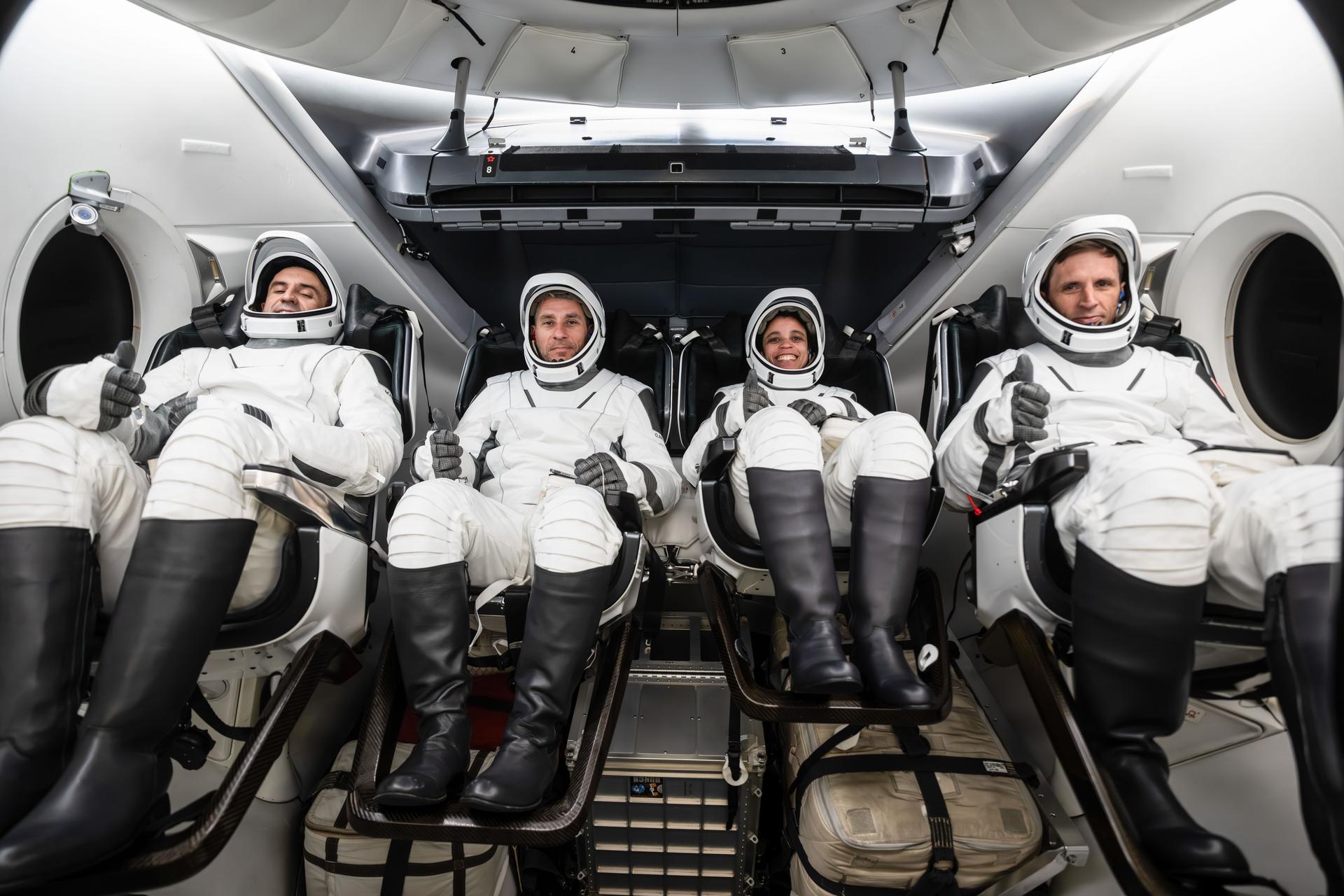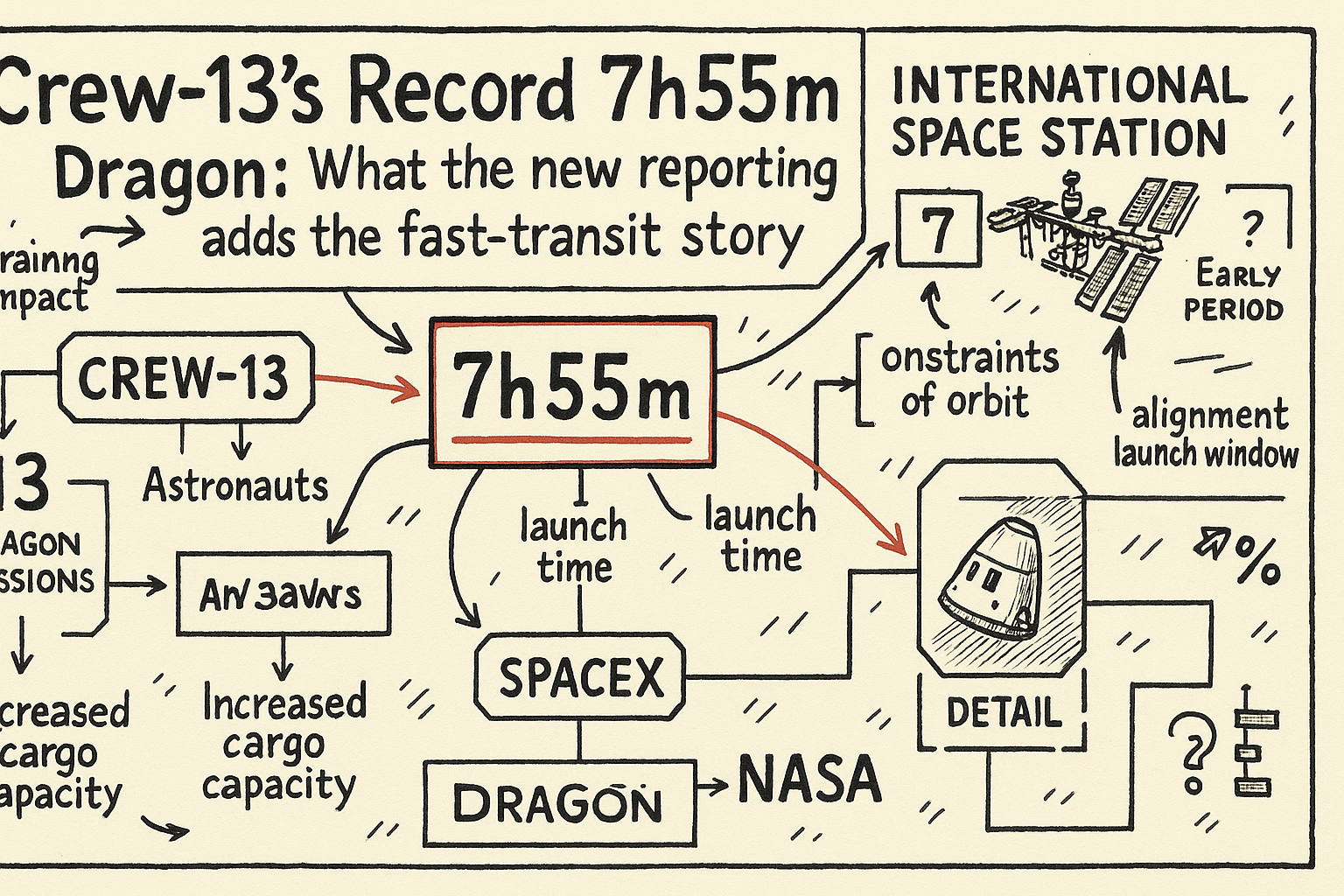
When NASA’s SpaceX Crew‑13 spacecraft docked with the International Space Station on Oct. 1, 2026, it did more than set a new speed benchmark for U.S. crewed launches — recent reporting clarifies how that fast transit fit into station operations and the changing human presence aboard the outpost.
NASA described the flight as a "record‑setting 7‑hour, 55‑minute Dragon spacecraft flight" from Florida, a timing repeated across agency and media outlets. The short transit time was notable enough that multiple NASA pages and independent outlets framed Crew‑13’s arrival primarily through the lens of pace and scheduling: the Dragon carried four new crewmembers who arrived after the rapid transit and increased the number of people aboard the station to 11.
Immediate station impact
NASA’s official coverage of Station activities after the arrival emphasized the human and operational effects. Following the docking, Expedition 75 personnel slept in and spent much of the day relaxing, according to a NASA blog entry summarizing the Oct. 1 arrival and the next day’s activities. The four new crew members who arrived on Crew‑13 brought the station’s population up to 11, temporarily changing daily routines and crewing levels on board the outpost.
Canadian reporting provides additional detail on the manifest impacts of the docking. SpaceQ reported that Canadian Space Agency astronaut Joshua Kutryk entered the station after Crew‑13’s Dragon docked in 7 hours 55 minutes, and that Kutryk’s arrival raised the crew to 11 while Crew‑12 prepared to depart. SpaceQ’s weekly ISS update reiterated that Kutryk reached the station Oct. 1 on the record‑fast Dragon flight, and that the arrival left the station with 11 people aboard.
How the new coverage complements earlier accounts
Earlier coverage of the launch focused on the launch itself and the speed of the transit; the subsequent reporting captured in NASA and Canadian sources adds complementary operational context. Rather than reporting new technical metrics or a different transit time, the later pieces document the immediate human consequences: the change in station population, how the Expedition crew adjusted their day following the arrival, and the handover sequencing with Crew‑12 preparing to leave.
That sequencing point — Crew‑12 preparing to depart while Crew‑13 joins the station — is highlighted in multiple sources and underlines a recurrent cadence in NASA’s commercial crew rotations: arrivals and departures are staggered so that handovers occur with overlapping crew members aboard.
What the sources do not claim
While the new reporting fills out the operational picture, the available sources do not offer additional technical explanations for how the fast transit was achieved, nor do they provide new onboard timelines beyond the 7‑hour, 55‑minute figure. The pieces also do not include further quotes, detailed mission sequencing, or technical change logs that would allow a deeper technical forensic into trajectory choices, launch window mechanics, or specific automation used during rendezvous.
Instead, the public record in NASA and Canadian outlets centers on the outcome: a Crew‑13 arrival that NASA called record‑setting in duration, the entry of Canadian astronaut Joshua Kutryk, and a temporary increase of the station population to 11 as Crew‑12 prepared to depart.
Those elements — timing, station population, change in daily routines, and the overlapping crew handover — constitute the verifiable additions the newer reporting brought to the initial launch narrative.