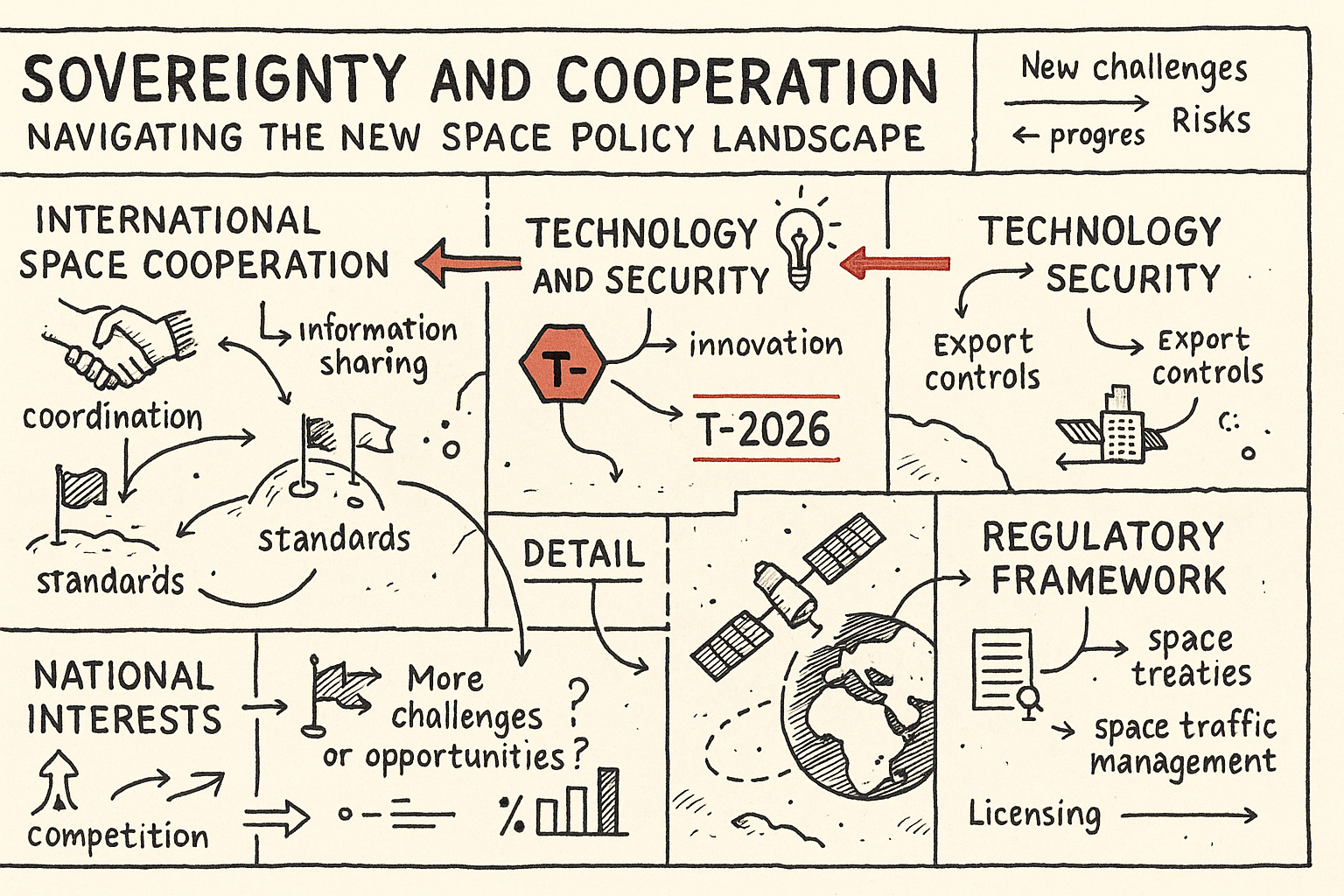
The International Astronautical Congress (IAC) 2026 and other recent space events have highlighted a significant tension in the current space policy landscape: the balance between national sovereignty and international cooperation. This duality is shaping the strategies and ambitions of spacefaring nations as they navigate the complexities of the modern space race.
A New Era of Sovereignty
Türkiye's ambitious space program, unveiled at the IAC 2026, is a testament to the resurgence of national sovereignty in space endeavors. Aselsan's development of a 198-satellite military Low Earth Orbit (LEO) constellation and Baykar's creation of a navigation network at 1,200 km underscore Türkiye's commitment to building a comprehensive sovereign space stack. This approach, while fostering national pride and capability, also raises questions about the implications for global space cooperation.
Similarly, China's planetary defense initiatives and its efforts to expand lunar partnerships reflect a strategic focus on bolstering national security and technological prowess. These initiatives highlight a broader trend among nations to assert control over their space activities, driven by security concerns and geopolitical competition.
The Role of International Cooperation
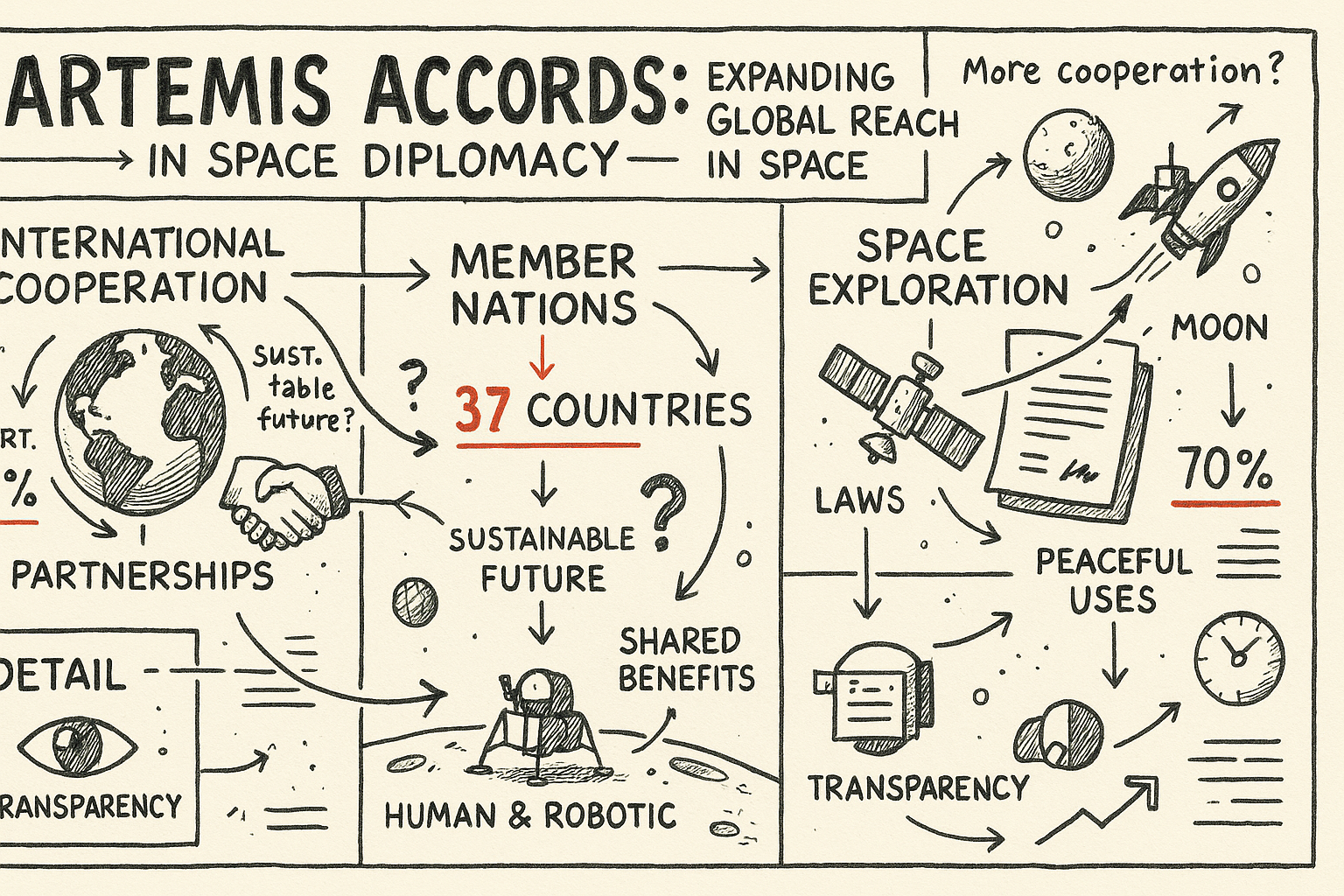
Despite the emphasis on sovereignty, international cooperation remains a cornerstone of space policy. The IAC 2026 illustrated this through various side events, such as China's opening of the Tiangong space station to international partners and the UK's sovereignty-through-partnership approach. These initiatives demonstrate that while nations are keen on asserting their independence, they recognize the value of collaboration in achieving broader scientific and exploratory goals.
Furthermore, the involvement of emerging space nations like Tanzania and Côte d'Ivoire in programs such as KiboCUBE suggests that international partnerships are crucial for developing sustainable national space capabilities. These collaborations not only facilitate technological transfer but also help integrate these nations into the global space community.
Innovation and Impact
The concept of innovation is being redefined in the space sector. At Germany's Mission-K, the Space Innovation Gateway was presented as a platform to measure innovation by its impact rather than mere activity. This shift in perspective emphasizes the importance of tangible outcomes in space endeavors, aligning with the overarching goal of strategic influence and practical benefits.
Mission-K also highlighted the necessity of tactical Intelligence, Surveillance, and Reconnaissance (ISR) from space, drawing lessons from recent geopolitical conflicts. This capability is increasingly seen as essential for national defense, further reinforcing the link between space technology and national security.
Future Implications
As countries continue to balance sovereignty with cooperation, the future of space policy will likely involve a hybrid model that accommodates both aspirations. The upcoming World Radiocommunication Conference 2027 (WRC-27) will be a pivotal moment, with significant implications for the allocation of spectrum and the governance of satellite communications, which are critical infrastructures.
In conclusion, the current trajectory of space policy reflects a world where national interests coalesce with global challenges. The interplay between sovereignty and cooperation will define the next decade of space exploration, with nations navigating this complex landscape to ensure both technological advancement and international harmony.