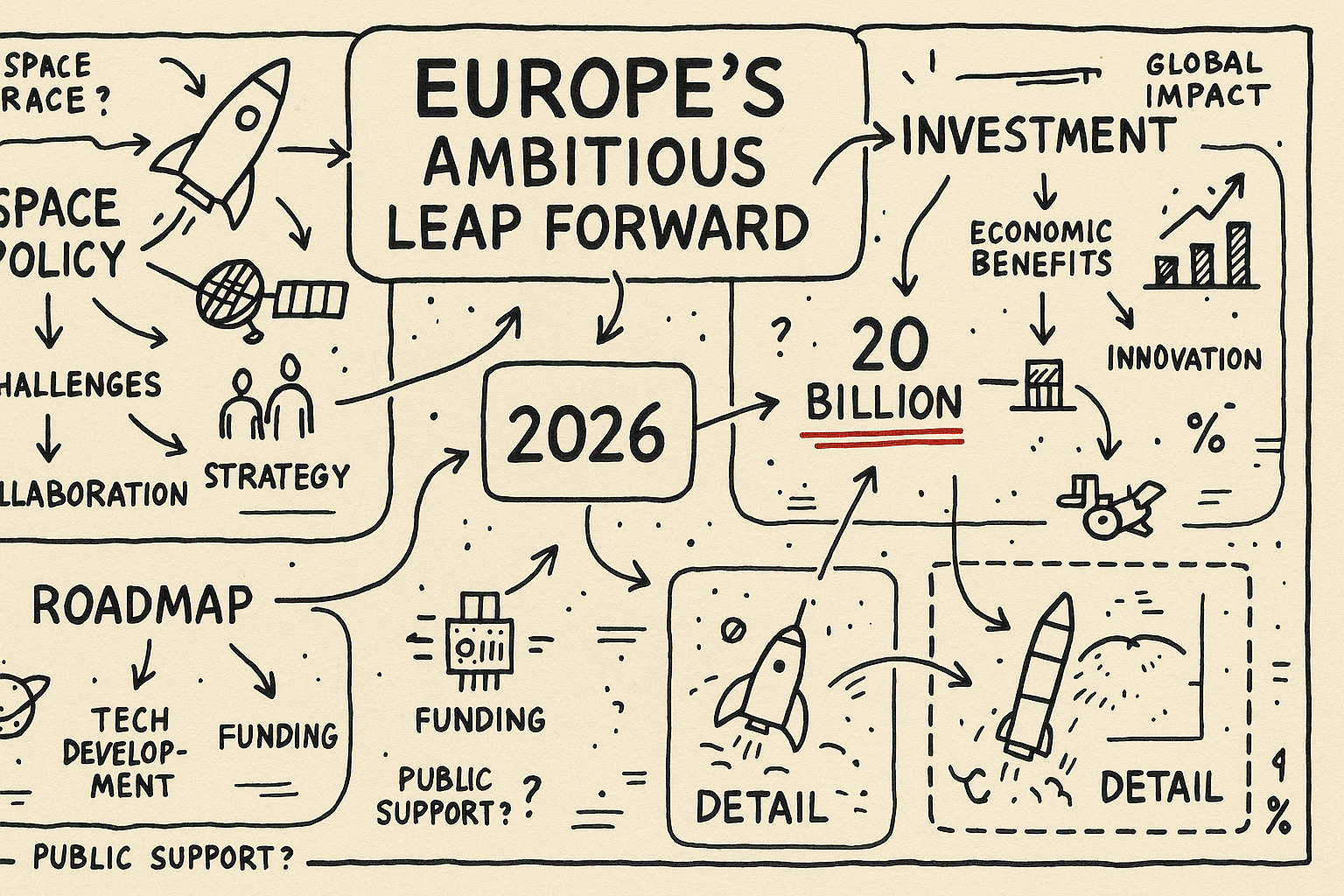
In September 2026, the International Space Summit in Paris marked a pivotal moment in global space policy, setting the stage for Europe's ambitious leap into the future of space exploration and technology. With 51 announcements and a €20 billion headline, the summit underscored Europe's intent to assert itself as a formidable player in the space industry.
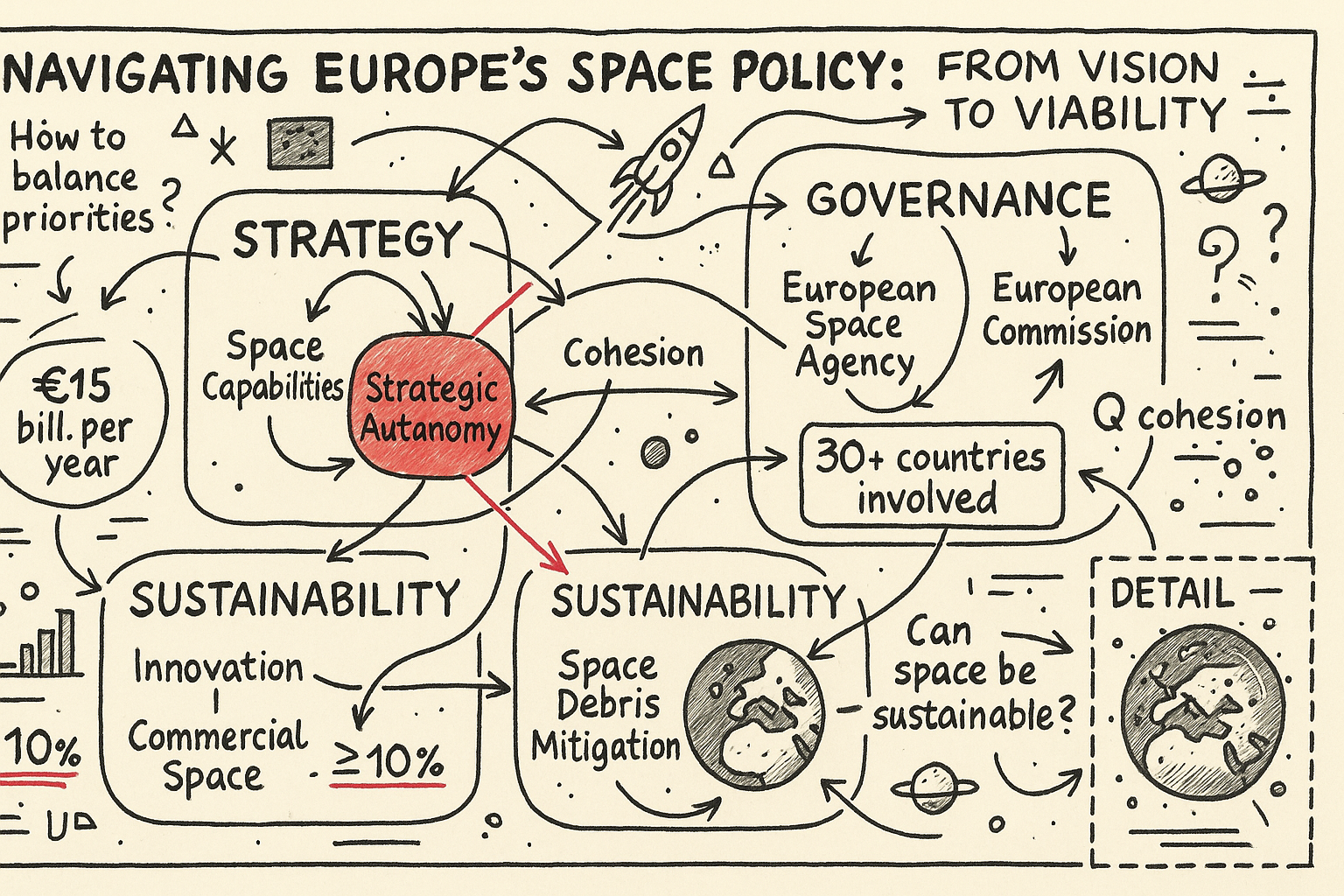
The summit's most significant outcome was not merely in the contracts signed but in the strategic vision laid out for Europe's space future. The emphasis on launching European satellites on European rockets, as advocated by Philippe Baptiste, signifies a move towards greater autonomy and self-reliance. This policy direction is crucial as it reduces dependency on non-European launch providers, a concern amplified by geopolitical uncertainties.
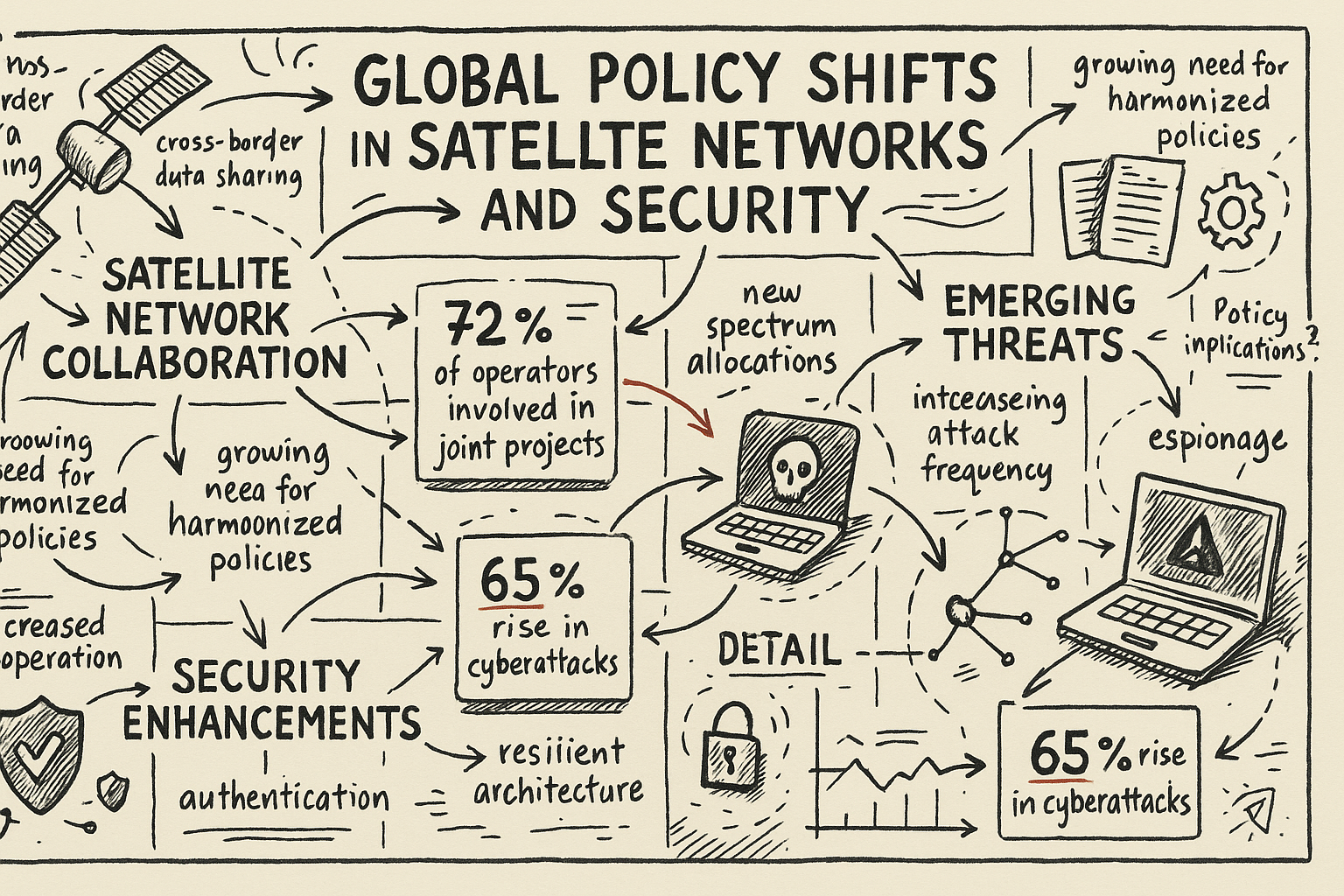
One of the standout announcements from the summit was OroraTech's deal to install 96 thermal sensors on Eutelsat OneWeb's fleet, effectively creating a connected orbital data center. This development, described as 'GEOINT from LEO' by OroraTech CEO Dr. Martin Langer, highlights the increasing importance of low Earth orbit (LEO) for strategic information gathering and real-time data access. It also reflects a broader trend where the economics of LEO connectivity are shifting from launch capabilities to ground-based technology, as noted by Ian Lankshear in his analysis of the sector.
The Role of Innovation and Collaboration
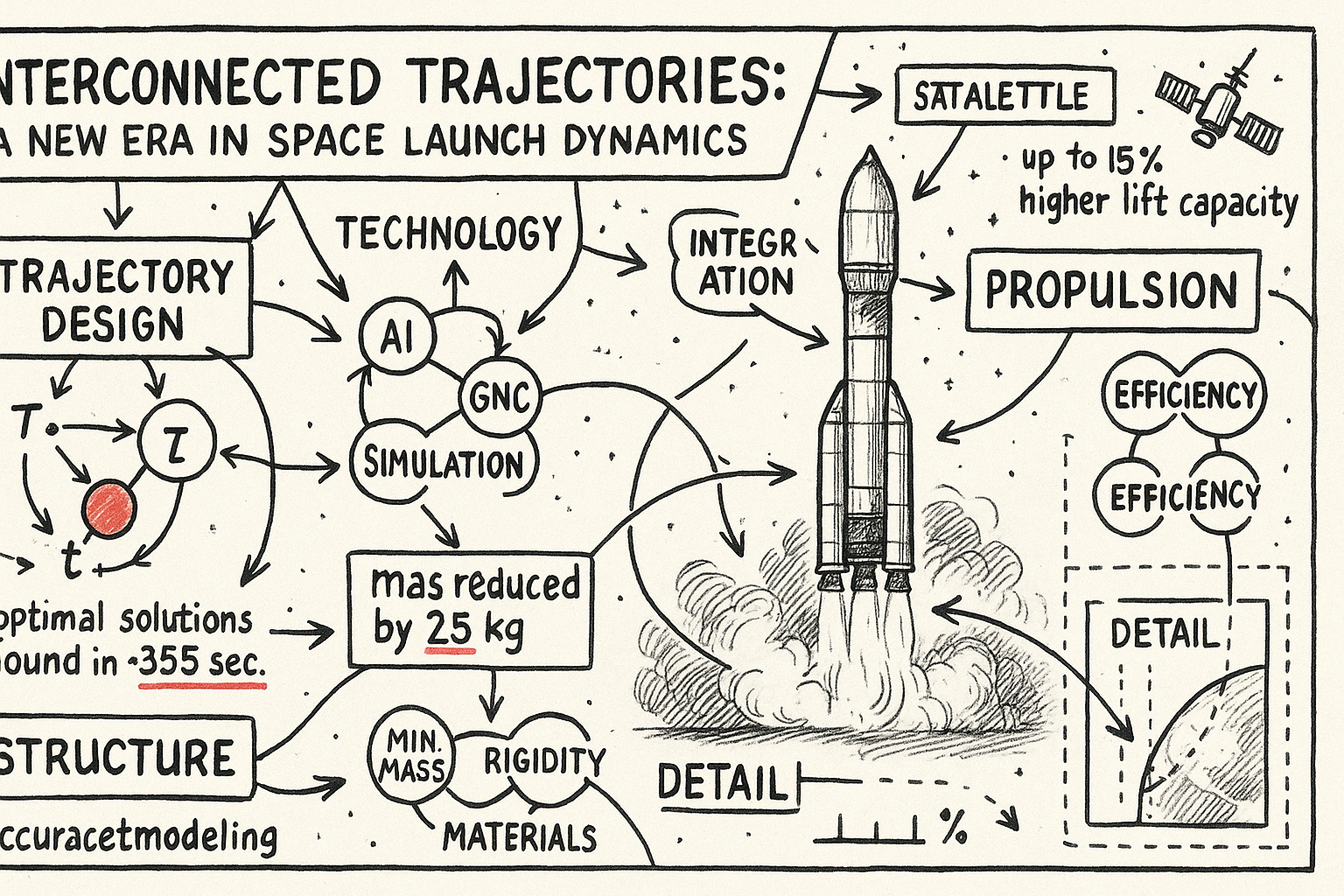
The summit also showcased the critical role of innovation and collaboration in driving the space industry forward. D-Orbit's contract with GomSpace for power systems in their ION orbital transfer missions exemplifies the interconnected nature of space ventures. These partnerships are vital for overcoming technological and logistical challenges inherent in space missions.
Moreover, Manny Shar of Astrolab highlighted how rapid development cycles and a culture of iteration are key to advancing space technology. Building a lunar rover in just 17 months for NASA represents a paradigm shift in how space hardware is developed, pointing to a future where agility and speed are as important as precision and durability.
Europe's Unified Front
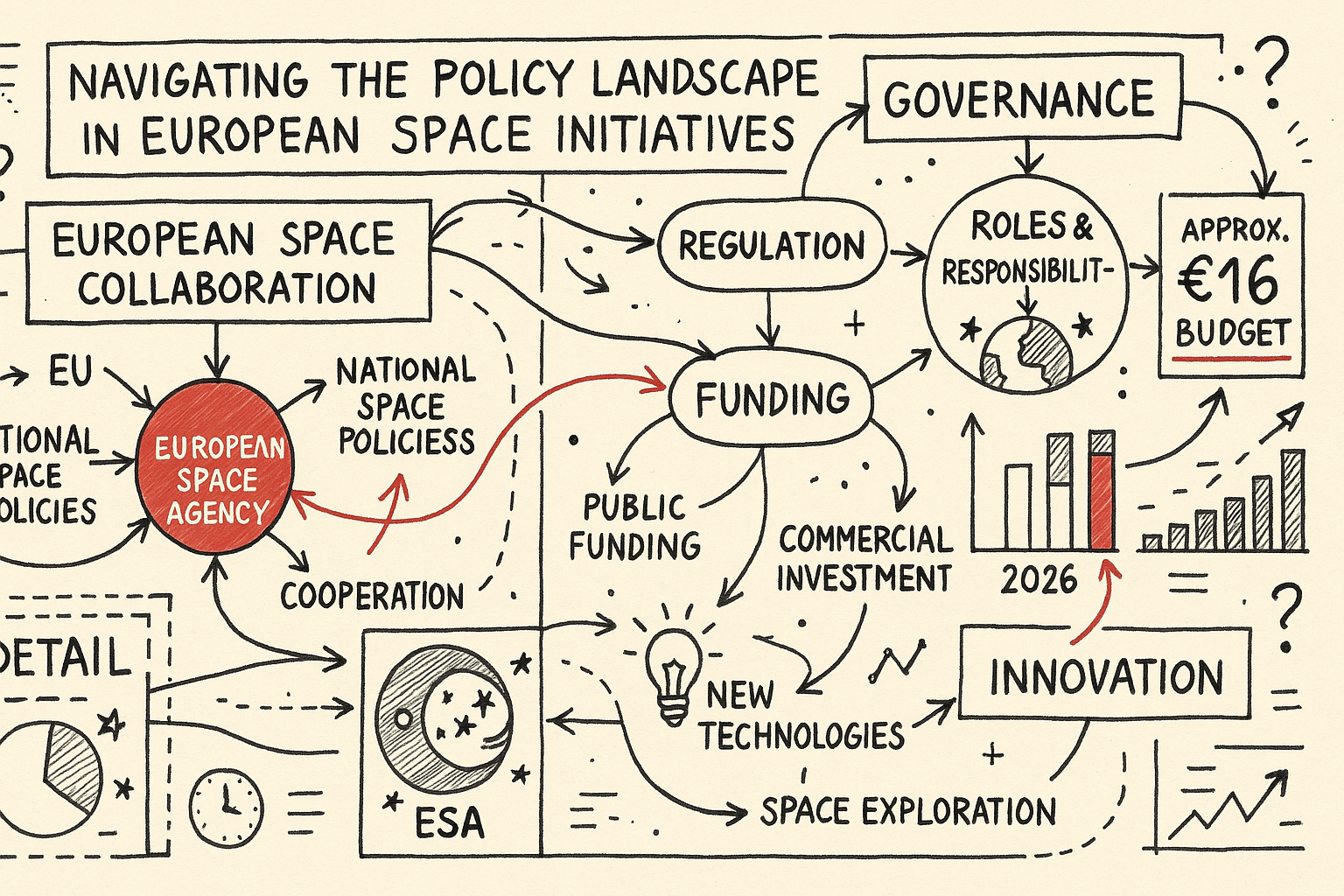
Rodrigo da Costa's reflections on Europe's achievements at the summit emphasized the importance of a unified front. As space becomes a part of the European Competitiveness Fund, the continent is poised to leverage its collective capabilities to enhance its position on the global stage. This move towards a cohesive European space policy is in stark contrast to past fragmented efforts and could lead to more efficient and impactful outcomes.
However, the transition from ambition to execution remains fraught with challenges. As Torsten Kriening pointed out, the real test lies in building the 'plumbing'—the infrastructure and operational frameworks necessary to support these grand ambitions. This includes addressing bottlenecks in satellite integration and testing, as Yoav Landsman of Space Backend highlighted, which can significantly delay project timelines and increase costs.
Future Implications and Challenges
Looking ahead, the implications of Europe's space policy are profound. By prioritizing indigenous capabilities and fostering international collaborations, Europe is not only enhancing its technological sovereignty but also contributing to a more balanced global space ecosystem. This approach could serve as a model for other regions aiming to bolster their space capabilities.
Yet, challenges remain, particularly in balancing the economic realities of space ventures with political aspirations. As space becomes increasingly commercialized, the need for scalable and economically viable solutions will drive policy decisions. The focus on custom silicon and common terminal architectures for LEO networks, as discussed by Lankshear, illustrates the need for innovations that can support this balance.
In conclusion, the International Space Summit has set a bold trajectory for Europe's space policy. While the path forward is fraught with challenges, the commitment to innovation, collaboration, and strategic autonomy offers a promising blueprint for the future.