Starlink’s India launch stalls amid dispute between Elon Musk and local telecom interests
SpaceX’s satellite internet service Starlink has been unable to begin commercial operations in India because it is still awaiting security clearances and spectrum allocation, and the delay has prompted a public escalation from Elon Musk who has directly questioned the influence of Reliance Industries chair Mukesh Ambani.
Over the past week Musk posted a series of messages on X accusing unnamed "oligarchs" of blocking Starlink’s entry into India and calling such obstruction "a crime against the people of India," according to reporting by TechCrunch and the BBC. Musk then singled out Ambani by name, asking "Is Ambani the real boss of India?" and arguing Starlink could bring connectivity to unserved areas, help children learn and enable small businesses to reach global customers (TechCrunch, BBC).
India’s Ministry of Communications rejected Musk’s allegations as "baseless and misconceived," saying the regulatory framework for satellite communications is "fair and non-discriminatory." The ministry told reporters that Starlink, Eutelsat OneWeb and Jio Satellite Communications are "broadly at the same regulatory stage," and that all three licensed operators remain subject to security assessments that must be completed before spectrum can be assigned (TechCrunch, BBC, TechCrunch follow-up).
Starlink has been attempting to enter the Indian market since 2021 and has secured several key approvals, plus commercial distribution agreements signed in March 2025 with Reliance Jio and Bharti Airtel that were conditioned on government permissions (BBC, TechCrunch). Despite those agreements and a local team led by Prabhakar Jayakumar — appointed in December to head India operations — Starlink still lacks the final licence to begin services (TechCrunch).
TechCrunch’s coverage notes Starlink has spent "more than five years" complying with Indian requirements and that senior Starlink executive Lauren Dreyer reiterated the company’s commitment to India at the India Mobile Congress, saying "We stand ready to serve India" and that Starlink wants to support Prime Minister Narendra Modi’s goal of universal connectivity. But Dreyer’s statement and Starlink’s readiness have not moved the process past required security reviews and spectrum assignment (TechCrunch).
The row unfolds against a backdrop of intensifying competition in India’s satellite internet market. Reliance Jio and Bharti Airtel are both preparing their own satellite internet services: Jio through a joint venture with Luxembourg-based SES, and Airtel as a major shareholder in Eutelsat OneWeb — both also awaiting regulatory approvals (TechCrunch, BBC). That competition complicates the commercial landscape because Starlink had existing distribution tie-ups with some of these same players.
Reporting across TechCrunch, BBC and SpaceWatch.Global highlights the core technical and regulatory facts at stake: before commercial operations can begin, a licensed satellite operator must complete national security assessments and then receive spectrum — the radio frequencies satellites use to transmit signals. The communications ministry emphasized those steps apply equally to Starlink and the other licensed operators, countering Musk’s suggestion that Starlink is being singled out (BBC, TechCrunch).
SpaceWatch.Global covered the dispute from a geopolitics and space-policy angle, noting the broader implications for market competition among global megaconstellations and the interplay between national security reviews and commercial deployment. The outlet flagged that credentialed reporting on the matter is limited behind its paywall but reinforced that New Delhi’s formal response frames the delay as procedural rather than politically motivated (SpaceWatch.Global).
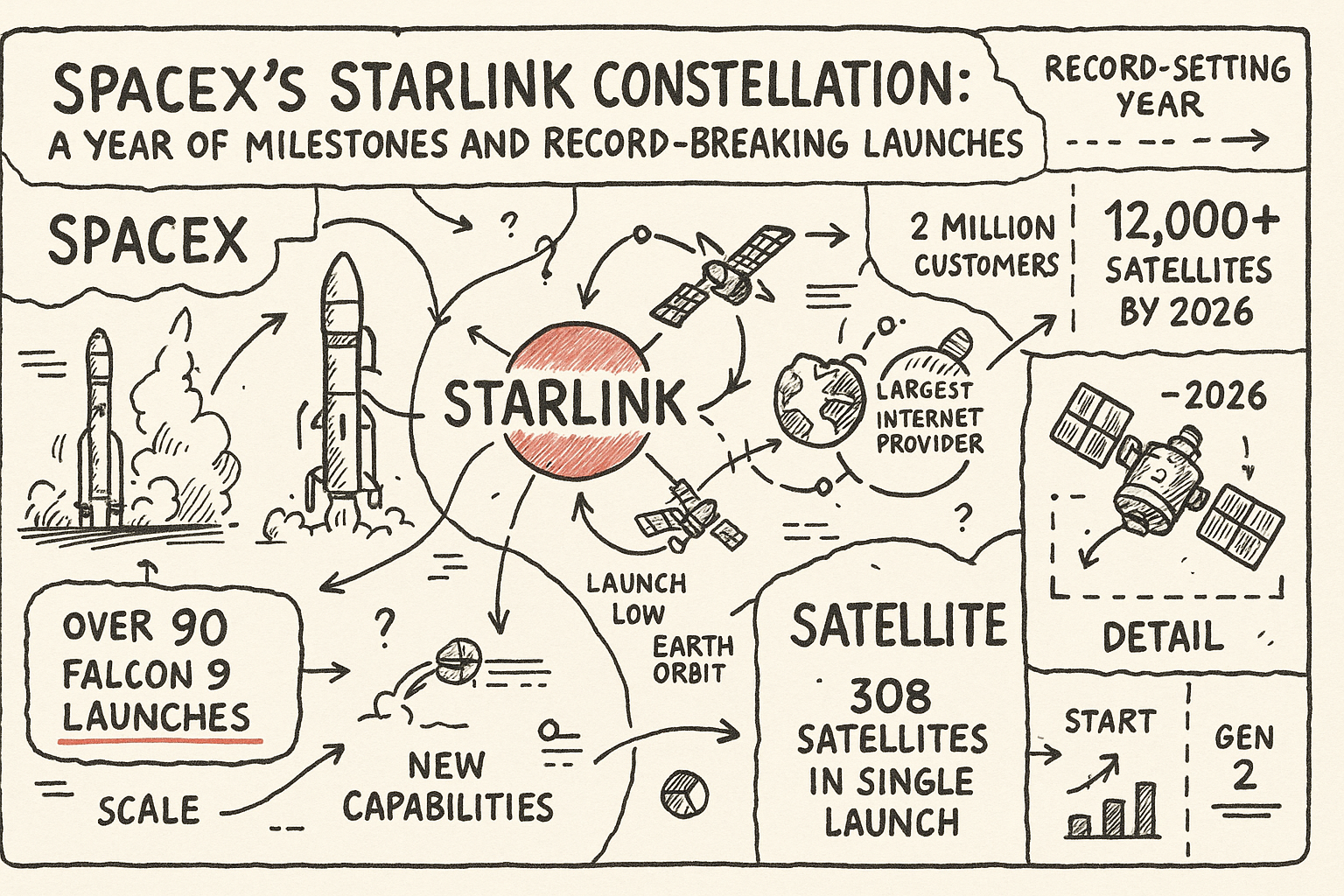
For Starlink, India represents a strategically important market with more than a billion internet subscribers and significant underserved rural populations. The company is licensed in over 165 countries, Musk noted in his posts, and SpaceX has recently been expanding the constellation and preparing next-generation deployments globally. But the Indian approvals process — involving security clearances and spectrum — remains a gating factor that no amount of commercial readiness or partner agreements can circumvent (BBC, TechCrunch).
Where this dispute goes next is uncertain. The Indian ministry’s public position is that all three operators are progressing through the same regulatory steps; Starlink’s public posture is frustration at the pace of approvals and suspicion of commercial interference. Neither Reliance Industries nor Mukesh Ambani had publicly responded in the cited reports, and the ministry’s statement did not name Musk directly while reiterating the non-discriminatory nature of the framework (BBC, TechCrunch).
Beyond the immediate conflict, the episode underscores two longer-term tensions in the global satellite internet business: how national security reviews and spectrum management shape who can provide services, and how incumbent telecom operators and new satellite entrants will compete or cooperate in large, commercially attractive markets. For millions of Indians still offline, the delay means continued dependence on terrestrial networks while regulators complete reviews that they say are necessary before satellites can be authorised to use spectrum.
Until the security assessments are concluded and spectrum is allocated by the Indian authorities, Starlink’s commercial launch in India will remain on hold, even as public sparring between Elon Musk and one of India’s most powerful business figures continues in the open.