Introduction
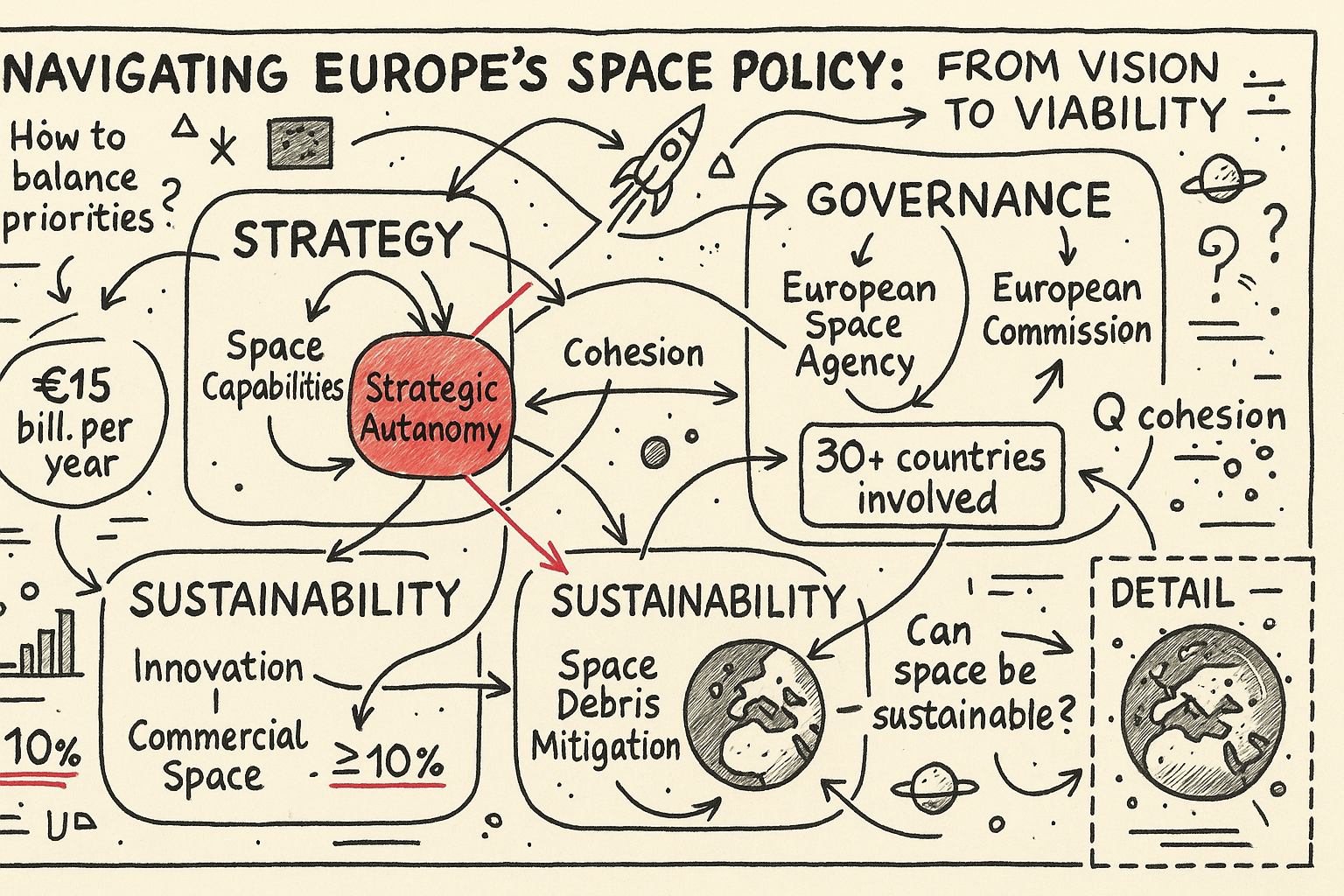
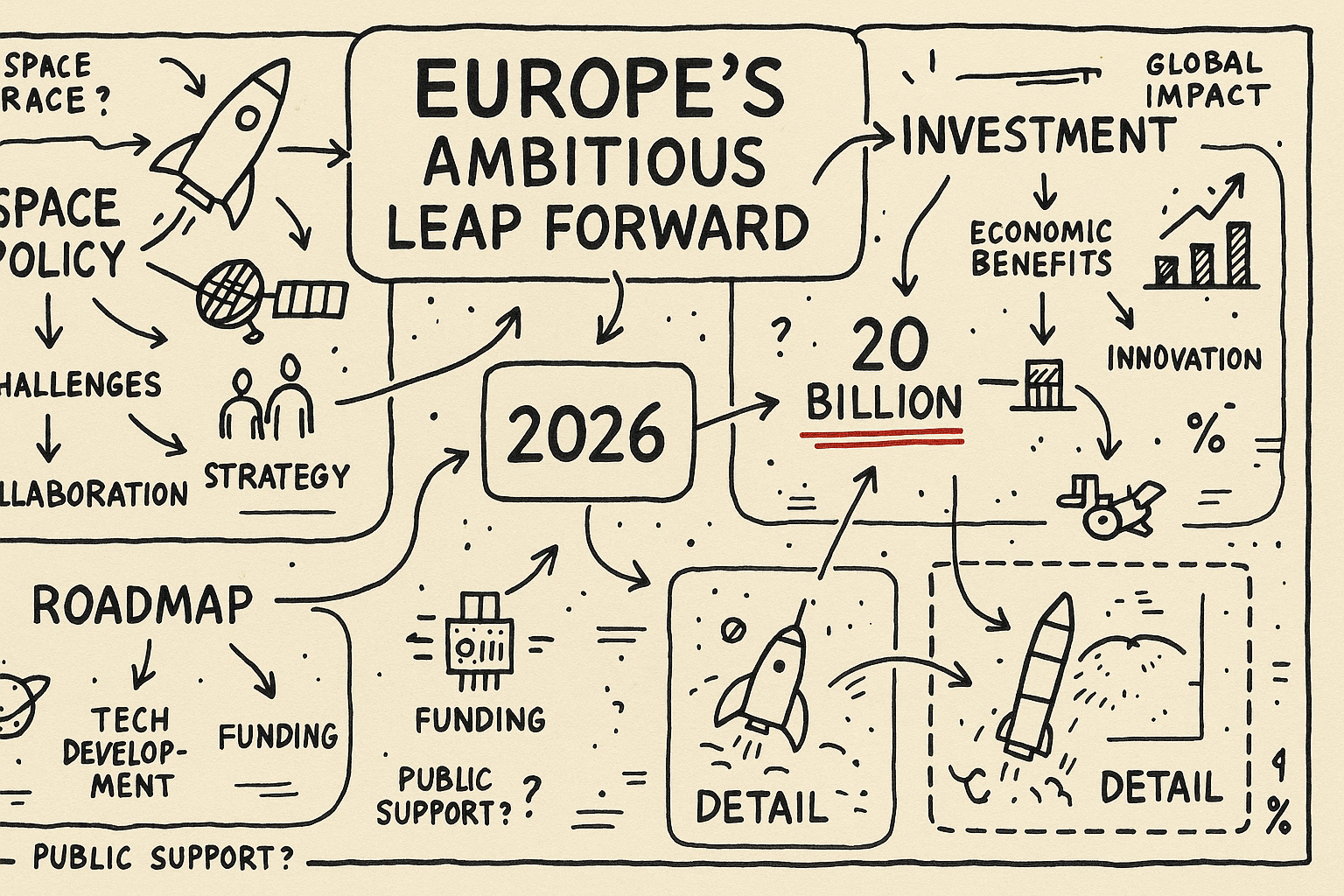
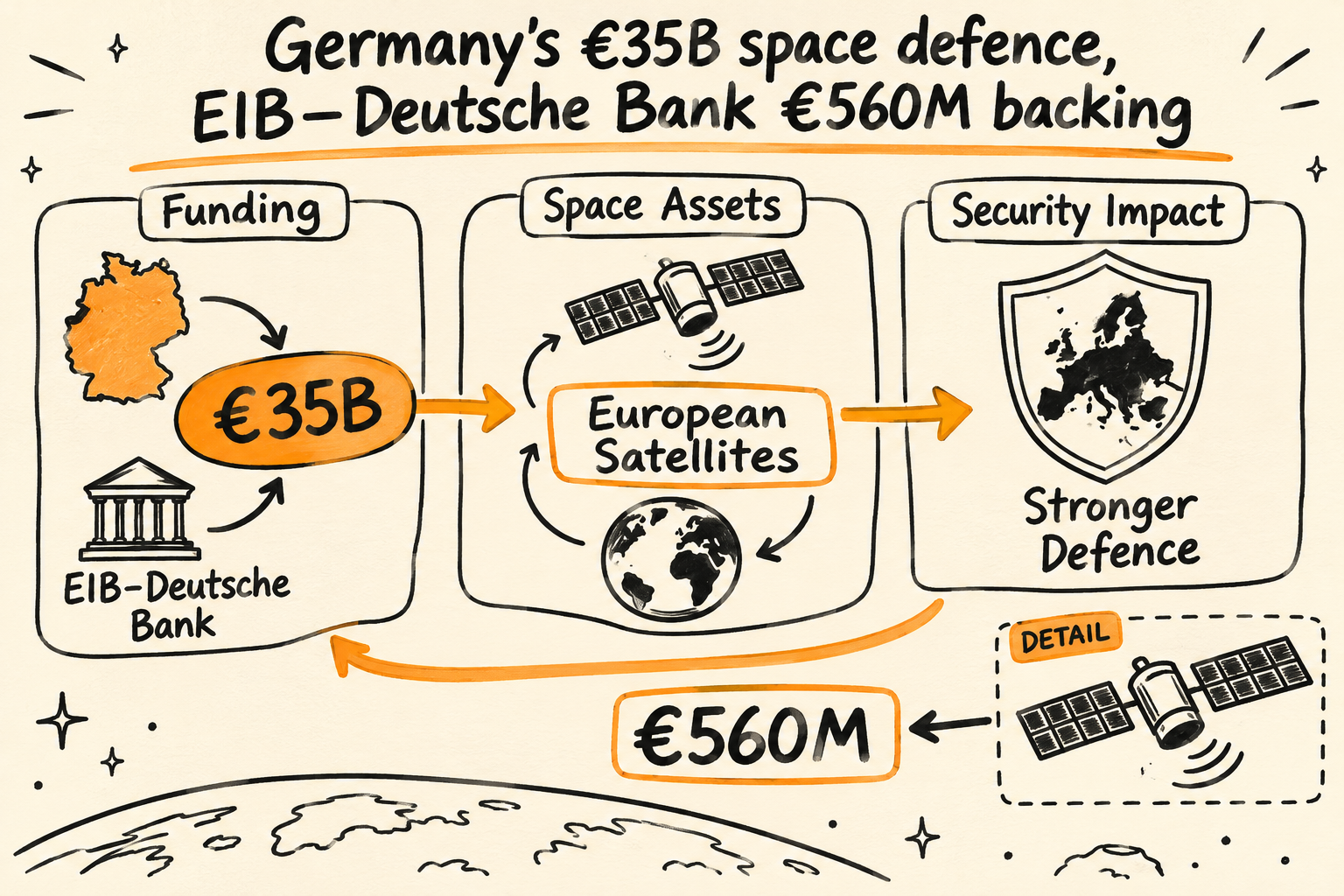
In the space of a few weeks, a striking tableau of Europe’s strategic aspirations and policy contradictions has become visible. Germany publicly embraced a hard turn toward space defence with a €35 billion commitment and an operational Luftwaffe space unit; the European Investment Bank and Deutsche Bank announced a €560 million financing initiative to accelerate European space companies; UNOOSA prepared a law-and-market mission to Kenya as African nations codify rules for rising domestic space sectors; and repeated close approaches and provocative manoeuvres in orbit have exposed the continent’s thin collective response mechanisms. These headlines are not isolated. Together they reveal a continent scrambling to translate political slogans of sovereignty and strategic autonomy into real capacity — while the architectures, budgets and laws needed to make that work do not yet fit together.
Fragmented ambition, concentrated risk
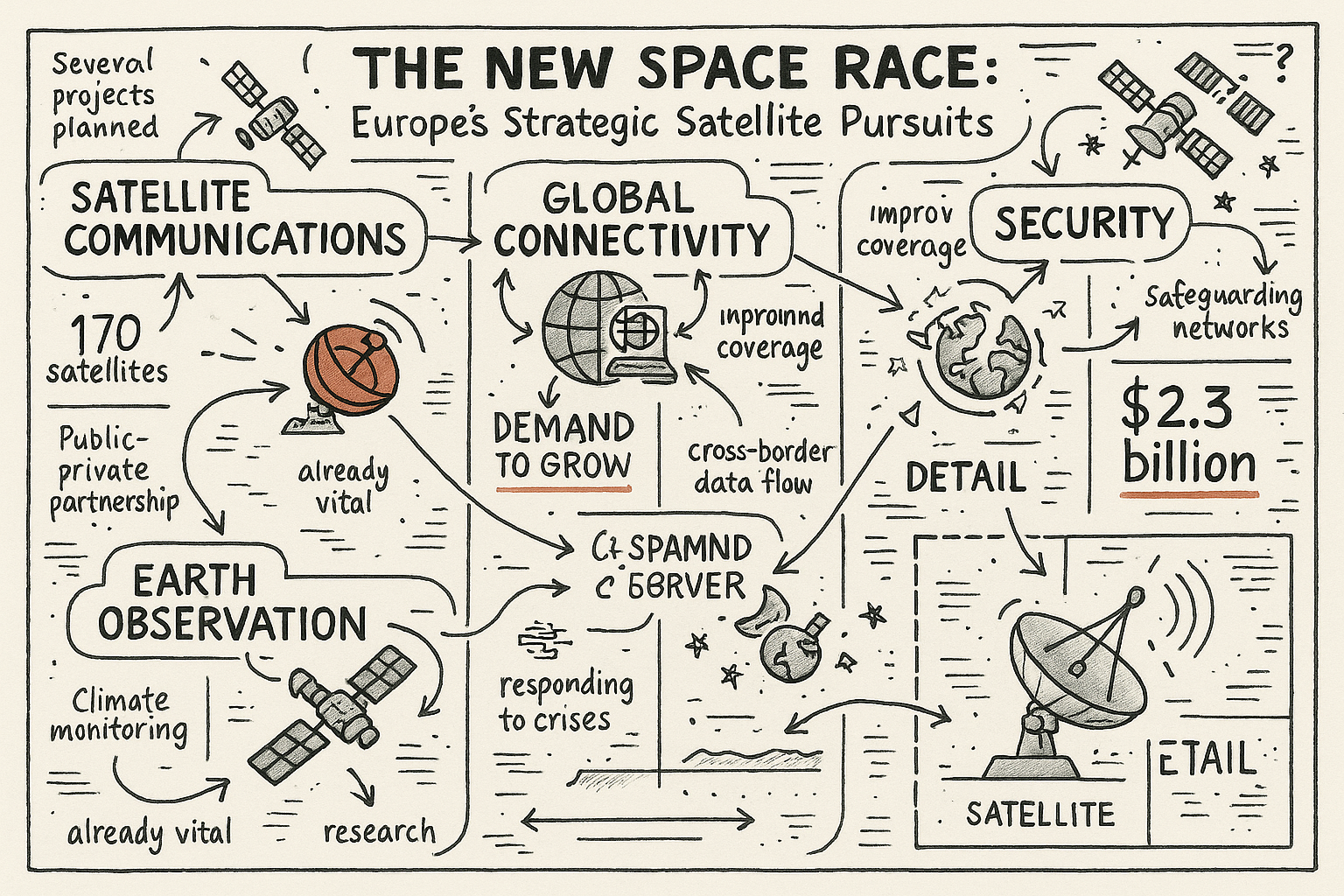
Europe’s political language has shifted: terms such as sovereignty and space defence are now routine. But commentators like K.-P. Ludwig and others warn that money alone will not convert national programmes and industrial protectionism into operational deterrence. The German disclosure — a doctrine that promises retaliation and names space as a theatre — is a milestone. Yet it also illuminates a fundamental problem: each European capital pursues capabilities through national programmes and legacy contractors. The result is duplication of satellites, overlapping constellations and a highly visible catalogue of valuable targets rather than a resilient, collective posture.
That catalogue problem has two consequences. First, it raises the political and operational stakes of every procurement: instead of distributed, redundant services you get concentrated, unique systems that adversaries can map and threaten. Second, it fragments incentives for industry consolidation or shared investment. If governments insist on national sovereignty in procurement, the economies of scale that create resilience and cheaper launch and manufacturing simply do not emerge.
Money follows fear — with strings
The EIB–Deutsche Bank €560 million financing line is an important, pragmatic response: Europe’s companies need long-term capital to scale launch, EO, comms and on-orbit services. But finance cannot substitute for a coherent industrial strategy. Private capital — even when catalysed by public institutions — will chase bankable revenue models: broadband, imagery analytics, small-sat manufacturing. It will be less eager to underwrite collective defence capabilities that look like slow, politically driven procurement programmes. Put another way: the new financing eases cashflow, not the core coordination problem.
Legal patchwork and the global south’s rising role
At the same time, UNOOSA’s technical advisory mission to Kenya underscores another axis of change: the geography of space law and markets is expanding beyond traditional powers. As African states craft investment-friendly, treaty-compliant legal frameworks, they will attract operators and investors who prize regulatory certainty. That opens opportunities for partnerships and industrial investment — but also creates a governance challenge for Europe. If European companies expand production and services into African markets under different legal regimes, interoperability and standards for security may diverge, complicating any allied defence response.
Grey-space encounters and the alliance gap
Recent incidents — like a Russian satellite manoeuvring close to ICEYE-X36 — produced strong reactions from Washington but limited collective European or NATO messaging. This asymmetry is telling. The United States has long accepted that space security tools are as much political signalling as military capability. Europe, with its mosaic of sovereign programmes, struggles to produce unified diplomatic or operational responses. NATO’s relative silence so far highlights institutional limits: the alliance has neither a coherent policy nor the complete buy-in of members for forward-leaning declaratory posture in space.
Where the needle must move
Policy-makers face three interlinked tasks. First, line up finance with strategic intent: couple instruments like the EIB–Deutsche Bank facility with joint procurement programmes and conditionality that promote interoperable, resilient architectures. Second, reduce visible single points of failure by investing in disaggregation, resilience and shared services — not only unique national flagship satellites. Third, build legal and alliance-level mechanisms that enable fast, collective diplomatic or operational responses to provocative acts in orbit.
Future implications
If Europe fails to stitch these pieces together, it risks becoming both a capital source for a vibrant commercial space economy and an increasingly exposed target set for coercive actors. Conversely, successful alignment could create a European model that combines industrial scale, finance and multilateral legal frameworks — attractive both to domestic firms and to partner states in Africa and beyond. That model would hinge on political will: leaders must be prepared to trade some national procurement autonomy for shared resilience — a politically painful but strategically necessary bargain.
Europe’s current moment is thus a test: can billions in spending, new finance lines and emerging regulatory outreach be welded into a collective capability — or will they merely produce a richer, more conspicuous constellation of vulnerable assets?