Introduction
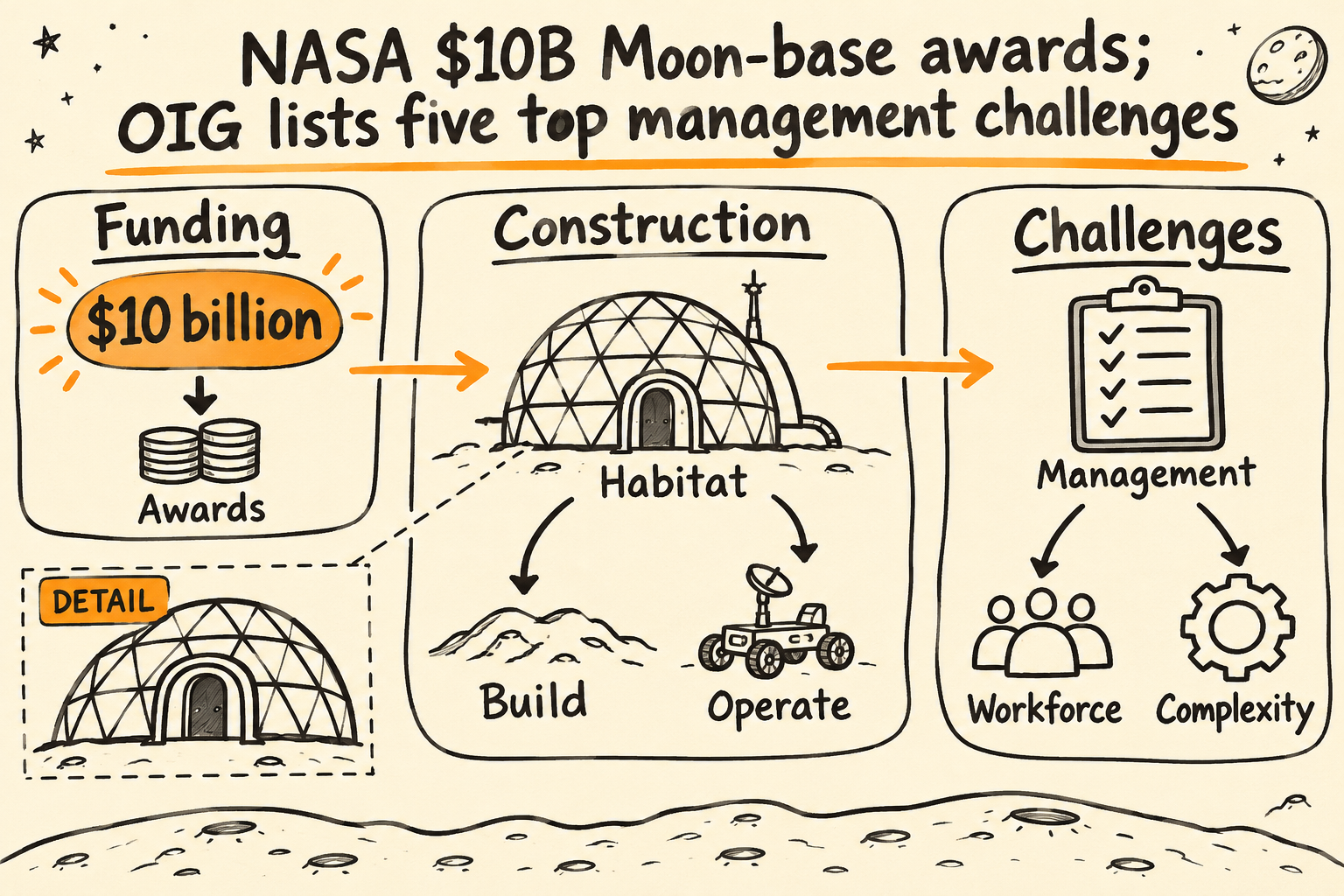
In November 2026 a single policy narrative crystallised: the United States is simultaneously accelerating commercialisation of the Moon and confronting a set of deep institutional frictions that could blunt those ambitions. Two parallel developments capture this tension. First, NASA announced up to $10 billion in moon-base contracts—including the expanded Commercial Lunar Payload Services (CLPS 2) roster of eight providers and $1.3 billion in commercial launch task orders—signalling an aggressive push to privatise transport, logistics and even elements of surface infrastructure. Second, the agency inspector general released its 2026 top management challenges report, listing five systemic risks from program management to cybersecurity that threaten execution of NASA’s most ambitious goals.
Why both moves matter together
Taken separately, the CLPS 2 awards and the OIG report are unsurprising: an agency leaning on industry while being held to account by watchdogs. Together they reveal a policy inflection point. NASA’s strategy has moved from demonstrating commercial capability to embedding private actors as long‑term providers for a sustained lunar presence. That creates dependencies—on launch firms, lander developers and contractors such as SpaceX, Blue Origin, Relativity and the new cohort of CLPS 2 vendors—that increase the agency’s exposure to supply‑chain, schedule and cybersecurity shocks.
The OIG’s five challenges—establishing a human presence on the Moon, ensuring a robust U.S. presence in low Earth orbit, improving management of major programs, managing cybersecurity and emerging technology, and sustaining mission‑critical support services—read like a checklist of vulnerabilities that become more consequential when trillions of dollars of activity shift to public‑private workflows.
Historical context: not the first time industry and oversight collide
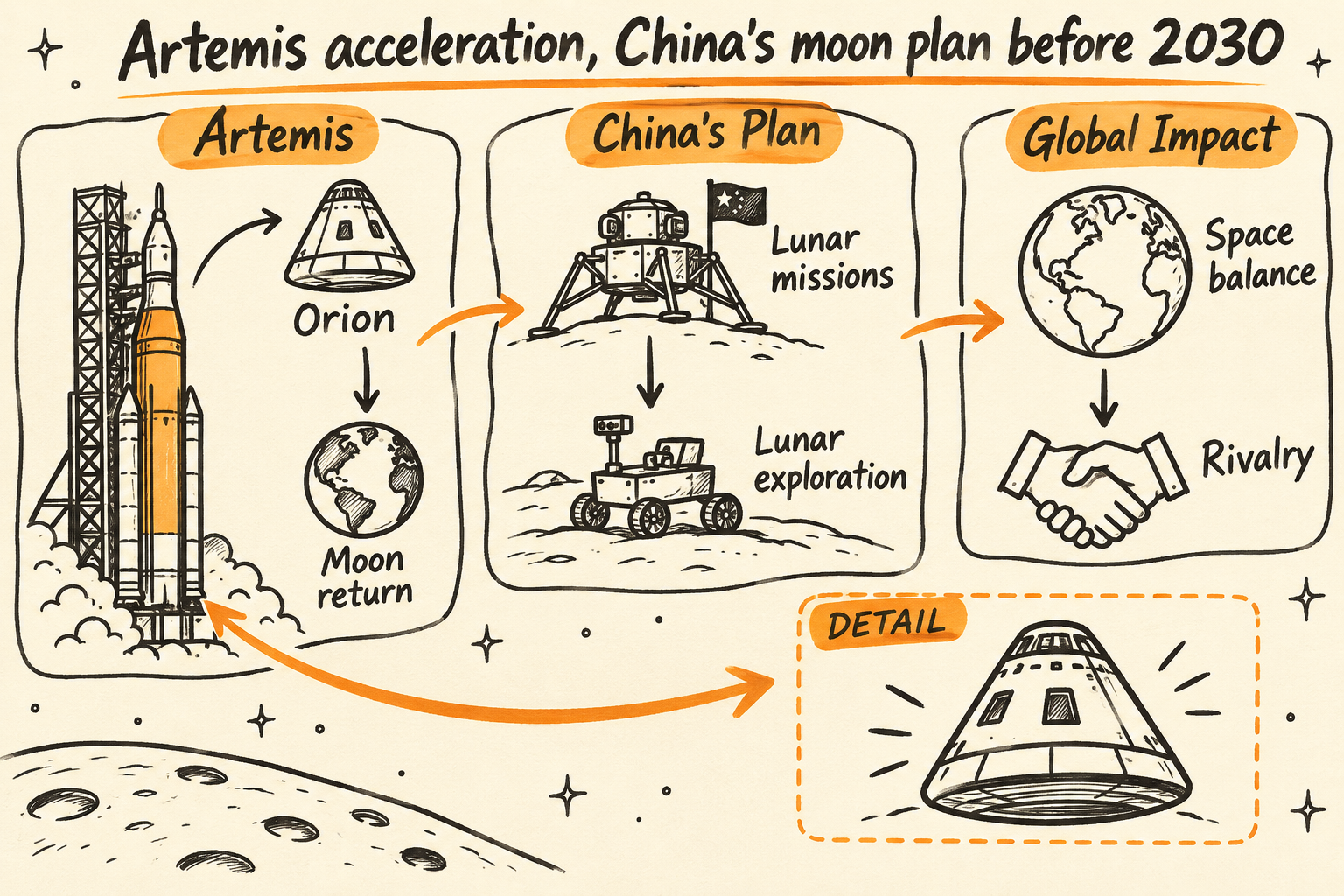
This is not new. During the Shuttle and Ares/Constellation eras, NASA repeatedly cycled through phases of heavy contractor reliance followed by painful management reforms after high‑profile failures. What has changed is scale and tempo. The Artemis programme, the push for a permanent lunar base by 2032, and rapid expansion of commercial suppliers mean that programmatic risk now propagates faster across a more diverse industrial base. Congressional oversight—freshly intensified by a change in House control—will add political unpredictability to technical and managerial risk.
Counterintuitive insight #1: More companies can increase systemic fragility
Conventional wisdom holds that diversifying suppliers improves resilience. But the CLPS 2 approach—adding eight providers to a $10 billion delivery network and concurrently issuing large launch orders to a handful of companies—creates a mixed topology: many last‑mile providers relying on a few shared launch, tracking, and communications infrastructures. Shared dependencies (for example, launch vehicle cadence, ground networks and contractor software stacks) can create single points of failure. If a key launch provider slips or a common middleware stack is compromised, multiple CLPS deliveries and surface operations could be delayed simultaneously. Thus, proliferation of suppliers reduces supplier‑level risk but may increase systemic fragility unless NASA hardens interfaces and contingency plans.
Counterintuitive insight #2: Congressional oversight can speed reforms but slow missions
Heightened congressional scrutiny—cited in commentary accompanying recent coverage—tends to push NASA toward more rigorous financial controls, transparency and risk mitigation. In the short term that often means slower procurements and added compliance burdens. Yet those same pressures can force long‑overdue reforms: stronger program management discipline, clearer requirements for cybersecurity, and more realistic schedules. The net result may be a slower path to initial sorties but a more sustainable long‑term programme—if political cycles allow the follow‑through.
Emerging international and commercial threads
The policy landscape is further complicated by non‑U.S. actors and new commercial players. Japanese company ispace’s work with JAXA on a lunar solar power tower and its MoU with KDDI on communications illustrates a maturing international commercial ecosystem building redundant power and comms options. Those projects can mitigate some single‑point risks, but they also insert more actors and interfaces into mission architectures—increasing the need for interoperability standards and shared cybersecurity practices.
What must change: governance, assurance and architecture
Three policy actions would materially reduce the gap between ambition and risk. First, NASA must treat integrated risk across the commercial ecosystem as a programmatic parameter, not an afterthought—mapping shared dependencies and funding redundancies (alternate launch lines, backup comms, cross‑licensing of payload interfaces). Second, Congress and NASA should align oversight with multi‑year delivery metrics rather than episodic audit cycles; predictable, well‑scoped reviews can enforce discipline without throttling timelines. Third, cybersecurity and supply‑chain assurance must be built into contracts from day one, with clear escalation paths and technical standards for interoperable systems on the Moon and in cislunar space.
Conclusion and outlook
The current policy moment is a crucible. The $10 billion in moon‑base contracts and CLPS 2 expansion are bold and potentially transformative steps toward a semi‑commercial lunar economy. But they also expose NASA to complex programmatic and security risks flagged by the OIG. How NASA, Congress and industry manage overlapping dependencies, oversight demands and emergent international partnerships will determine whether the Moon becomes a durable platform for science and commerce—or a cautionary tale of rapid ambition outpacing governance.