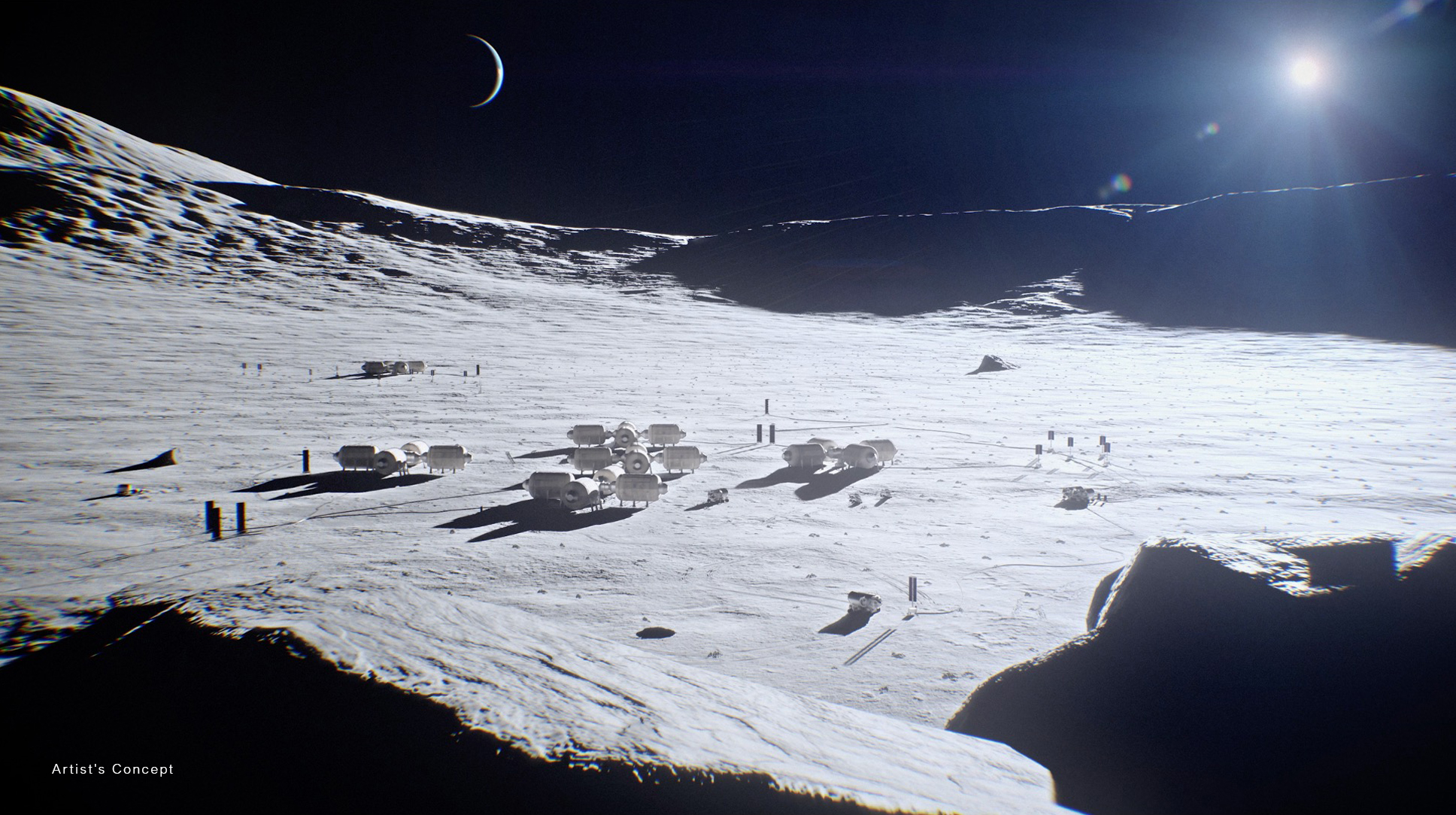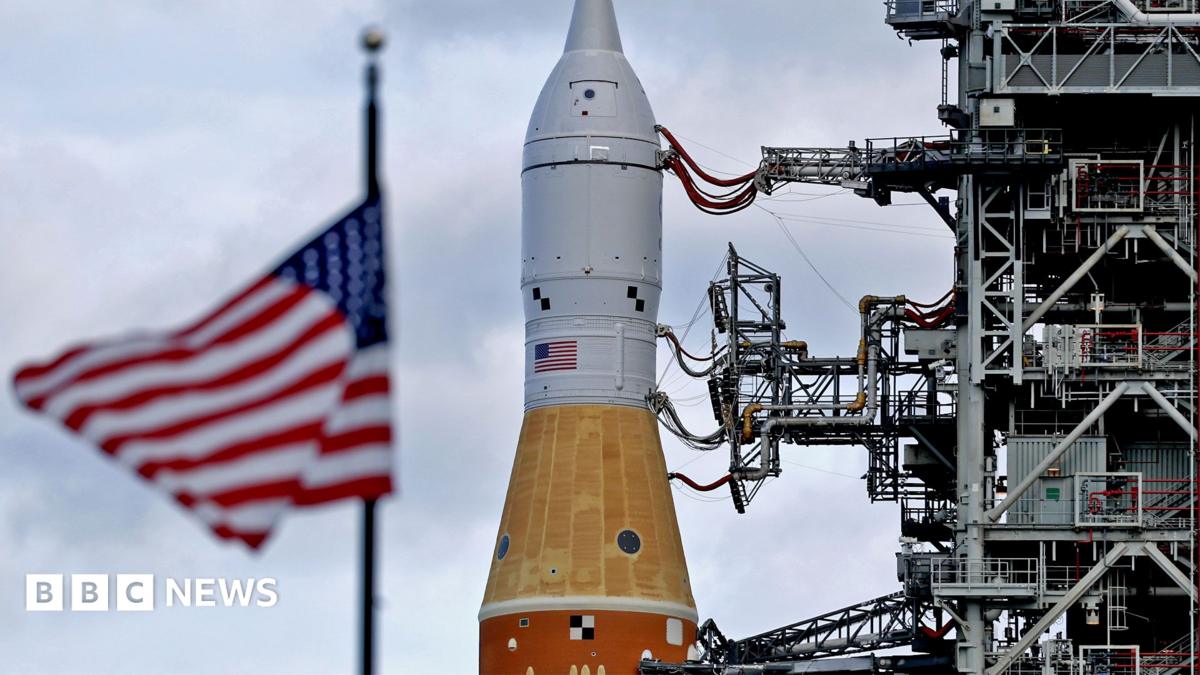
NASA announced in early November that it has issued six task orders under the 10-year Venture-Class Acquisition of Dedicated and Rideshare (VADR) launch services contract, purchasing a portfolio of rockets and orbital transfer vehicles (OTVs) valued collectively at about $1.3 billion to support its Moon Base program.
“We’re going to be flipping the formula from being mission-focused to basically getting rockets, payloads, landers, and matching them to maintain the oversight and ownership of that mission,” Carlos García-Galán, NASA’s Moon Base Manager, said during a Nov. 8 news conference. The agency said the approach is intended to create a ready inventory of transportation services — rockets and OTVs — that can be matched to payloads as requirements become firm.
On the launcher side, NASA’s task orders call upon Blue Origin’s New Glenn, Relativity Space’s Terran-R, and SpaceX’s Falcon 9. Of the three, Terran-R had not yet flown as of the announcement and was expected to make its debut in 2027. For OTVs, NASA selected vehicles from Blue Origin, Firefly Aerospace, Impulse Space and Quantum Space; those OTVs are at various development stages and had not flown as of the announcement.
Mark Wiese, manager of NASA’s Moon Base Transportation office, framed the purchases as a demand signal to industry that both matures commercial orbital transportation capabilities and provides NASA with the option of matching transportation to preplanned payloads. “We’re buying transportation capacity to accelerate industry in alignment with the requirements NASA has for Moon Base missions,” he said.
NASA said some task orders already have payloads assigned. The largest single disclosed award was a $185 million contract to launch the Cislunar Autonomous Positioning System Technology Operations and Navigation Experiment (CAPSTONE 02), developed by Advanced Space, with Arrow Science and Technology as integrator and prime contractor. SpaceX will provide the Falcon 9 for CAPSTONE 02, while Quantum Space will supply its Ranger OTV. CAPSTONE 02 is a pair of satellites planned to fly in cislunar space in the 2027–2028 timeframe to test navigation and communication techniques relevant to future docking and transfer operations.
Another Falcon 9 task order will carry a set of Intuitive Machines-built communications satellites, with Impulse Space as prime integrator and potentially using Impulse’s Mira OTV. NASA said procuring transport capability enabled it to consolidate multiple Altus communications spacecraft into a single ride, accelerating deployment and reducing demands on future CLPS lander missions.
Three additional task orders will fly on Blue Origin’s New Glenn. One will use Firefly Aerospace’s Elytra OTV to deliver three Jet Propulsion Laboratory-built MoonFall hopper drones close to the lunar surface in 2028; those hoppers are intended to land, communicate with each other and hop to additional locations. The two other New Glenn missions are slated to use Blue Origin’s Blue Ring OTV for communications and delivery roles, with finer mission details to be determined later.
García-Galán described Phase One of Moon Base — running through 2029 — as focused on technology demonstrations and science experiments the agency calls the “science of survival.” He said having payloads queued up, such as a solar communications tower or scientific instruments, and matching them to purchased transportation capacity will help meet the program’s aggressive timelines.