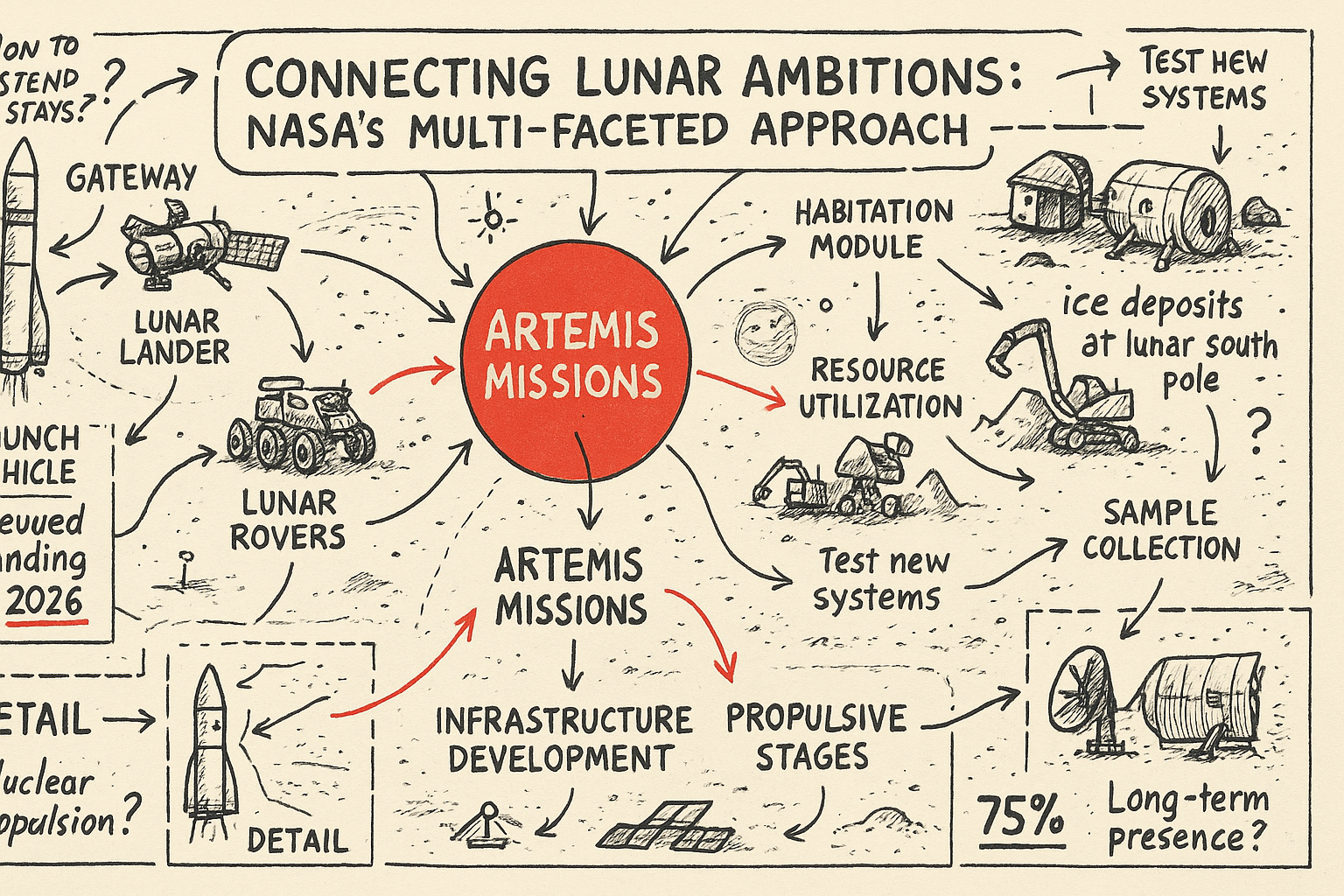
In the quest to establish a permanent human presence on the Moon, a significant focus is now being placed on the integration of biological research. This shift highlights the growing understanding of the complex challenges involved in sustaining life in the harsh lunar environment. The need for a multidisciplinary approach, particularly involving biology, is becoming increasingly evident as space agencies like NASA advance their plans for lunar exploration.
The Apollo 17 mission in December 1972 marked the last time humans set foot on the lunar surface. During their 75-hour stay, astronauts Gene Cernan and Harrison Schmitt conducted extensive experiments, including three spacewalks, to gather crucial data and samples. However, the brief nature of these missions underscored the challenges of establishing a more permanent presence.
Today, the focus has shifted from temporary visits to sustainable habitation, which requires overcoming significant obstacles related to human biology and life support systems. The lunar environment is characterized by extreme temperatures, radiation exposure, and a lack of atmosphere, all of which pose serious risks to human health. Addressing these challenges involves developing robust biological systems that can support life, from air and water regeneration to food production.
Biological research plays a pivotal role in understanding and mitigating these risks. For instance, studies on plant growth in extraterrestrial environments are crucial for developing food sources that can be cultivated on the Moon. Additionally, understanding the effects of low gravity on human physiology is essential for maintaining astronaut health during extended stays.
Investment in biological research is not only necessary for human survival but also for the success of future lunar missions. By developing closed-loop life support systems, space agencies aim to create self-sustaining habitats that minimize the need for resupply missions from Earth. This approach is vital for reducing costs and ensuring the feasibility of long-term lunar exploration.
The integration of biology into lunar mission planning represents a significant shift in strategy. It acknowledges the role of life sciences in addressing the challenges of space exploration and underscores the importance of interdisciplinary collaboration. As space agencies continue to refine their plans, the contributions of biologists and other life scientists will be essential in paving the way for a sustainable human presence on the Moon.