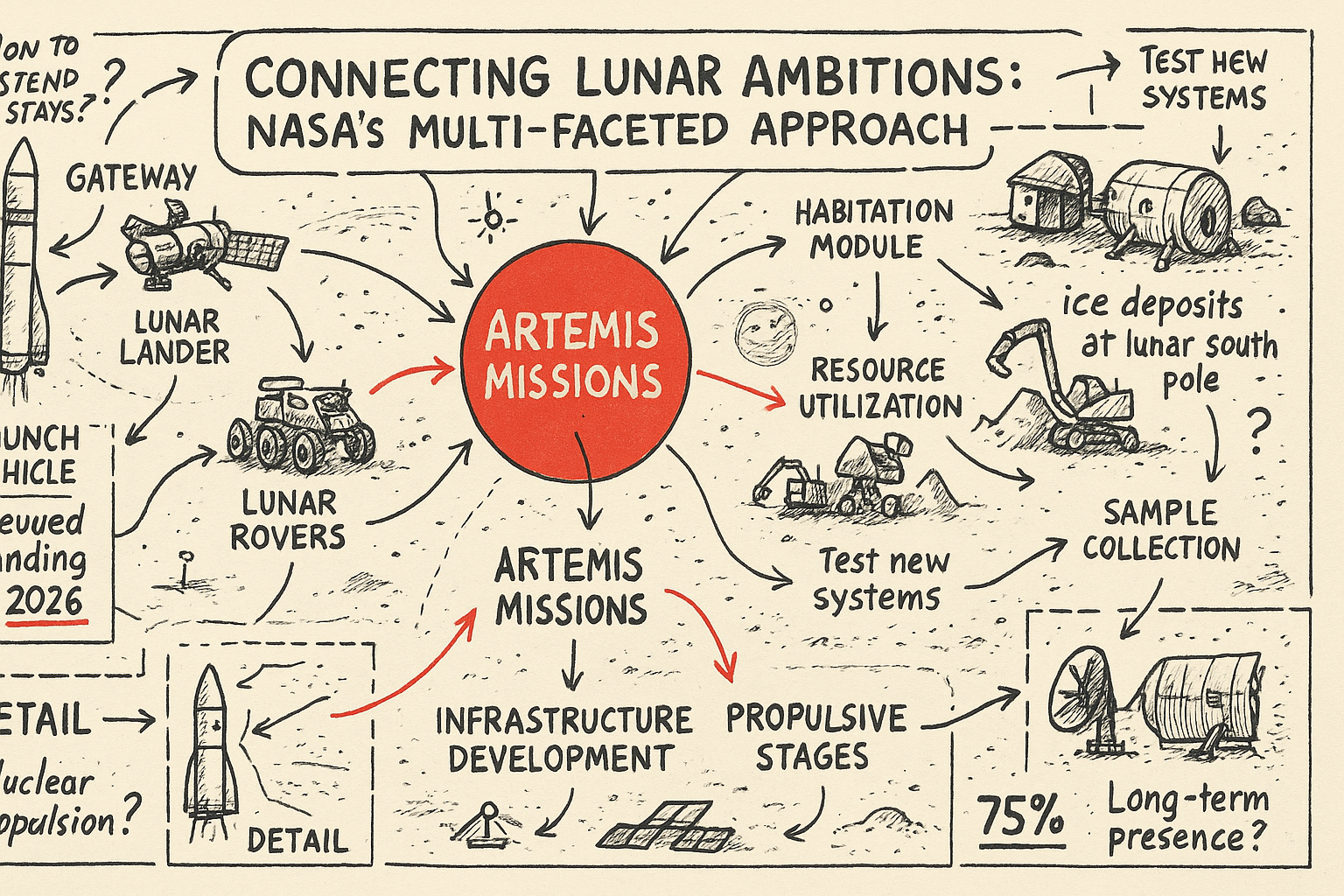
NASA's recent flurry of activities signals a strategic and comprehensive approach to lunar exploration and development, showcasing the agency's commitment to advancing both technology and scientific understanding. From testing the effects of lunar landings to designing innovative mobility solutions, NASA is laying the groundwork for sustainable lunar presence.
Understanding Lunar Landings: Plume-Surface Interaction
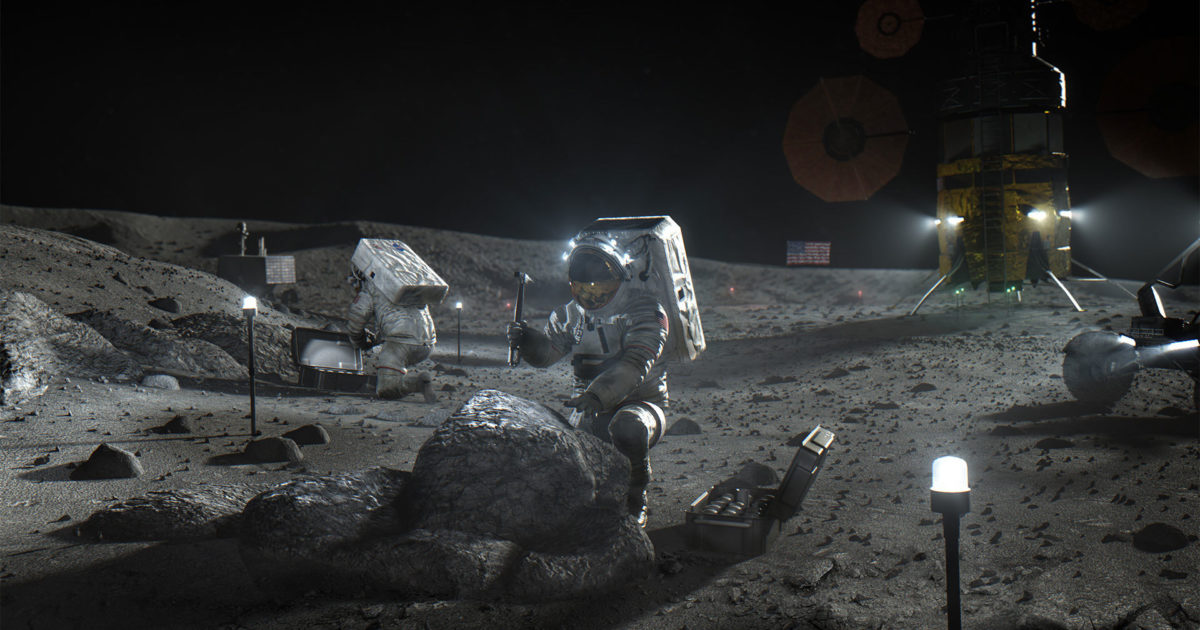
The Moon's dusty terrain poses unique challenges for lunar landings, particularly regarding the plume-surface interactions during touchdown. NASA's ongoing tests, as described in their recent updates, aim to anticipate and mitigate the hazards these interactions might pose. This research is vital not only to ensure the safety of lunar missions but also for the longevity of equipment and habitats on the lunar surface.
Historically, the Apollo missions provided critical data on plume effects, but today's advanced simulations and tests reveal a more nuanced understanding of these interactions. These insights are crucial as NASA collaborates with commercial partners to develop landers that can withstand and minimize these effects, thus preserving the delicate lunar environment.
Innovations in Lunar Mobility
NASA's 'Rock and Roll with NASA Challenge,' which garnered global participation, underscores the importance of mobility in lunar exploration. The development of next-generation rover wheels represents a leap forward in enabling lunar base construction and exploration. Mobility on the Moon isn't just about moving from point A to point B; it's about overcoming the harsh and unpredictable lunar terrain, which requires innovative design and engineering.
By engaging public innovators from around the world, NASA not only taps into a diverse pool of ideas but also fosters a global sense of ownership and collaboration in space exploration. This approach mirrors historical precedents where open challenges have accelerated technological advancements, such as the Ansari X Prize in private spaceflight.
Simulating Future Missions with Enhanced Realism
NASA's upgrades to its Vertical Motion Simulator (VMS) reflect the increasing complexity of modern space missions. The VMS, now more powerful and versatile, is an invaluable tool for training astronauts and developing mission protocols. As missions become more intricate, the need for detailed simulation grows, allowing for preemptive troubleshooting and mission rehearsal in a risk-free environment.
Simulation technology has long been a cornerstone of aerospace training, tracing back to early flight simulators. However, the VMS's ability to mimic a wide range of missions, from lunar landings to piloting futuristic air taxis, marks a significant advancement in preparing astronauts for the unknowns of space.
Scientific Exploration Beyond the Surface
While NASA's engineering feats are remarkable, its scientific pursuits remain equally ambitious. During the recent solar eclipse, NASA's high-altitude aircraft chased the Moon's shadow, providing new data on the Sun's corona's temperature disparities. This mission exemplifies NASA's dual focus on technological and scientific exploration, demonstrating how each can inform and enhance the other.
The study of the Sun's corona is not just an academic exercise; understanding solar phenomena is critical for predicting space weather, which can have profound impacts on both terrestrial and orbital systems. As our reliance on satellite technology grows, so too does the importance of space weather prediction.
Collaborative Challenges and Future Implications
NASA's TechLeap Prize series, including the Orbital Clarity Challenge, highlights the agency's emphasis on collaboration and innovation. By addressing the effects of solar activity on Earth's atmosphere, NASA is not only preparing for lunar missions but also safeguarding our planet's orbital infrastructure. This dual focus on exploration and earthbound applications is a hallmark of NASA's strategic vision.
The surprising aspect of NASA's current endeavors is the breadth of its collaborative efforts, from public challenges to partnerships with commercial entities. This approach not only accelerates technological advancement but also democratizes space exploration, fostering a global community invested in humanity's future in space.