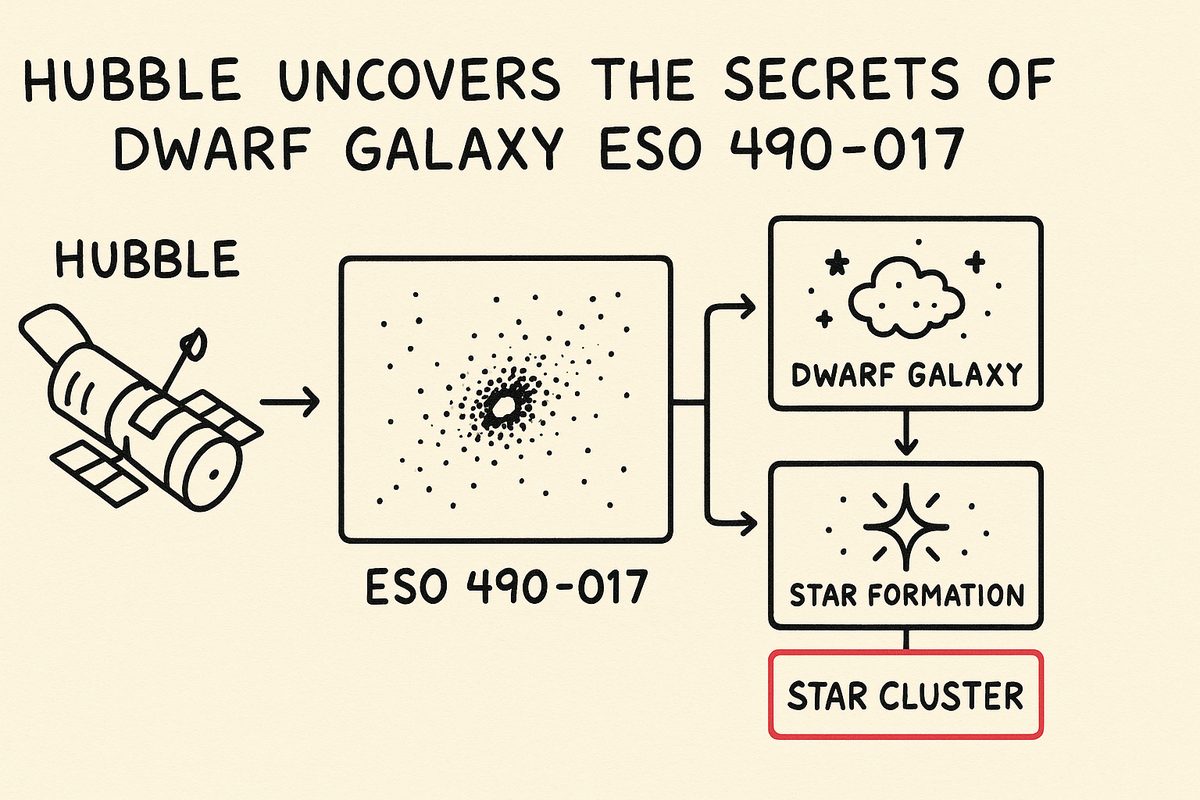
The Hubble Space Telescope, a cornerstone of astronomical observation, has recently captured a stunning image of the dwarf irregular galaxy ESO 490-017. This galaxy, located approximately 23 million light-years away in the constellation Canis Major, presents a captivating view due to its low surface brightness and irregular structure.
ESO 490-017 spans roughly 12,000 light-years in diameter, a modest size compared to the vast expanse of the Milky Way. Despite its relatively small size and faint appearance, this galaxy offers astronomers a unique opportunity to study the characteristics and formation of irregular galaxies, which differ significantly from the more common spiral and elliptical types.
The image released by NASA showcases ESO 490-017 as a faint, starry swarm, subtly illuminated against the backdrop of space. The galaxy's low surface brightness makes it difficult to observe, as it is overshadowed by brighter foreground stars, identifiable by their characteristic diffraction spikes. These spikes, a result of the telescope's optical system, do not detract from the galaxy's understated beauty but instead highlight its elusive nature.
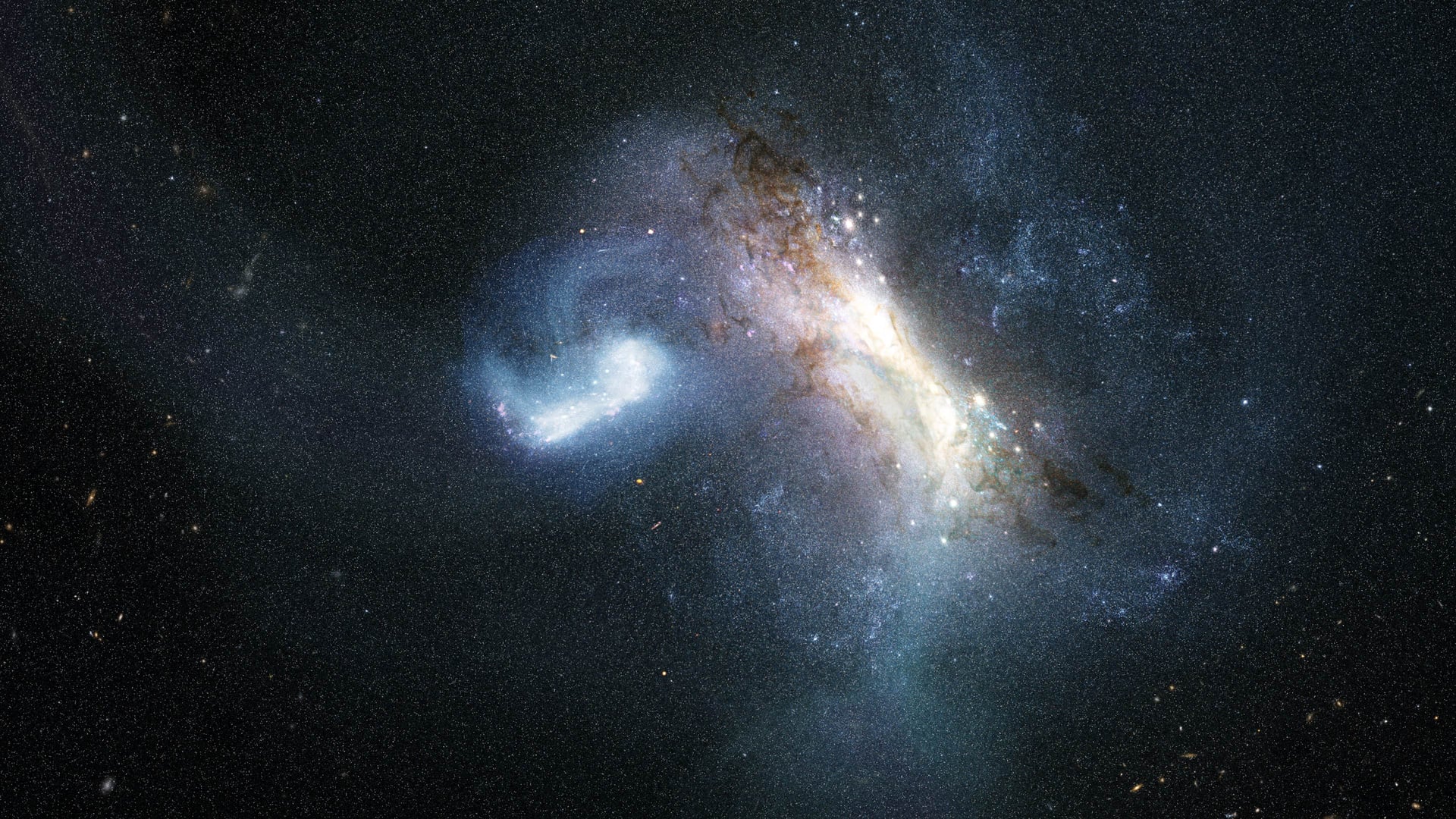
Irregular galaxies like ESO 490-017 provide valuable insights into the diversity and evolution of galaxies in the universe. Unlike their spiral and elliptical counterparts, irregular galaxies lack a distinct shape and are often the result of gravitational interactions or past collisions with other galaxies. Such interactions can trigger bursts of star formation, leading to the chaotic and asymmetrical appearance observed in these galaxies.
By studying ESO 490-017, astronomers hope to gain a deeper understanding of the processes that govern galaxy formation and evolution. The data collected by Hubble not only helps to map the structure and composition of such galaxies but also contributes to broader cosmological models of how galaxies have evolved over billions of years.
As the Hubble Space Telescope continues its mission of exploring the universe, discoveries like ESO 490-017 remind us of the diverse and intricate tapestry of galaxies that populate the cosmos. Each observation adds a new piece to the puzzle, enhancing our understanding of the universe's history and complexity.