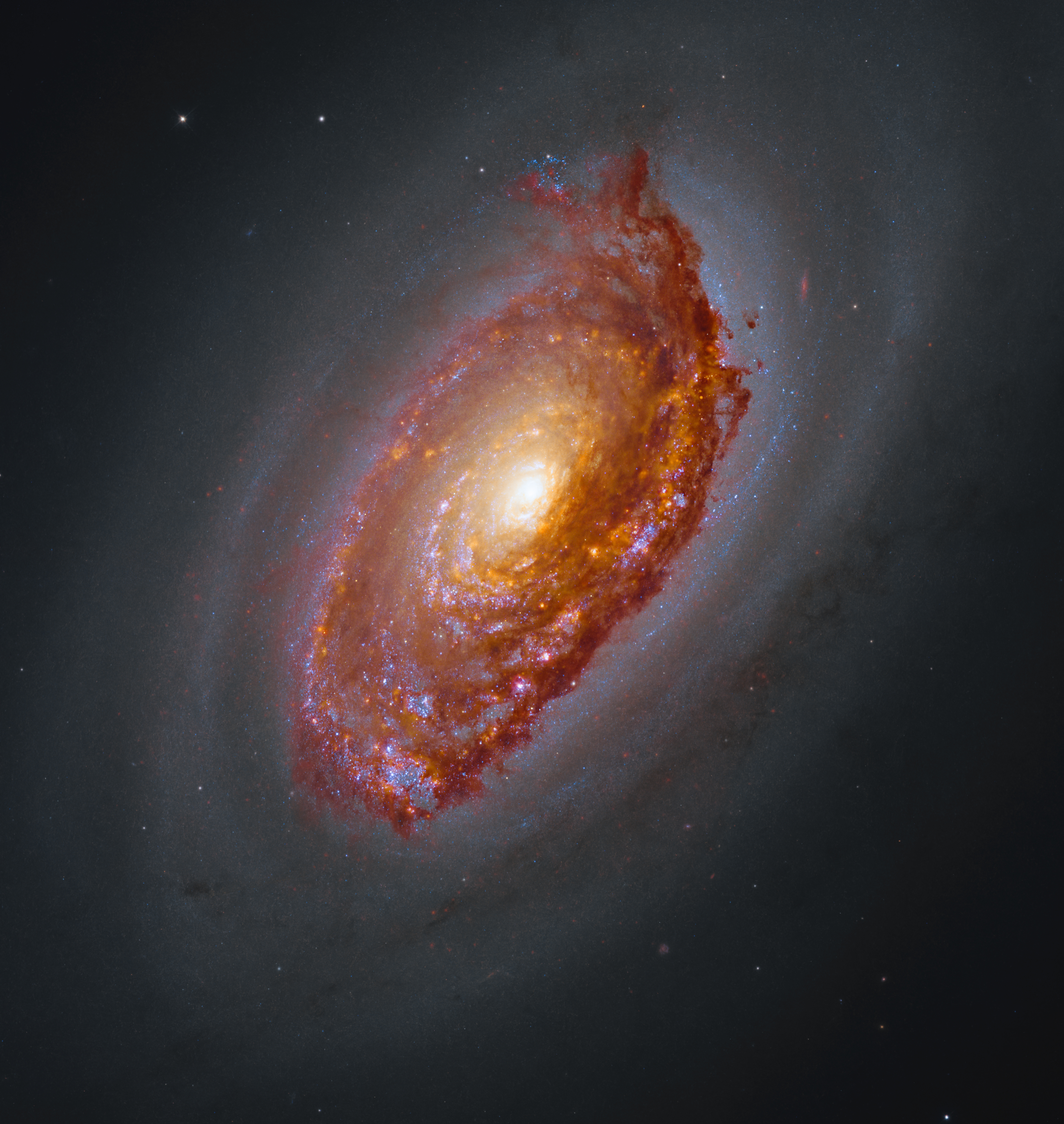
The Black Eye Galaxy, also known as Messier 64, has long intrigued astronomers with its distinctive appearance and unique rotation patterns. Recently, NASA's Hubble Space Telescope and the James Webb Space Telescope have teamed up to provide an even more detailed view of this captivating cosmic structure. The new composite image, released on March 20, 2026, offers a comprehensive look at Messier 64 by combining observations from both telescopes.
The Black Eye Galaxy is located approximately 17 million light-years away in the constellation Coma Berenices. It is named for the striking dark band of absorbing dust that partially obscures its bright nucleus, giving it the appearance of a cosmic 'black eye'. This latest image compiles data from the Hubble Space Telescope, which captures the galaxy in ultraviolet, visible, and near-infrared light, alongside the observations from the James Webb Space Telescope, focusing on near- and mid-infrared wavelengths.
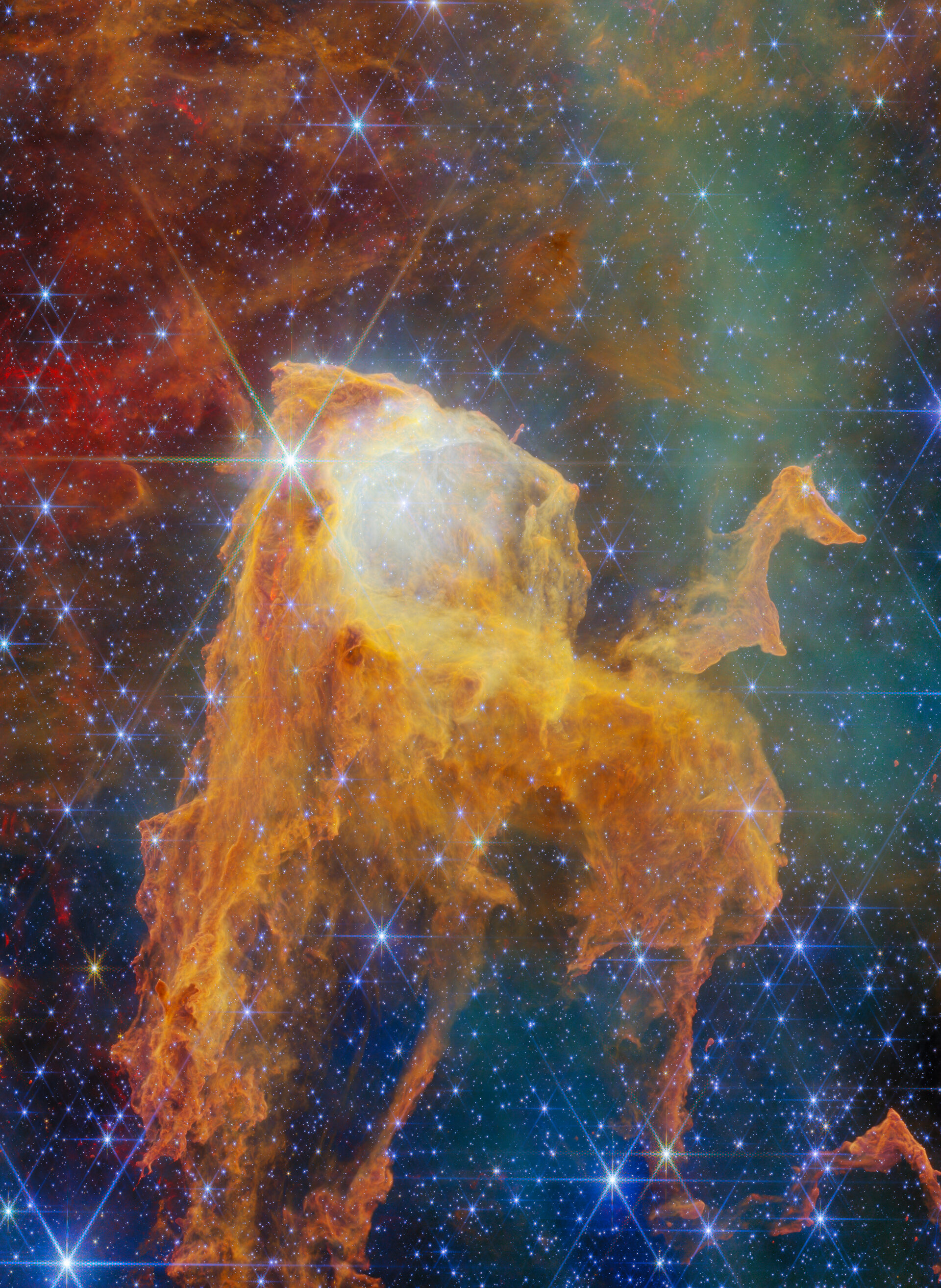
This composite approach showcases the complementary capabilities of both telescopes. Hubble’s ultraviolet and visible light imaging allows scientists to observe the star formations and the galaxy’s overall structure. In contrast, Webb’s infrared capabilities enable astronomers to peer through the dust that obscures much of the galaxy’s features in visible light, revealing the hidden processes within Messier 64.
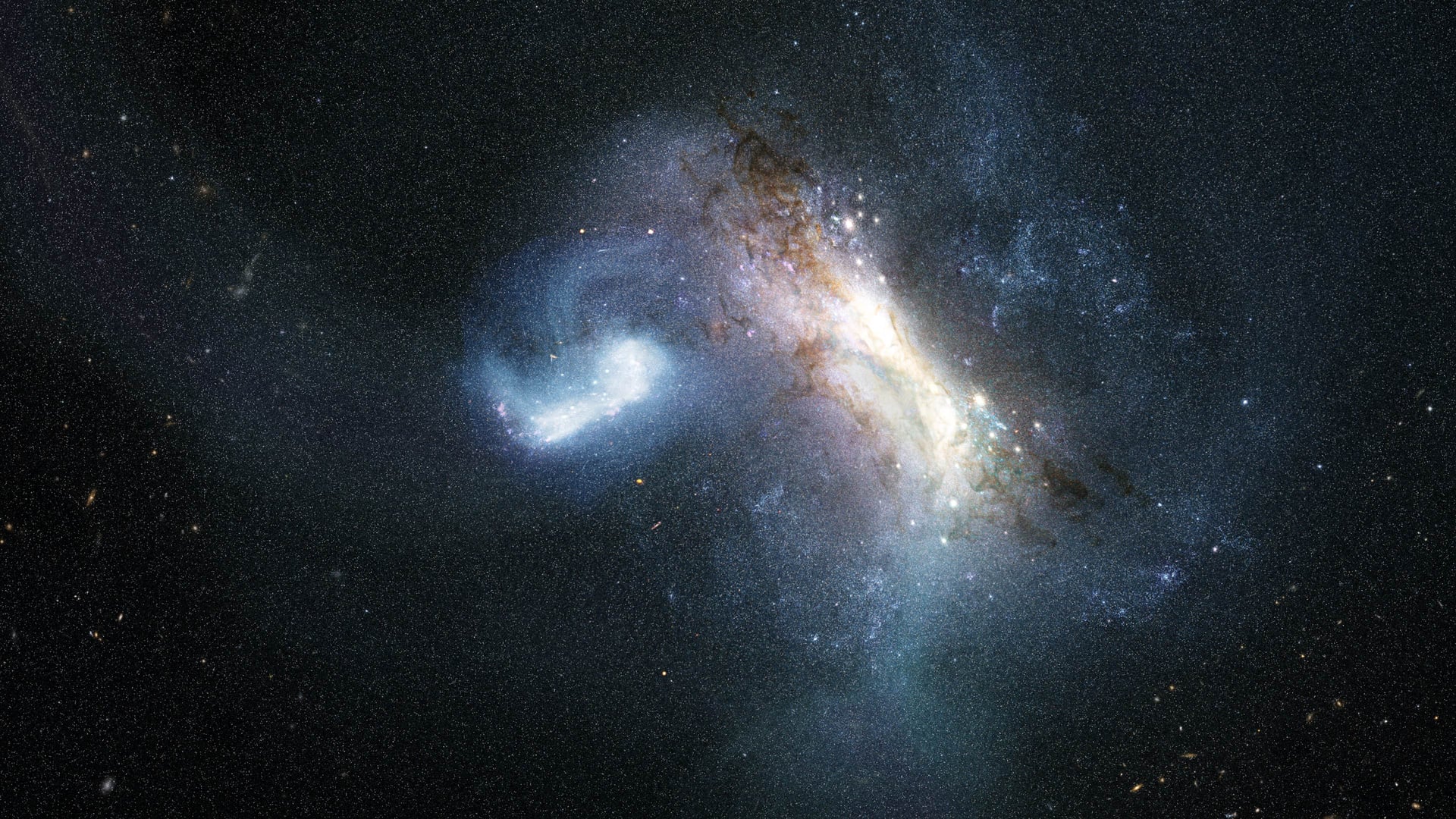
One of the most intriguing aspects of the Black Eye Galaxy is its unusual rotational dynamics. Unlike most galaxies, where all stars and gas clouds orbit in the same direction around the galactic center, Messier 64 presents a unique scenario. Observations reveal that while the inner regions of the galaxy’s stars orbit in one direction, the outer regions rotate in the opposite direction. This counter-rotation is believed to result from a past collision and subsequent merger with a smaller satellite galaxy. Such events can significantly influence the dynamics and evolution of a galaxy by triggering new star formation and altering its structural integrity.
The collaboration between the Hubble and Webb telescopes exemplifies the potential of utilizing multiple observational platforms to gain a more comprehensive understanding of cosmic phenomena. While Hubble continues to provide critical insights into the ultraviolet and visible spectrum, Webb offers a new dimension of exploration with its infrared observations, expanding our ability to investigate objects obscured by cosmic dust.
This synergy not only enhances our understanding of Messier 64 but also sets a precedent for future astronomical studies. As both telescopes continue to observe the universe, their combined data could unlock further mysteries of galaxies, star formation, and the fundamental processes that govern cosmic evolution.
The detailed imaging of Messier 64 offers a glimpse into the complex interactions and histories that shape galaxies. By studying such systems, astronomers can infer the past interactions and events that have led to the current configurations of galaxies, offering clues about the history of our own Milky Way.
Looking ahead, the ongoing collaboration between Hubble and Webb is expected to continue yielding valuable data that will contribute to the broader field of astronomy. As technologies advance and more sophisticated instruments are developed, our understanding of the universe will expand, potentially answering some of the profound questions that have puzzled scientists for centuries.