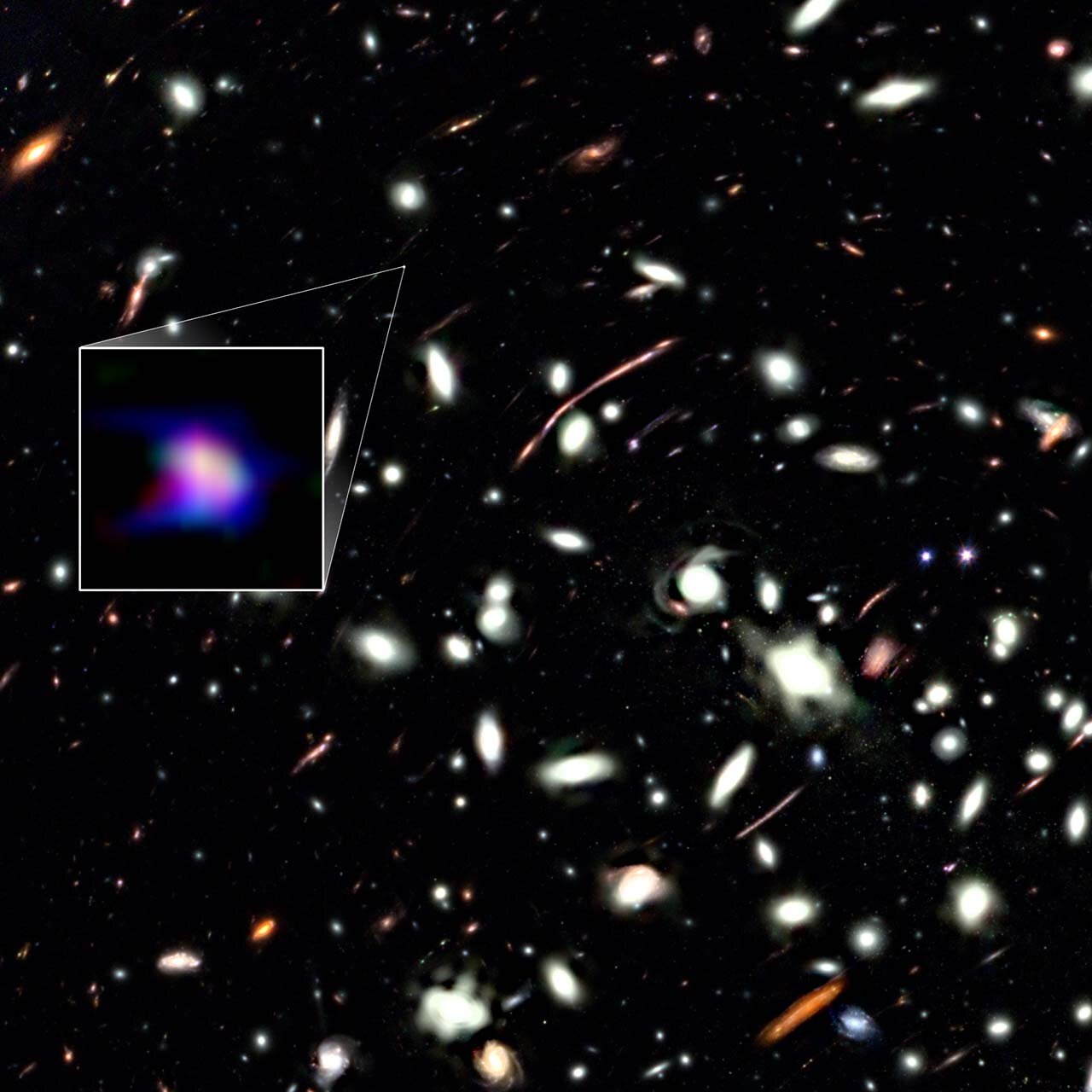
An international team of astronomers has recently made a groundbreaking discovery regarding the early universe's chemical composition. Utilizing the powerful capabilities of the James Webb Space Telescope (JWST), they have successfully characterized an ultra-faint galaxy, LAP1-B, from 13 billion years ago. This galaxy has revealed the lowest oxygen abundance ever recorded in a galaxy, at just 1/240th that of our sun. The study's findings, published in the journal Nature, provide critical insights into the universe's early chemical evolution and the formation of the first stars and galaxies.
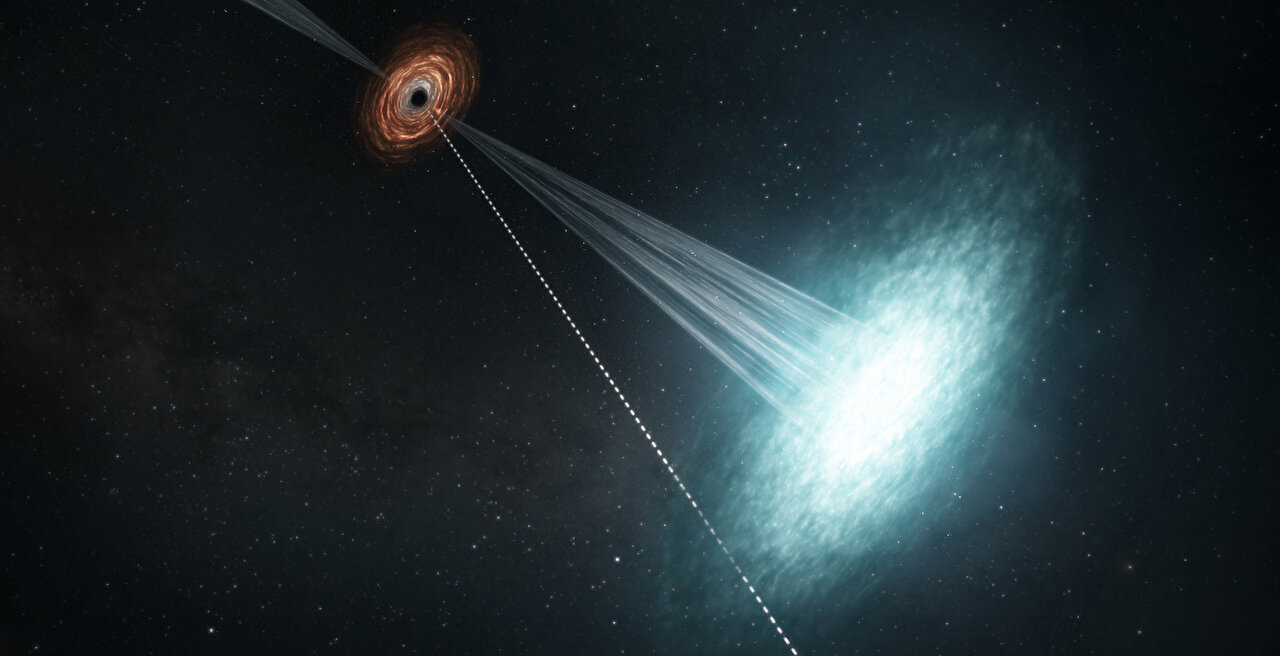
The galaxy LAP1-B is situated at a tremendous distance, with its light taking approximately 13 billion years to reach us. This makes it an invaluable cosmic time capsule, offering a glimpse into a period shortly after the Big Bang, when the universe was just beginning to form complex structures from the primordial soup of hydrogen and helium. The discovery of LAP1-B was made possible through gravitational lensing, a natural phenomenon where the gravity of a massive galaxy cluster acts like a cosmic magnifying glass, amplifying the light from the distant and faint galaxy.
The research team, led by Kimihiko Nakajima of Kanazawa University, along with Masami Ouchi from the National Astronomical Observatory of Japan (NAOJ) and the University of Tokyo, made use of JWST's Near-Infrared Camera (NIRCam) and Near-Infrared Spectrograph (NIRSpec) to study LAP1-B's chemical signatures. Although the galaxy is invisible in the NIRCam's background images due to its extreme faintness, the NIRSpec was able to detect crucial chemical markers, revealing a unique chemical profile.
One of the most striking features of LAP1-B is its chemically primitive state. The galaxy exhibits not only a record-low oxygen abundance but also an elevated carbon-to-oxygen ratio. These characteristics suggest that LAP1-B is a vital piece in understanding the evolution of galaxies, potentially acting as an ancestor to the so-called "fossil galaxies" found near the Milky Way today. These fossil galaxies are thought to be remnants of the earliest cosmic structures that have undergone little change over billions of years.
Understanding when and how the first stars and galaxies began to scatter heavier elements across the cosmos has been a longstanding challenge in astronomy. Just after the Big Bang, the early universe was composed almost entirely of light elements like hydrogen and helium. It was only later, within the cores of the first stars, that heavier elements such as carbon and oxygen were forged and subsequently distributed throughout the universe. The ability to detect and analyze the chemical makeup of such early galaxies as LAP1-B marks a significant milestone in this research area.
The implications of these findings are far-reaching. By studying galaxies like LAP1-B, astronomers can better understand the processes that governed the universe's early chemical evolution, offering clues about the formation of the first stars and galaxies. Furthermore, these discoveries underscore the critical role of advanced technologies like the JWST and the natural phenomena of gravitational lensing in pushing the boundaries of our cosmic knowledge.
As we continue to explore the depths of the universe, each new discovery adds another piece to the puzzle of our cosmic origins. The characterization of LAP1-B represents a significant step forward in our quest to understand the universe's infancy and the fundamental processes that shaped the galaxies we observe today. Looking ahead, ongoing and future observations with the JWST and other next-generation telescopes promise to shed even more light on these ancient cosmic epochs, further illuminating the path from the Big Bang to the present day.