The cosmos never ceases to amaze, and recent discoveries continue to push the boundaries of our understanding. A team of astronomers, led by Hucheng Ding from Anhui Normal University in China, has reported the observation of an exceptional optical transient event in a dwarf galaxy. This event, designated AT2019ijn, is characterized as a rare fast-evolving blue optical transient (FBOT), raising intriguing questions about its nature and potential classification as a new type of cosmic explosion.
Fast-evolving blue optical transients are among the rarest astronomical phenomena. They exhibit a rapid rise to peak brightness, typically within ten days, and are distinguished by their blue coloration at peak luminosity. After reaching their zenith, they decay exponentially over approximately a month. AT2019ijn was first detected on May 31, 2019, by the Zwicky Transient Facility (ZTF) as an optical transient in the nucleus of a dwarf galaxy at a redshift of 0.27. The recent observations, detailed in a paper published in The Astrophysical Journal Letters on July 6, 2026, reveal that AT2019ijn displays characteristics akin to luminous FBOTs, albeit with a slower decline than typical.
The peculiarities of AT2019ijn lie not only in its optical properties but also in its radio emissions. The transient event exhibited exceptionally bright radio emission, a feature that stands out even among other FBOTs. The multi-wavelength analysis conducted by Ding's team shows that AT2019ijn rose rapidly in the optical band to a peak luminosity of −21.05 magnitude in just over five days, maintaining a persistently blue color. This unique combination of characteristics prompts the question: could AT2019ijn represent a new class of cosmic explosion?
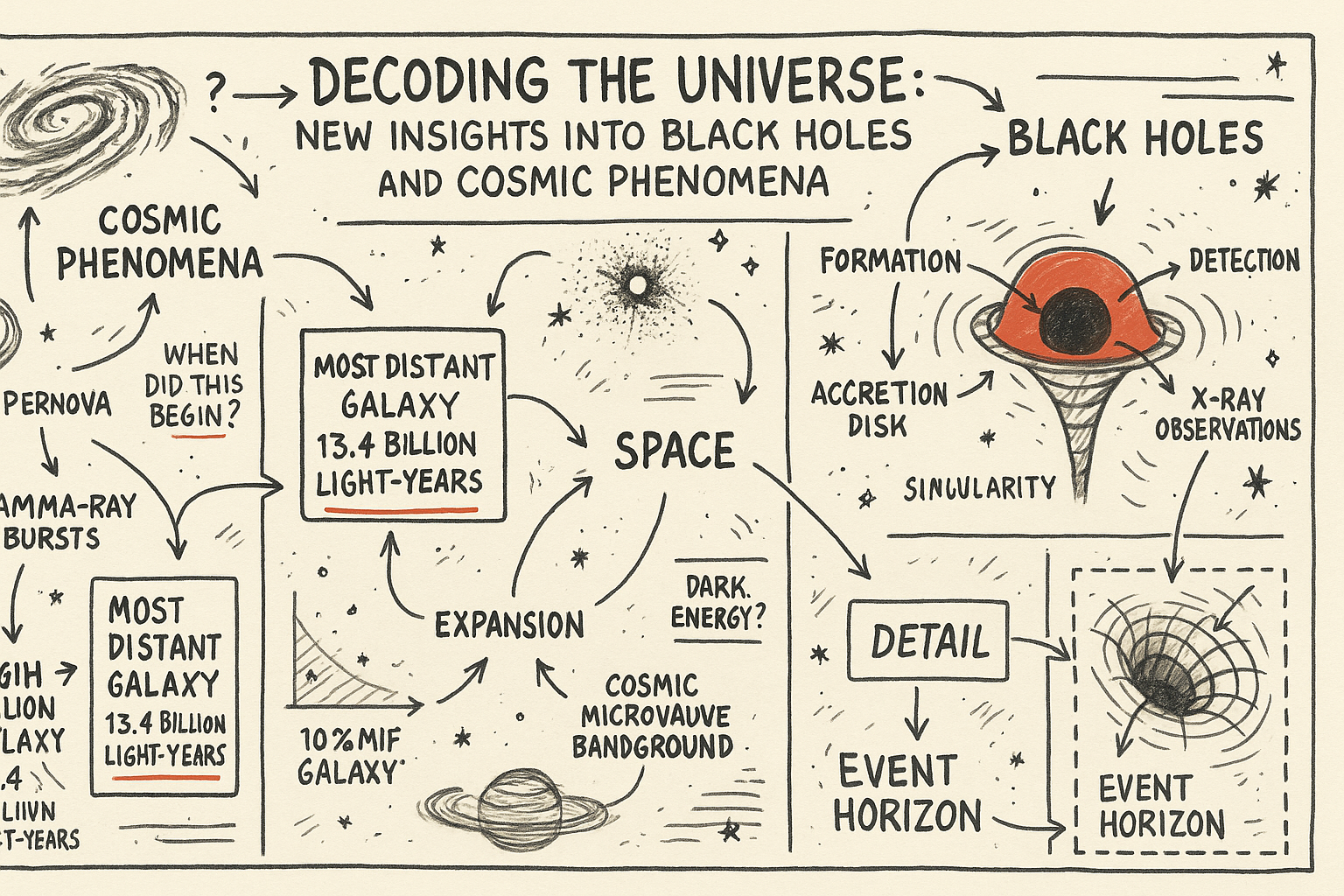
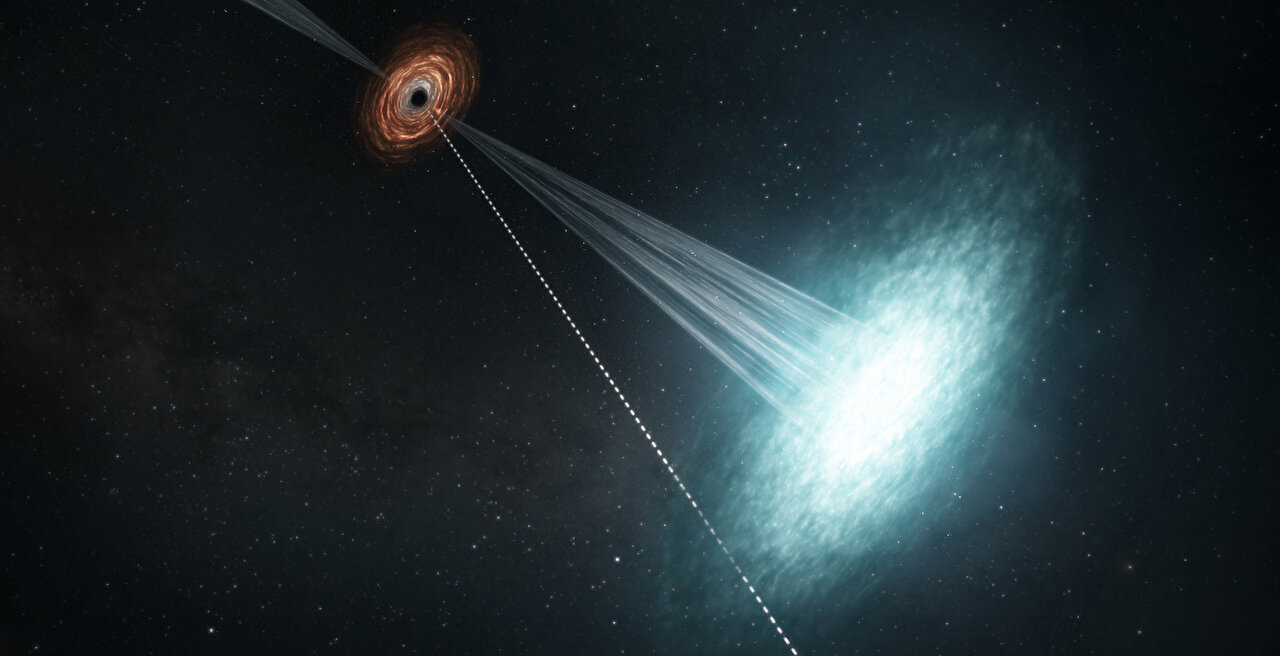
Understanding such phenomena is crucial for astronomers, as it can provide insights into the dynamic processes occurring in the universe. Theoretical models suggest that these rare transients might be associated with the activity of black holes, potentially involving the disintegration of a star by an intermediate-mass black hole. This process might create an accretion disk and relativistic jets, producing the observed optical and radio emissions.
In the broader context of astrophysical research, such discoveries are invaluable. They offer a glimpse into the violent processes that shape galaxies and influence the evolution of the cosmos. Additionally, they may provide clues about the early universe and the formation of the first black holes. Understanding these high-energy events could also shed light on the mechanisms behind other transient phenomena, such as supernovae and gamma-ray bursts.
The discovery of AT2019ijn also emphasizes the significance of continued observation and data collection. Facilities like the Zwicky Transient Facility play a crucial role in identifying and cataloging these fleeting events, allowing astronomers to analyze and interpret their findings in the context of existing cosmic models.
While the exact nature of AT2019ijn remains a topic for further study, this rare blue optical transient adds a new piece to the puzzle of cosmic explosions. As astronomers continue to unravel the mysteries of these transients, they bring us closer to a comprehensive understanding of our universe's most enigmatic phenomena.
Looking to the future, ongoing advancements in observational technology and theoretical modeling promise to deepen our understanding of such events. As we refine our techniques and broaden our observational capacity, we may soon uncover more examples of these rare transients, potentially leading to the identification of new classes of astronomical phenomena.