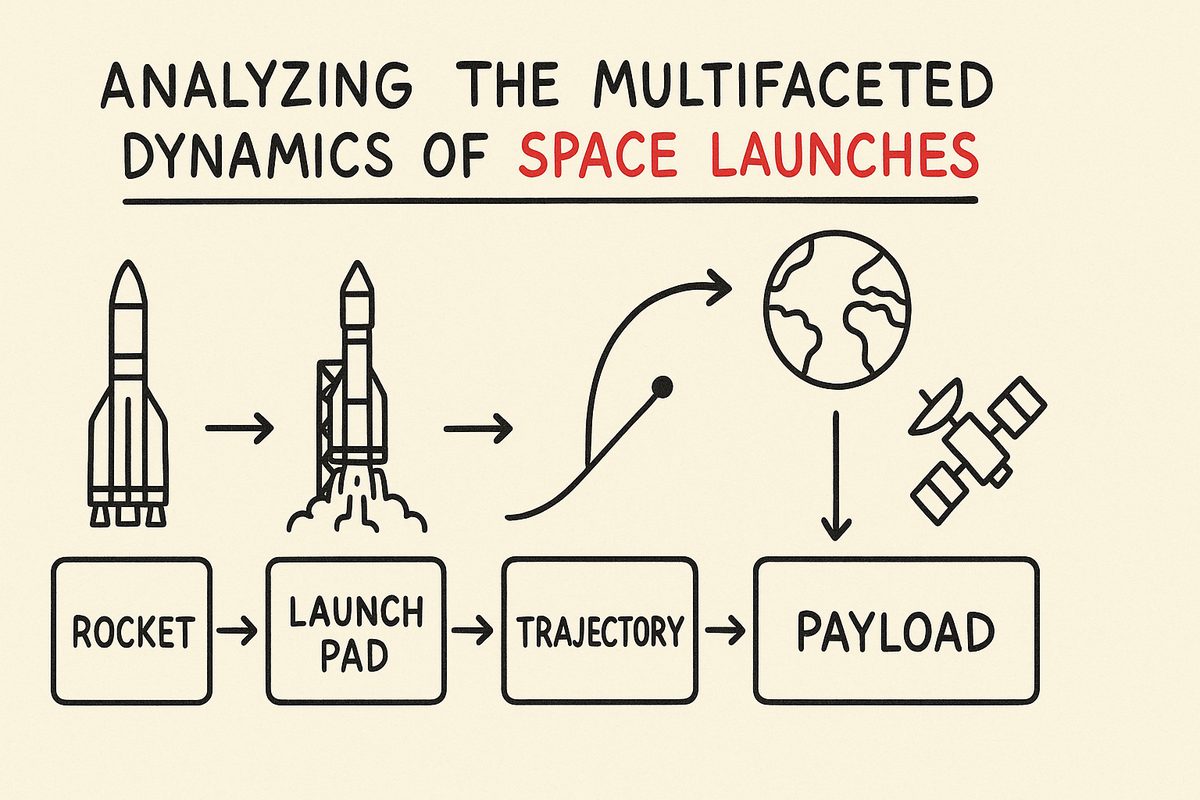
In recent years, the world of space launches has been a theater of both technological innovation and human endurance. The Italian Space Agency's (ASI) novel approach to simulating the stresses of long-duration spaceflight through maritime training on a tall ship exemplifies the creative strategies being deployed to prepare for future space missions. This initiative, known as ICE-Blue, highlights a crucial yet often overlooked aspect of space travel: the psychological and physiological impact of prolonged periods in confined, isolated environments.
Historically, the challenges of spaceflight have extended beyond engineering marvels. The Apollo missions, for instance, were as much a test of human resilience as they were of rocket science. ASI's decision to collaborate with the Italian Navy to use a tall ship for simulation is a nod to the past when maritime exploration was the closest parallel to space travel. This approach not only provides a cost-effective method for simulating isolation and confinement but also underscores the importance of interdisciplinary collaboration in space exploration.
Strategic Alliances: The Backbone of Modern Space Endeavors
In another corner of the aerospace sector, strategic partnerships are proving vital for advancing national interests in space. The alliance between MDA's 49North and Voyageur Aviation aims to harness domestic capabilities to secure Intelligence, Surveillance, and Reconnaissance (ISR) contracts. This move reflects a broader trend of consolidation within the aerospace industry, driven by governmental investment and a burgeoning demand for national security applications.
Such partnerships are reminiscent of the Cold War era when alliances were pivotal in establishing space dominance. However, today's collaborations are more commercially driven, focusing on leveraging existing technological infrastructures to secure market positions. This shift towards commercial partnerships signifies a new era where private industry plays a critical role in national space strategies.
The Enchantment of Celestial Events
While technological and strategic endeavors capture headlines, celestial events like the Blue Moon continue to captivate public imagination. Over a century, the Blue Moon has been a symbol of rare occurrences, lending its name to a variety of cultural phenomena. Its allure lies not just in its rarity but in its ability to connect human experiences across time and space, reminding us of the universe's grandeur.
The recent coverage of the smallest full moon of 2026 and the Blue Moon's concealment of an ancient star's light are a testament to our enduring fascination with the cosmos. These events offer a respite from the complex challenges of space technology, allowing a moment of reflection and wonder.
The Future: Balancing Innovation with Human Elements
As we advance towards more ambitious space missions, the integration of human factors with technological innovation will become increasingly crucial. The ICE-Blue initiative represents a forward-thinking approach that addresses this balance, while strategic alliances like that of MDA's 49North and Voyageur Aviation illustrate the importance of collaborative efforts in achieving space objectives.
Looking ahead, the challenge will be to harmonize these elements to ensure sustainable and successful space exploration. This involves not only technological advancements but also a deep understanding of human capabilities and limitations. As we stand on the cusp of a new era in space exploration, it is this synergy that will determine the trajectory of our cosmic journey.