The recent flurry of activities in the space industry encapsulates an era of transformative changes. As we delve into the developments around space launches, a tapestry emerges, interwoven with technological advancements, international collaborations, and strategic foresight.
Technological Leap: From Earth to Deep Space
One of the fascinating aspects of modern space exploration is the leap in technology facilitating missions beyond Earth's orbit. NASA's testing of a new refuel device for in-space refueling missions signifies a pivotal step in extending the reach of spacecraft. This innovation, akin to a gas pump for spacecraft, is crucial for the sustainability of long-term missions and highlights a shift towards more modular and adaptable space missions. The implications are profound, allowing spacecraft to embark on longer journeys without the limitation of fuel constraints.
Commercial and International Synergies
Concurrent with technological advancements is the burgeoning role of international cooperation and commercial involvement. The recent Canadian trade mission to Japan, resulting in $1.7 billion in commercial agreements, underscores the importance of bilateral frameworks like the Canada-Japan Equipment and Technology Transfer Agreement (ETTA). Such collaborations are not merely transactional but represent a strategic alignment in shared goals for space exploration and technology transfer. This development may herald a new era where national boundaries become porous, allowing for shared advancements that push the boundaries of what is possible.
The Role of AI and Megaconstellations
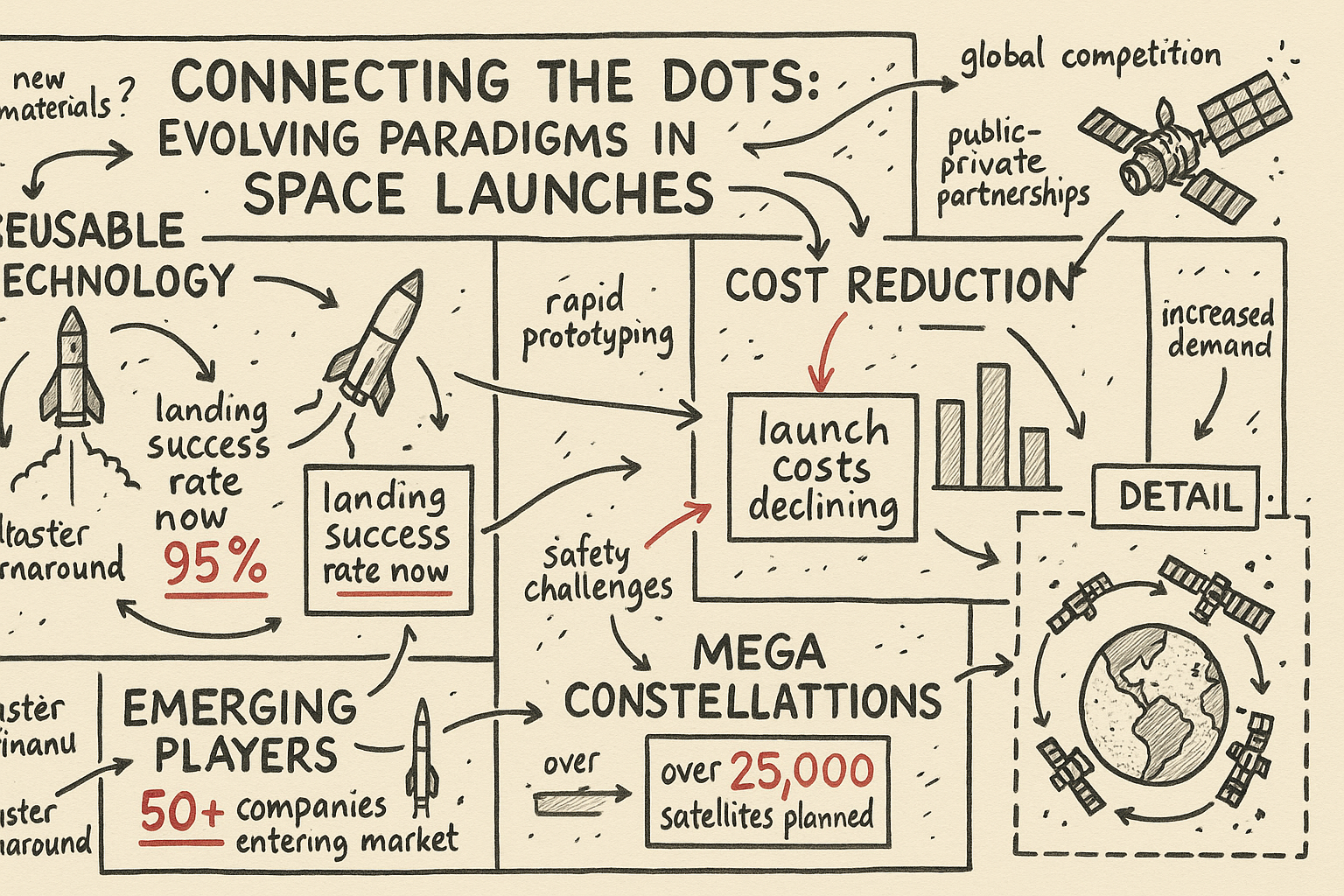
In the commercial arena, SpaceX's announcement of its AI megaconstellation, 'Starmind', reflects the growing intersection of artificial intelligence and space technology. This megaconstellation is not just a testament to the capabilities of modern engineering but also a harbinger of a future where AI-driven satellites enhance our understanding of the cosmos and improve communication networks on Earth. Such advancements pose questions about space traffic management and the sustainability of space activities, challenging policymakers to adapt rapidly.
Environmental Monitoring and the Earth Connection
While the gaze is often upward, the role of space technology in addressing terrestrial challenges remains significant. NASA's PACE mission, studying smoke and fires, exemplifies how space-based observations contribute to our understanding of environmental phenomena on Earth. By observing vegetation precursors to fires and tracking smoke plumes, PACE provides crucial data that could mitigate the impact of wildfires, a growing concern amid climate change.
Narratives Beyond the Launch Pad
The personal stories behind these technological and scientific advancements add a human dimension to space exploration. Eric Fernandez's journey from watching rocket launches in central California to contributing to NASA's projects illustrates the passion and dedication driving this industry forward. It reminds us that while technology propels us into new frontiers, it is the human spirit that fuels these endeavors.
As we synthesize these developments, a surprising insight emerges: the convergence of technology, international policy, and human aspiration is not just redefining space launches but also challenging our perceptions of what is achievable. The future of space exploration is not merely about launching rockets but orchestrating a symphony of technological, commercial, and environmental advancements that resonate back to Earth.