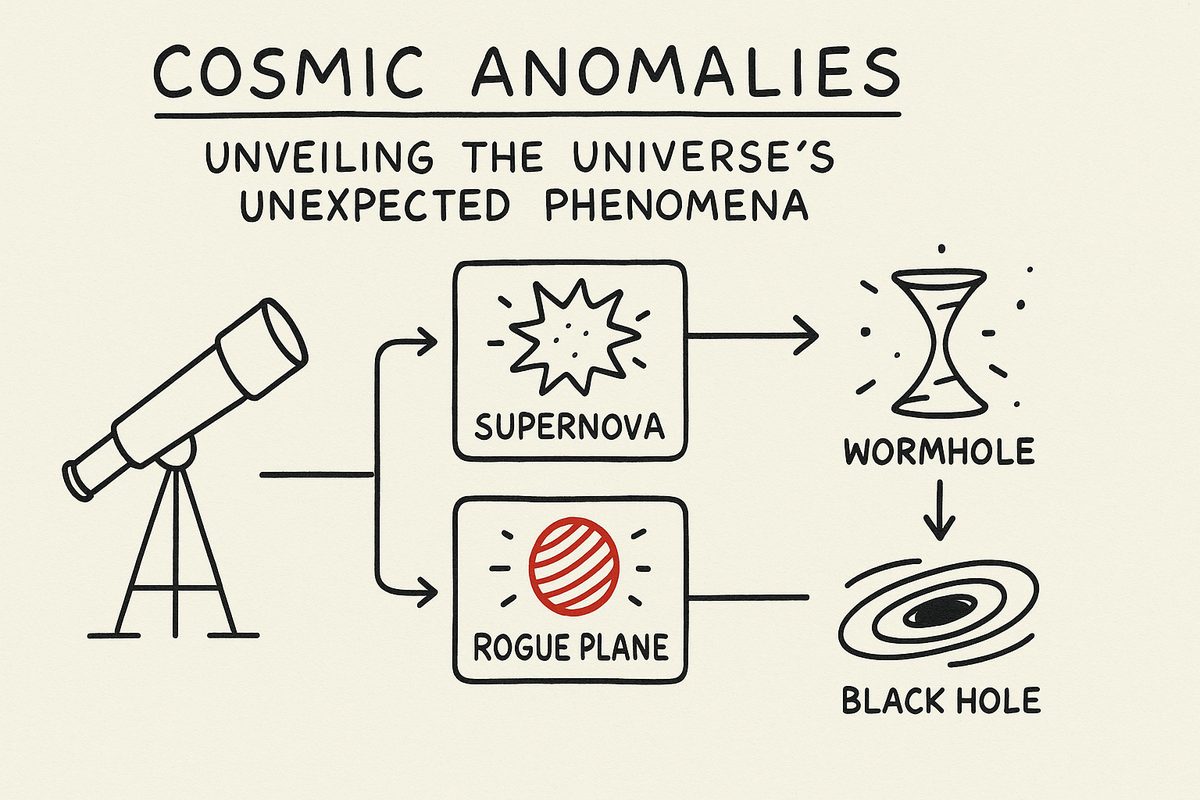
The universe, with its vast expanse and myriad mysteries, constantly challenges our understanding of fundamental cosmic principles. Recent findings from the James Webb Space Telescope (JWST) have brought forth phenomena that defy conventional astrophysical wisdom, urging scientists to rethink long-standing beliefs.
Galactic Stillness and the Mystery of GN20
Traditionally, galaxies are known to spin. This rotational motion is a cornerstone of our cosmic understanding. However, a recent discovery by JWST of a massive, early-universe galaxy that appears devoid of spin has left astronomers perplexed. The implications of a motionless galaxy suggest potential anomalies in dark matter distribution or unique evolutionary processes that challenge our current models of galaxy formation.
Simultaneously, JWST's identification of a stellar bar in the galaxy GN20, only 1.5 billion years post-Big Bang, introduces another enigma. Stellar bars typically form in mature galaxies, aiding in star formation and galaxy evolution. Their presence in such an early universe stage raises questions about the rapidity and nature of galaxy development during the universe's infancy.
Protoplanetary Disks: Cosmic Cradles
Beyond galaxies, the JWST has also provided unprecedented insights into the formation of planetary systems. Observations of the protoplanetary disk around the young star AB Aurigae revealed unexpected rotational dynamics. While the disk generally adheres to predicted physics, certain regions exhibit atypical motion, potentially influenced by emerging planetary bodies or previously unknown forces.
The study of dust rings within these disks offers a novel method for determining the mass of nascent planets. This 'weighing' technique, by examining dust ring characteristics, provides an alternative to traditional gap analysis, offering deeper insights into planetary formation processes.
Technological Advancements and the Quest for Extraterrestrial Life
Our quest to understand the cosmos extends beyond structural phenomena to the search for life itself. Technological advancements, as demonstrated by the construction of the Habitable Worlds Observatory and JWST's atmospheric 'sniffing', bring us closer to detecting biosignatures on other worlds. However, the interpretation of these signatures remains a profound challenge. As we edge closer to discovering extraterrestrial life, the question of whether detected biosignatures provide meaningful insights into universal biology persists.
Future Implications and the Path Ahead
Each of these discoveries nudges us toward a more complex understanding of our universe. The anomalies observed in galactic and planetary formation processes compel a re-evaluation of existing theories and models. They also highlight the necessity for continued technological innovation and interdisciplinary collaboration in unravelling the universe's secrets.
The findings underscore the importance of space science as a field that not only expands our knowledge of the cosmos but also illuminates the intricate and often counterintuitive nature of the universe. As we continue to explore the unknown, the potential for further surprises remains vast, promising to redefine our cosmic perspective.