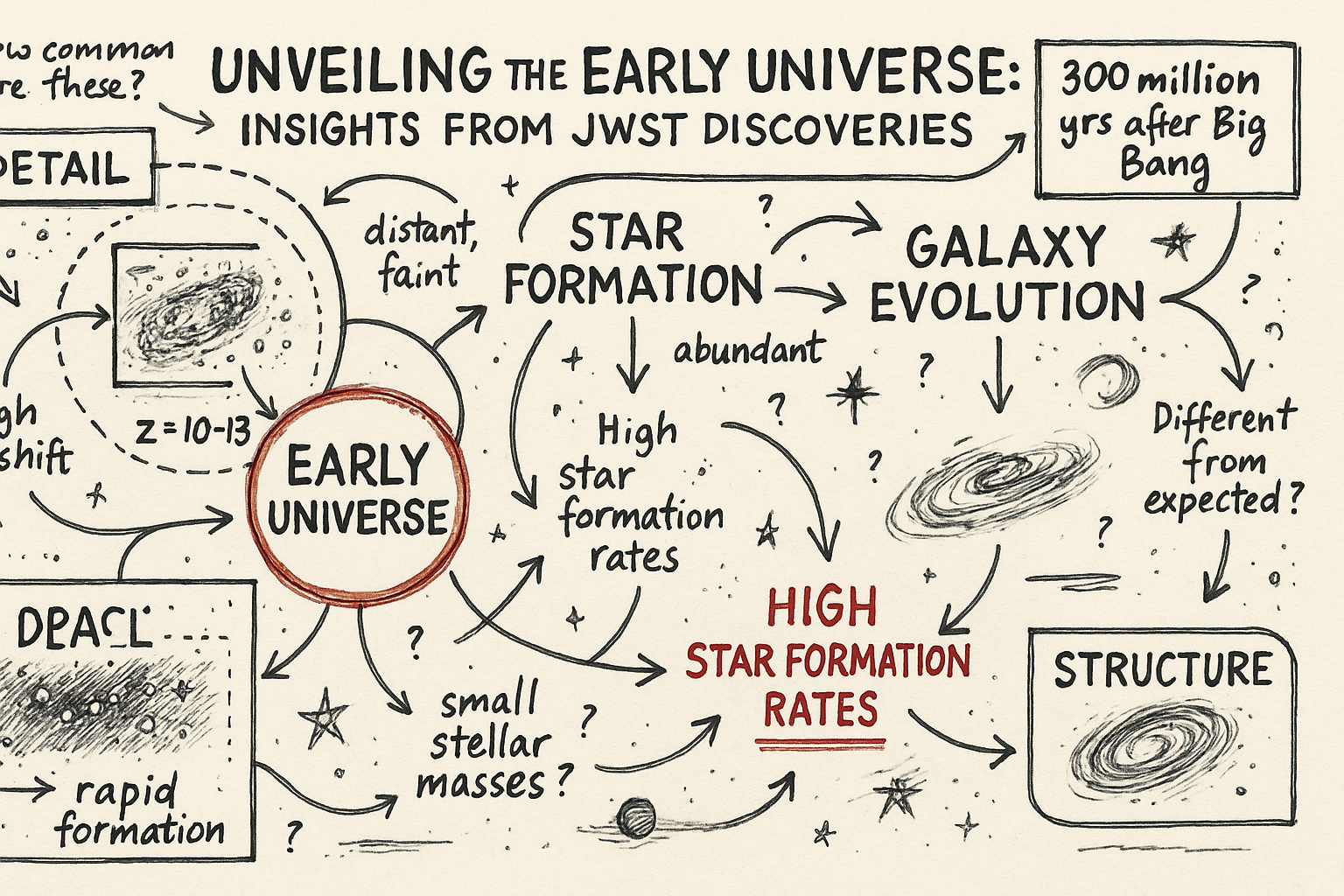
The James Webb Space Telescope (JWST) continues to revolutionize our understanding of the cosmos, particularly the early universe's enigmatic galaxies. Recent discoveries have unraveled surprising details, challenging long-held assumptions about how galaxies evolve and form stars.
The Enigma of Quenched Galaxies
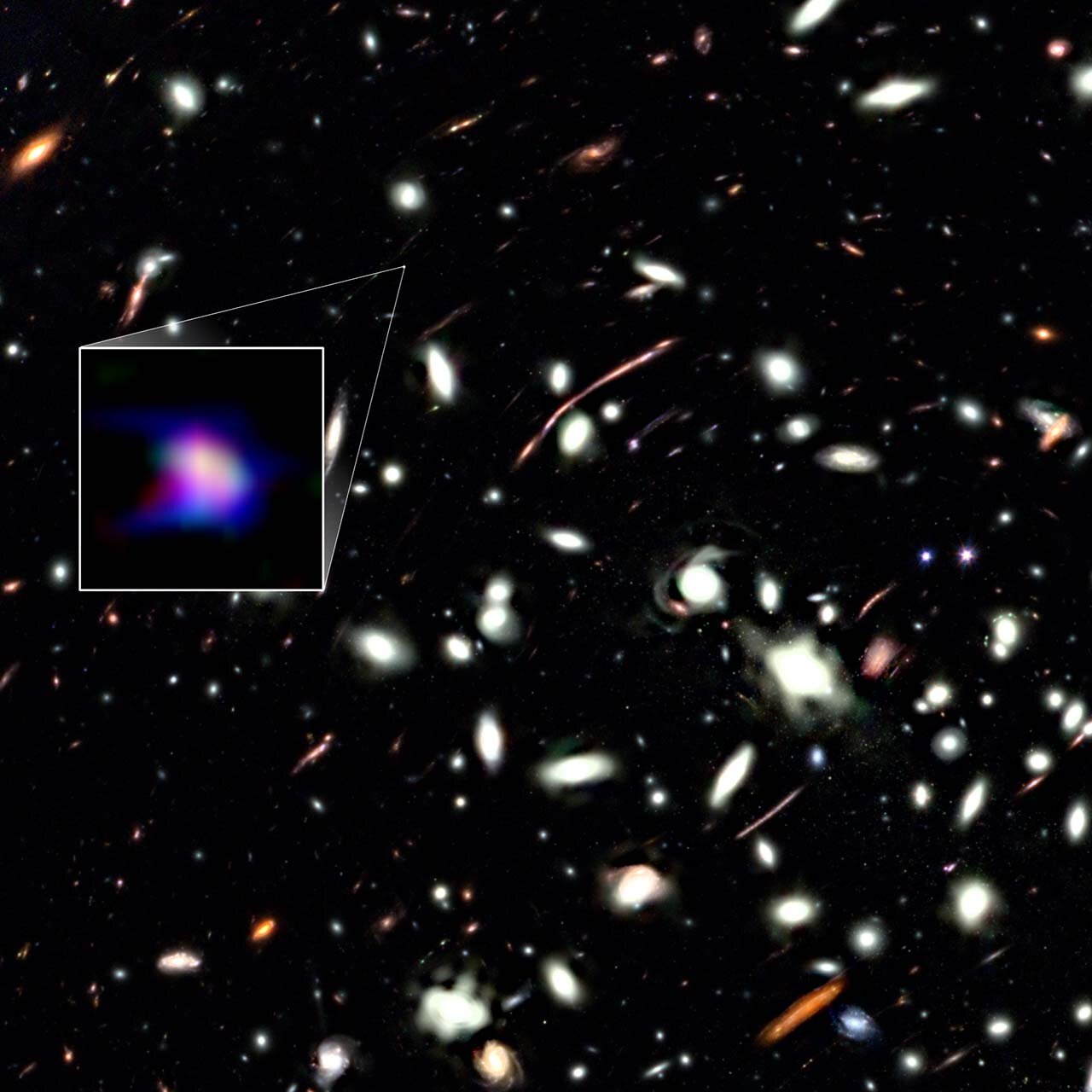
One of the JWST's most startling revelations is the existence of massive galaxies that ceased star formation much earlier than previously thought. Traditionally, these 'quenched' galaxies were expected to appear significantly later in cosmic history. The discovery of such galaxies, including the intriguingly named 'Red Potato Galaxy,' suggests that processes like active galactic nuclei (AGN) jets may have prematurely halted star formation.
In a related study, a black hole jet was found stirring a gas cloud associated with the Red Potato Galaxy, potentially 'cooking' it and inhibiting new star formation. This observation underscores the complex interplay between galactic structures and their environments, providing new avenues for understanding galaxy evolution.
Galactic Mergers: Hidden in Plain Sight
The JWST's ability to peer into the distant past has also revealed that galactic mergers, a critical process in galaxy evolution, are more prevalent than previously visible. Many early galaxies were thought to be chaotic due to frequent mergers. However, the JWST's observations indicate that these mergers often leave obscured evidence, hidden in the galaxies' morphology.
Research on galaxies like Centaurus A has shown that mergers can occur without obvious signs, suggesting that our understanding of early galaxy dynamics may need revision. This insight suggests that the universe's early history might be more orderly than previously thought.
Spiral Arms and Bars: Catalysts for Star Formation
The role of spiral arms and bars as 'fuel pumps' for star formation challenges the notion that early galaxies were solely chaotic and clumpy. Recent studies indicate that these structures facilitated the flow of gas, enabling rapid star formation during the period known as Cosmic Noon.
Furthermore, the JWST has identified what could be the most distant barred spiral galaxy, dating back to less than 1.2 billion years after the Big Bang. This discovery implies that well-ordered galactic structures formed earlier than anticipated, potentially altering our models of galaxy formation.
The Mystery of Little Red Dots
Among the JWST's intriguing finds are the 'Little Red Dots,' mysterious objects whose nature remains debated. Some researchers hypothesize that these dots may bridge the gap between typical galactic nuclei and active galactic nuclei, although their precise role in cosmic evolution is still under investigation.
The potential connection between these dots and AGN activity highlights the need for further research to understand their significance fully. As observations continue, the JWST promises to shed light on these and other cosmic mysteries.
Future Implications
The JWST's discoveries are reshaping our understanding of the cosmos, particularly the early universe's structure and evolution. By challenging existing models and revealing hidden processes, these findings inspire a reevaluation of galactic dynamics and formation theories.
As we continue to explore the universe's infancy, the JWST will undoubtedly play a crucial role in refining our cosmic narrative, offering new insights into the complex tapestry of galaxies that populate the cosmos.