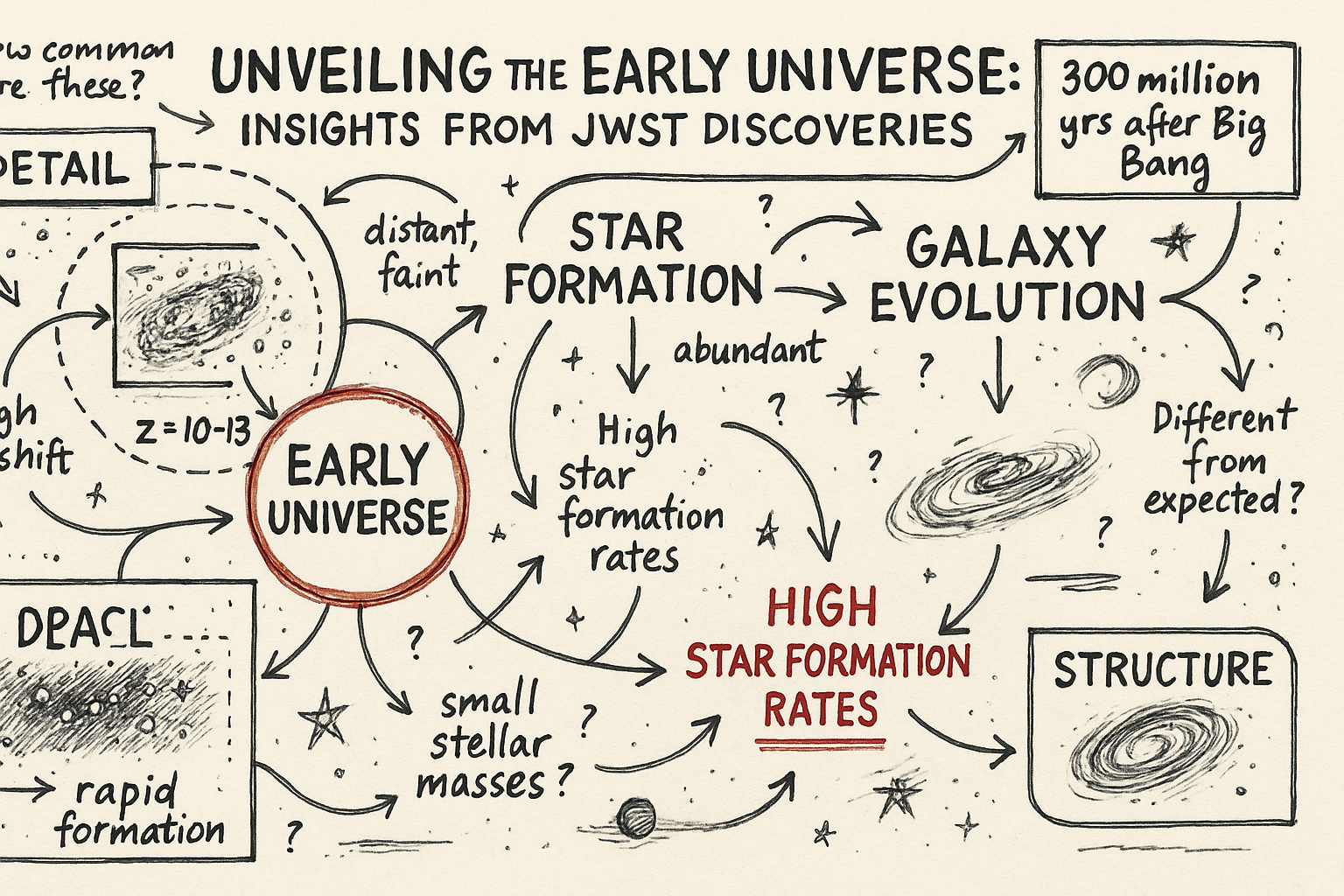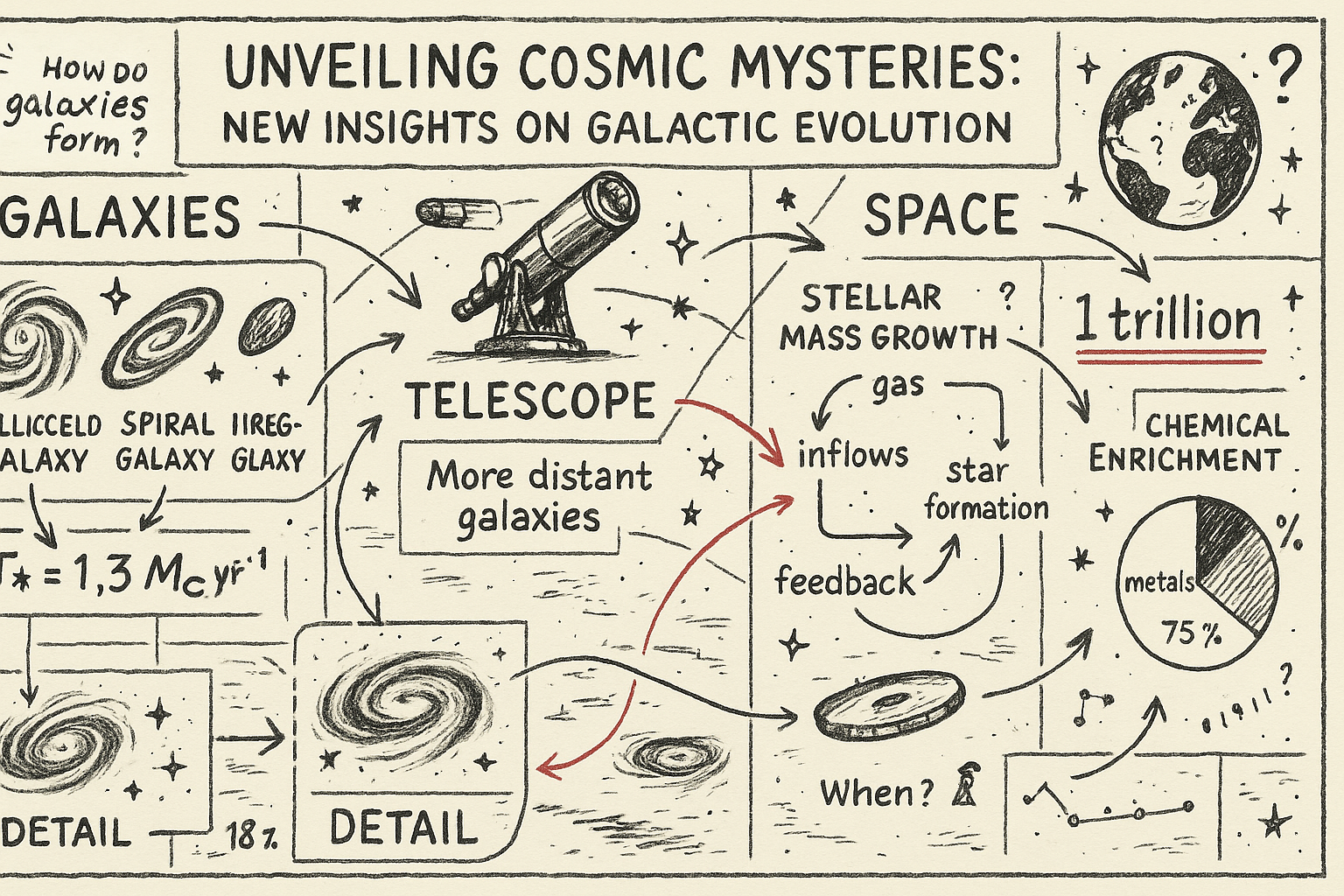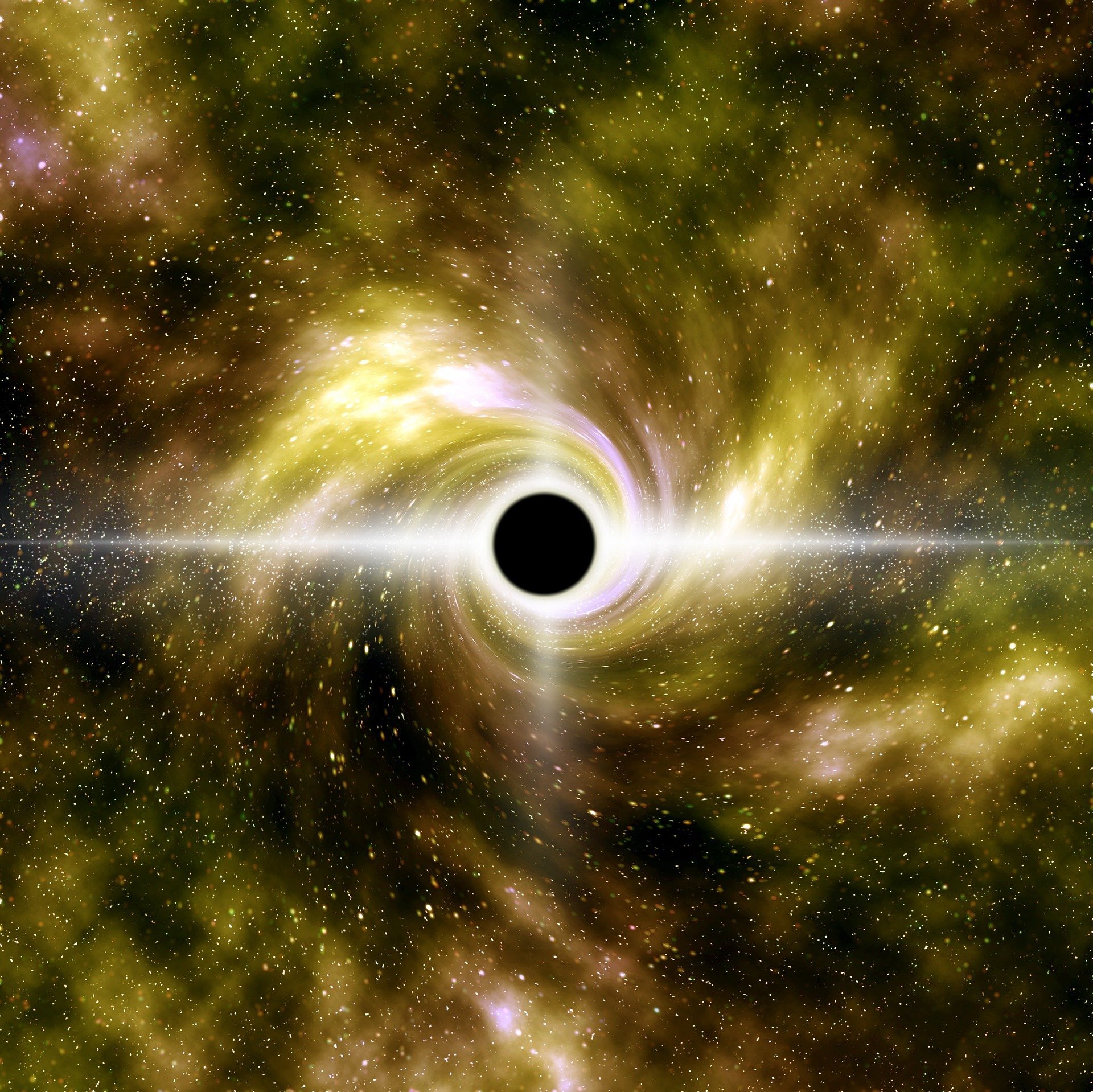
The James Webb Space Telescope (JWST) continues to revolutionize our understanding of the early universe with its latest findings. A recent study has illustrated a vivid picture of a supermassive black hole developing within a network of nascent galaxies, roughly a billion years post-Big Bang. This discovery not only offers a glimpse into the formation of black holes but also sheds light on the merging processes of the first massive galaxies.
The focal point of this research, a galaxy labeled GN-77652, harbors a supermassive black hole with a mass of about 11 million times that of our Sun. Intriguingly, its host galaxy contains merely about 170 million solar masses of stars, creating a puzzling scenario where the black hole is disproportionately large compared to its host. This anomaly is significant because, typically, black holes and their host galaxies exhibit a more proportional mass relationship in the local universe. Observations place this galaxy at a redshift of 5.23, situating it in a critical epoch of cosmic history.
The black hole's location is within a 12,000-parsec-long filament of galaxies, indicative of a future convergence and merger into a more substantial galactic entity. Such mergers are crucial in the evolutionary narrative of the universe, potentially explaining the rapid assembly of large structures observed today. The JWST's capability to capture high-resolution imagery and detailed spectra has been instrumental in discerning these early cosmic events.
Understanding Black Hole Growth
Traditionally, astronomers have deduced black hole masses by analyzing the velocity of gas orbiting these massive entities, inferred from spectral line measurements. This method has been effective for nearby galaxies, but when applied to early universe black holes, it produces unexpectedly massive results, challenging existing growth models. GN-77652's black hole is a part of this puzzling category, leading scientists to explore new explanations, such as super-Eddington accretion—a process where black holes intake material at rates exceeding theoretical limits, potentially skewing mass estimates and suppressing X-ray emissions.
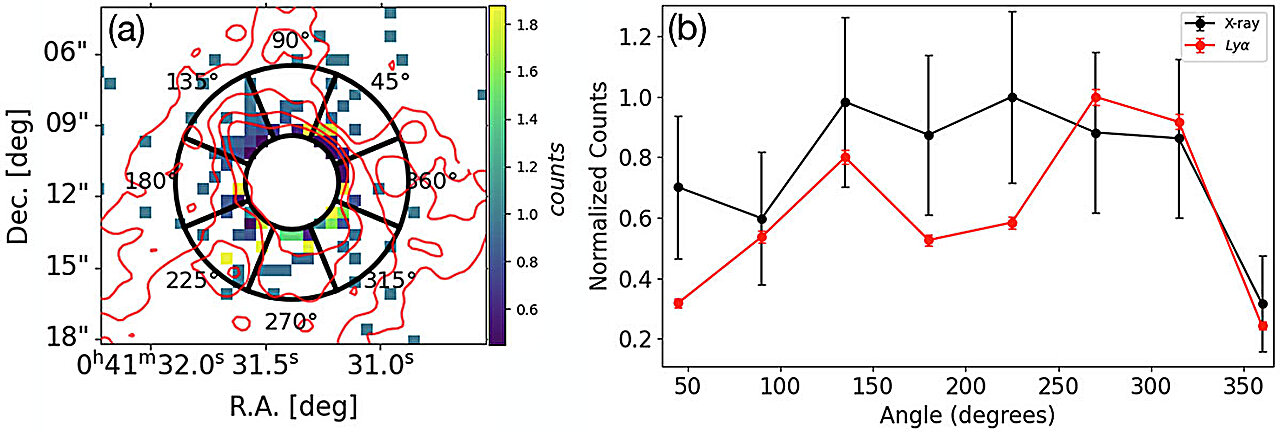
Further complicating the scenario, many of these early universe black holes, including the one in GN-77652, do not emit expected levels of X-rays. Typically, a region of hot plasma, or corona, above the accretion disk emits X-rays, a phenomenon not observed in this case. This absence suggests alternative feeding mechanisms or structural differences during this early growth phase.
Implications for Galaxy Evolution
The JWST's observations transcend mere black hole growth; they provide insights into galaxy evolution dynamics. The data suggests that the early universe was a period of rapid activity, with galaxies forming, merging, and evolving at a pace previously underestimated. The massive black holes, such as the one in GN-77652, could play pivotal roles in regulating star formation and shaping their host galaxies, either through energetic feedback mechanisms or gravitational influence.
The findings also underscore the importance of galactic filaments. These structures likely act as conduits for material, feeding both galaxies and their central black holes, thus driving the growth of these cosmic giants. Understanding these processes is crucial for piecing together the history of the universe's large-scale structure.
Future Prospects
As the JWST continues to operate, astronomers anticipate uncovering more about the early universe's complexities. Each discovery adds a piece to the puzzle of how galaxies and black holes co-evolved. Future studies may refine our understanding of early galaxy mergers, black hole accretion processes, and the intricate interplay between these massive entities and their environments.
The unfolding narrative of GN-77652 and similar systems will likely inform theoretical models, offering a more comprehensive picture of our universe's formative years. The JWST's contributions are pivotal, guiding astronomers towards a deeper understanding of cosmic history and the forces that have shaped the cosmos as we observe it today.