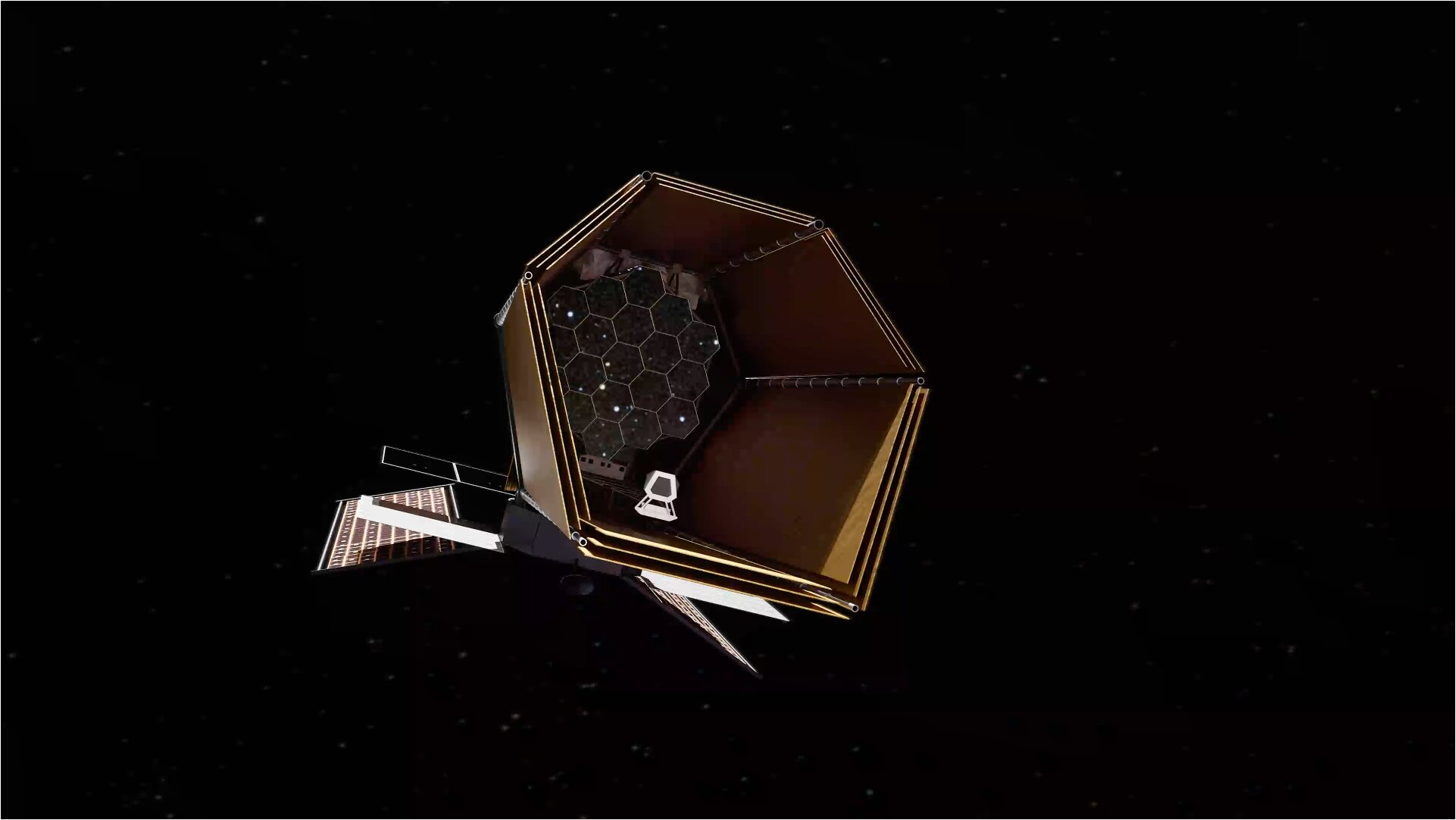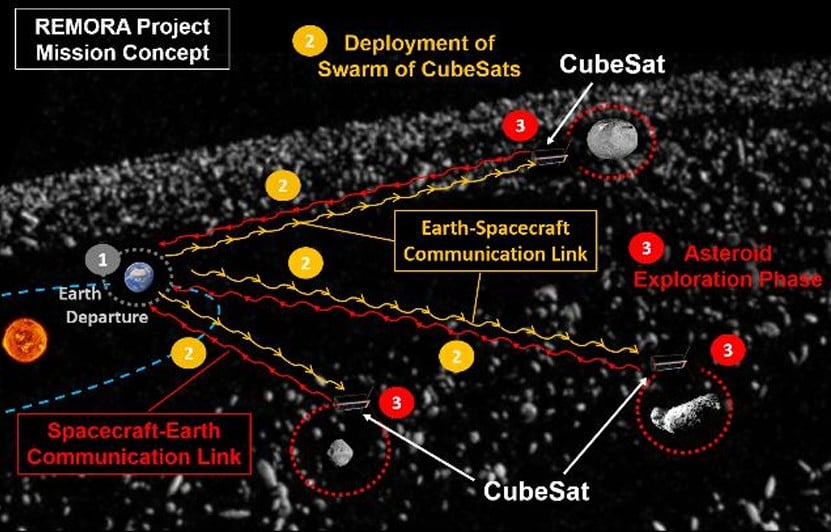
The quest to unravel the mysteries of asteroids, those celestial remnants from the early solar system, is taking a significant leap forward with the introduction of an innovative mission architecture known as REMORA. The REndezvous Mission for Orbital Reconstruction of Asteroids (REMORA) is a pioneering concept proposed in a recent white paper submitted to the UK Space Agency's 2035 Space Frontiers programme.
Asteroids have long intrigued scientists due to their potential to offer insights into the primordial materials that formed planets. However, understanding their composition requires more than remote observations from Earth-based or even space-located telescopes. The REMORA initiative addresses this need by deploying an autonomous fleet designed to tag and track asteroids directly in space.
The REMORA mission architecture involves sending a fleet of small, autonomous probes to an asteroid. These probes are engineered to execute a series of complex maneuvers: approaching, tagging, and tracking the celestial body over an extended period. This approach offers a more detailed and prolonged examination than traditional fly-by missions, which often provide only fleeting glimpses of their targets.
One of the key advantages of the REMORA fleet is its autonomy. The probes are equipped with advanced AI systems that allow them to make real-time decisions without relying on constant instructions from Earth. This capability is crucial given the vast distances and communication delays inherent in space exploration. By operating independently, the probes can swiftly adapt to unexpected conditions, ensuring continuous data collection and analysis.
The data gathered by REMORA will potentially revolutionize our understanding of asteroid composition, structure, and dynamics. By closely monitoring these space rocks, scientists hope to gain insights into their formation and evolution, which in turn holds clues about the early solar system's history.
Furthermore, REMORA's ability to track asteroids could have significant implications for planetary defense. By providing precise data on an asteroid's trajectory and composition, the fleet can assist in developing strategies to mitigate potential collision threats to Earth.
As we look to the future of space exploration, projects like REMORA exemplify the shift towards more sophisticated and autonomous systems. These technologies not only enhance scientific research but also pave the way for safer and more efficient space operations.